




JEDDAH: The Jeddah Art Promenade comes alive during Ramadan, providing a vibrant destination to experience the traditions and culture of Saudi Arabia.
The venue blends entertainment, culture and cuisine, displaying the essence of Ramadan in Saudi Arabia.
As visitors step into the promenade, they are greeted with the sounds of traditional songs and performances. The festive atmosphere is enhanced by colorful lanterns and decorative lights typical of the holy month.
There are also numerous restaurants offering traditional Saudi and international cuisine, catering to a wide range of tastes.
Sajidah Sheikh, a vendor selling traditional fried liver, known as kibdah, and baleela, made with chickpeas, said: “I feel empowered to be a part of the Ramadan season. I love cooking and I am trying to make the kibdah taste different from other stalls using my own spices.
“The Ramadan vibes here are incredible and it is something which everyone should visit to learn about our culture and holy month traditions.”
One of the standout features of the Jeddah Art Promenade is its celebration of local heritage and traditions.
Visitors can take a walk through history by exploring exhibits that recreate traditional Saudi homes.
There is a tent that shows the way homes were decorated in the past, with a majlis (sitting area) where a man sits with children studying, and a girl watching on an old-fashioned television.
This nostalgic scene offers a glimpse into the past and shows how Ramadan was celebrated in previous generations.
One of the visitors, Nida Ali, said: “Coming to the Art Promenade with my children, I could teach them about the culture and show them how Ramadan is celebrated in the country.
“It’s amazing to show them … how our houses used to look, especially the television, stand, and seating arrangements. The nostalgia and … memories are special.
“We broke our fast here with a seaside view and prayed in Rahma Mosque, which was beautifully decorated with lights.
“After breaking our fast, we enjoyed walking the streets, trying snacks like baleela, French fries, luqaimat, and sipping on the very famous Vimto drink.”
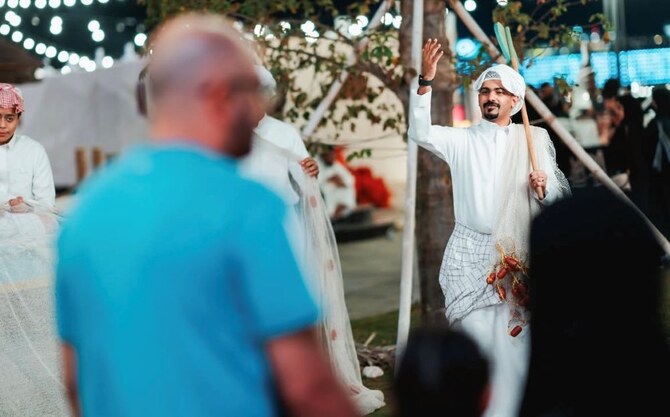
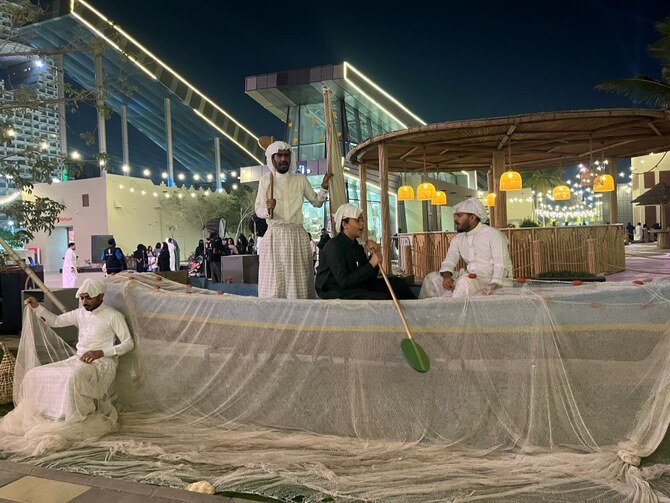
In addition, the promenade brings to life the culture of the local fishermen, where a group of them can be seen working on their nets while singing traditional songs.
Abdullah Okis, one of the performers, said: “We are trying to present the local fishermen culture and the songs they sing while catching.
“It feels great to be a part of Ramadan activities as well as showcase the Saudi culture, the lively atmosphere ... People stop to watch us perform and engage with us while we are singing.”
The promenade also offers the opportunity to experience traditional trades. Visitors can meet a miharris, a person who sharpens knives in the traditional way, roaming around the area.
Another familiar figure is the mesaharati, a person who carries a drum and goes around waking people up for suhoor.
Alongside them, local vendors offer an array of products, from perfumes and pickles to tailor-made clothing and accessories, giving visitors the chance to experience the crafts and flavors of Jeddah.
Maha Al-Rahman, who sells traditional jalabiyas and handmade accessories, said: “Each of my creations is crafted to blend tradition with a modern touch, offering something unique that represents Ramadan traditions.
“Although I sell online, this opportunity allows me to reach new customers and expand my business by connecting with thousands of visitors each day, helping me build a strong customer base.”
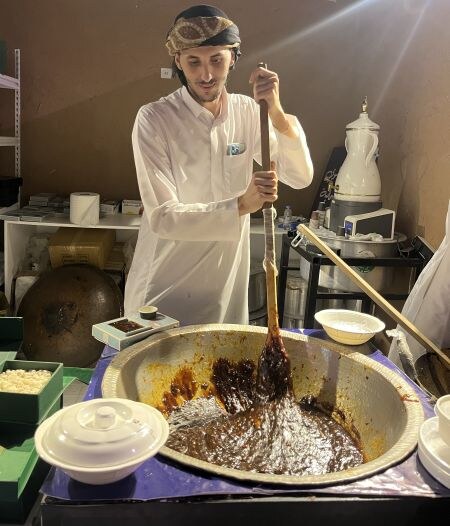
Khalid Al-Zaabi, a vendor from Oman selling traditional sweets, said: “We’re here to give visitors a taste of our traditional Ramadan sweet, made from sugar and flour, which is stirred until it turns brown. People are really enjoying it, and we’re also offering Omani perfumes.”
The appeal of the art promenade is not limited to just the food. Mohammed Hamoud, another visitor, said: “The cultural significance is clearly visible. My daughters applied henna (and) we had the most amazing traditional Saudi snacks.
“We even enjoyed the Mexican snacks that were available everywhere. Rides, food stalls were many, and children had their own dedicated playing areas and we had a good time until breaking fast.”


