ISLAMABAD: The provincial government in Pakistan’s Punjab province has paid wages to inmates ahead of Eid for crafting handmade ‘Norozi chappals,’ the home department said on Monday, marking a significant step in prison labor reforms.
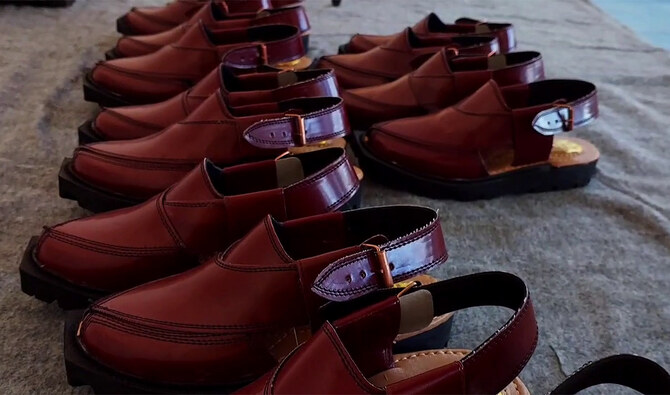
The prisoners at Punjab’s Shahpur prison, trained by experts from the private sector, were paid as part of Punjab’s Jail Reforms Agenda for making Norozi chappals, a variation of the traditional Peshawari chappal, that are crafted from full-grain leather and feature a classic toe and cross-over strap design. These chappals often feature a double sole for added comfort and durability.
Tauseef Sabeeh Gondal, a Punjab home department spokesperson, said the provincial government is utilizing corporate social responsibility (CSR) programs of private companies to train inmates in various skills and the earnings would allow them to cover personal expenses within prison facilities and support their families outside.
“Around 20 prisoners were trained in the initial phase and they are now earning fair wages. In the open market, laborers typically receive Rs450 ($1.60) per set of 12 pieces of the upper or lower part of the sandal, but under this program, inmates are paid Rs455 per set,” Gondal said.
“Just two days ago, these inmates were paid around Rs10,000 ($35) each for their work.”
The Jail Reforms Agenda, which was initiated last year, covers all 44 prisons in the province and has introduced motor mechanics, barbering and information technology (IT) skills development programs, according to the home department.
Inmates in Punjab are now engaged in producing goods, including clothing, carpets, furniture, handicrafts, tiles, paper, footballs, perfumes and tissue paper. While eligibility criteria for these training programs vary, initially, prisoners with good conduct were selected.
Gondal said although industrial units for carpet, sports goods and manufacturing of some other goods already existed in Punjab prisons, this specific project aimed to ensure vocational training reached all inmates.
“The reforms go beyond industrial training. The government has also introduced educational programs, improved visitation facilities, psychological counseling, and skill development centers to help inmates reintegrate into society,” he shared.
Currently, a prison in Faisalabad is operating a full-scale printing press, Kasur prison is manufacturing shoes, and Kot Lakhpat jail in Lahore is producing high-quality furniture, according to the official.
“In fact, I have a table in my office that was made by prisoners at Kot Lakhpat,” Gondal added.


![]()

At Punjab prison, inmates earn honest wage making leather shoes ahead of Eid
Short Url
https://arab.news/rahyt
At Punjab prison, inmates earn honest wage making leather shoes ahead of Eid
- The inmates, trained by experts from the private sector, were paid as part of the Punjab government’s Jail Reforms Agenda launched last year
- Official says the skill development program and earnings would allow prisoners to cover personal expenses within prisons and support families
Latest updates


© 2026 SAUDI RESEARCH & PUBLISHING COMPANY, All Rights Reserved And subject to Terms of Use Agreement.