

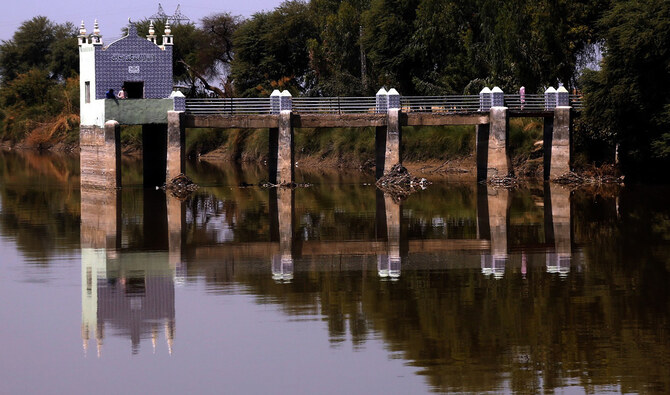

SHIKARPUR, Sindh: Standing on seven pillars in the middle of the Kirthar Canal, a unique mosque in Pakistan’s southern Shikarpur district is more than just a place of worship — it is a symbol of defiance and resistance against British colonial rule.
With its whitewashed walls rising above the flowing waters, the Amroti Mosque’s architecture is as unique as its story.
The mosque was first constructed from mud, wood and palm tree trunks on a mound around 1890 under the guidance of scholar and educationalist Syed Taj Mahmood Shah Amroti, who was the first to translate the Holy Qur’an into the Sindhi landguage and provide detailed explanations of its teachings. For years, the mosque served as a place of workshop for the residents of Junejo village in Shikarpur until its location became an issue when the British colonial rulers of India decided to build the Sukkur Barrage and its canals, ordering the demolition of the masjid.
Historical accounts say Amroti sent over 20 letters to authorities asking to change the canal’s route but received no response and the British eventually issued a warrant for his arrest.
“In 1922, the British government started the Kirthar Canal project to irrigate uncultivated lands of Sindh and Balochistan [provinces],” Sayed Rushdullah Shah Amroti, the administrator of Amroti Mosque and the great grandson of Amroti, told Arab News.
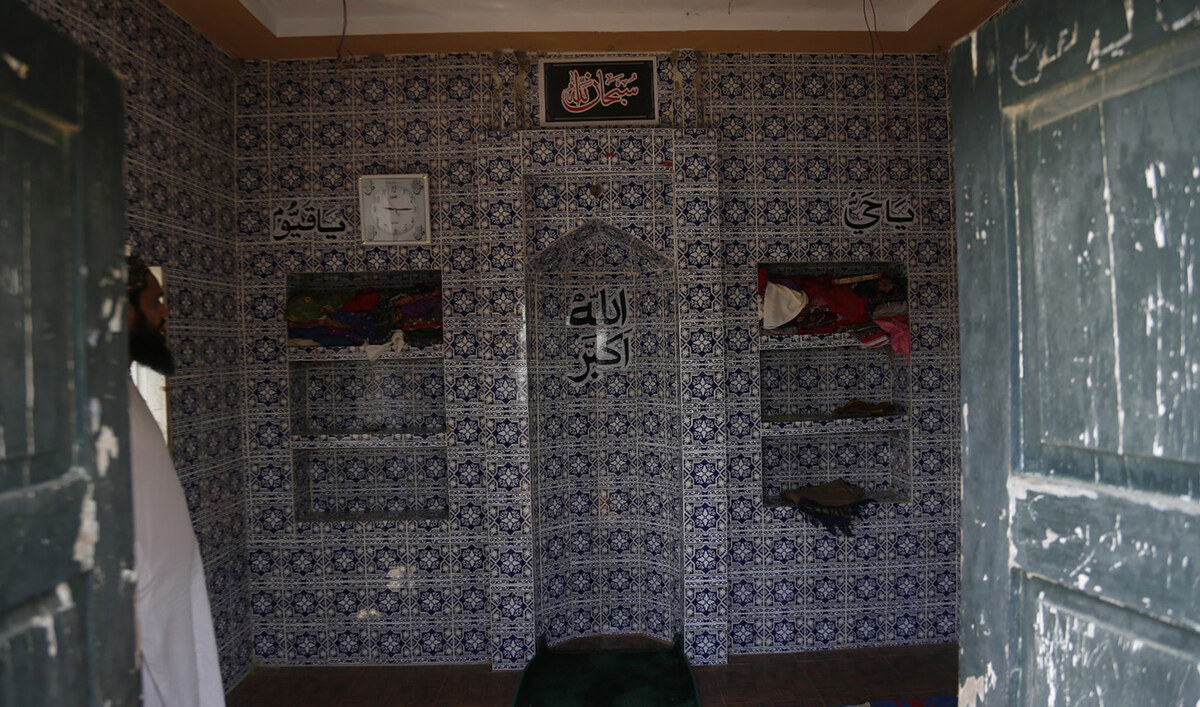
The picture taken on March 19, 2025, shows blue tiles in the Amroti Mosque in Pakistan’s southern Shikarpur district. (AN Photo)
“When Hazrat Amroti came to know that the British government wanted to demolish the mosque, he decided to camp here and offered stiff resistance to British authorities.”
When British officials arrived with machines to demolish the mosque, local villagers joined Amroti in a massive protest. In the end, the British agreed not to destroy the mosque and instead promised to strengthen its structure so that both the mosque and the canal could remain.
“The impact of the resistance was that the British government was forced to kneel down,” Sayed said. “They left the mosque as it was and made the canal around its four sides.”
The mosque in its present shape was subsequently built, serving as a reminder of the importance of both faith and rebellion as it stood amid the waters of the Kirthar Canal, which originates from the Indus River at Sukkur Barrage and became operational in 1932 as a vital watercourse for Balochistan, particularly districts like Jafarabad and Naseerabad.
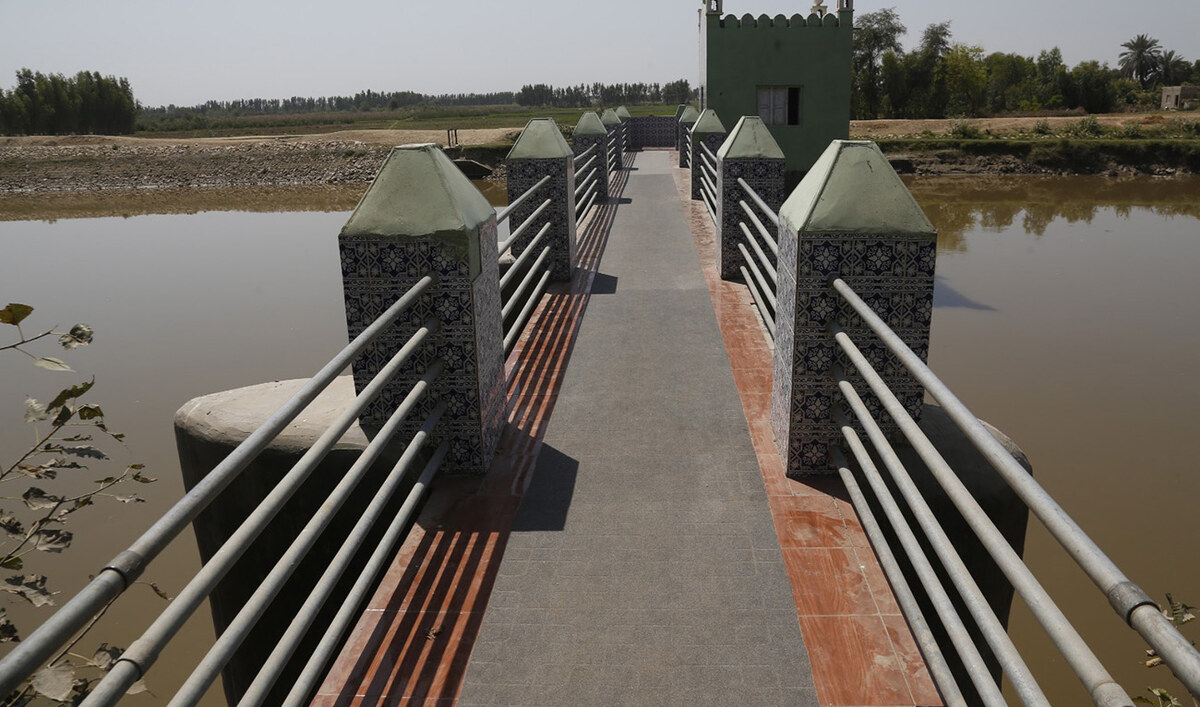
The picture taken on March 19, 2025, shows Amroti Mosque constructed in the middle of Kirthar Canal in Pakistan’s southern Shikarpur district. (AN Photo)
“STRANGE SPIRITUAL STATE”
In the past, residents would use boats to reach Amroti Mosque for prayers but after independence from British rule in 1947 and the creation of the two separate nations of Pakistan and India, the government rebuilt a proper structure for the mosque, constructed a bridge for easier access and ensured that water continued to flow beneath it.
Though the small mosque only allows 10-12 people to pray at a time, it holds great cultural and spiritual value for the people of the area.
“We are very proud of the religious and Islamic achievements of our ancestors, and wherever we go in the world, the respect we receive because of our connection to Amroti Sharif is largely due to the role of this mosque,” Rushdullah said.
Nasim Bukhari, a local writer, described the mosque as a “great symbol of resistance in history.”
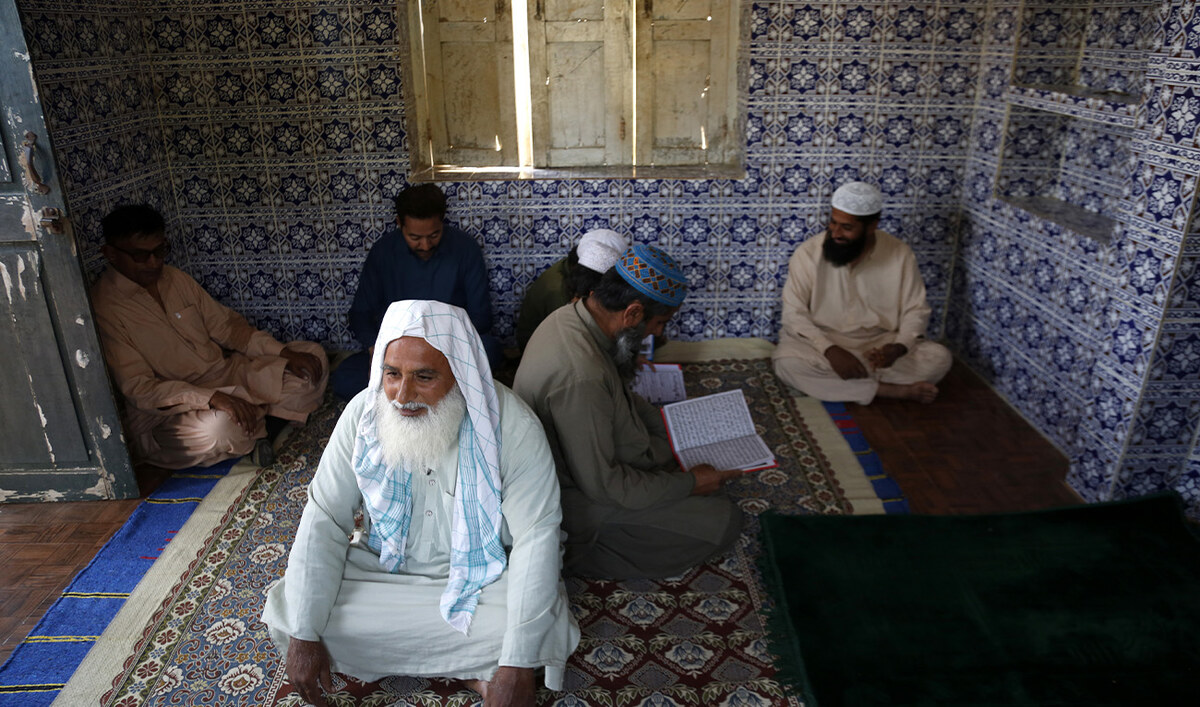
Worshippers pray at the Amroti Mosque in Pakistan’s southern Shikarpur district. (AN Photo)
“And this has been the history of Sindh, that we have never accepted defeat. Even if we had to face defeat, we would die with our names still alive. We never ran away,” he said.
Amroti’s struggle was part of a larger resistance movement in Sindh, according to Bukhari.
“Syed Taj Mahmood Amroti fought against the British in his time and became a symbol of resistance. The people of that time, unarmed, fought with perseverance,” the author said, highlighting Amroti as an inspiration for others. One of his disciples, Syed Salah Aajiz Memon, later became the first Sindhi and Muslim figure against whom the British filed a case for rebellion.
“The name and deeds of our leader, Syed Taj Mahmood Amroti, have had their impact, but the resistance movement led by his followers and disciples also carries a remarkable legacy,” Bukhari said.
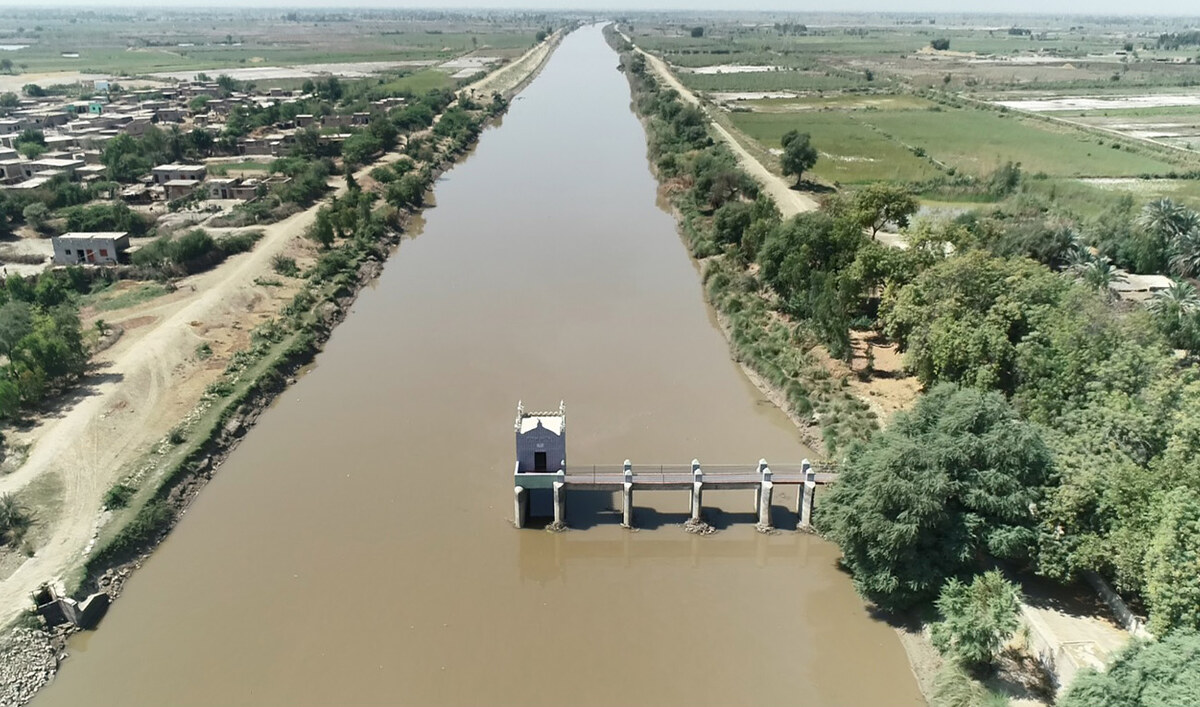
The picture taken on March 19, 2025, shows aerial view of the Amroti Mosque constructed in the middle of Kirthar Canal in Pakistan’s southern Shikarpur district. (AN Photo)
To date, the mosque continues to serve as a place of deep spirituality and worshippers describe a “profound sense of peace” at the place, especially when the water runs high and the mosque appears to be floating in the canal.
“While praying here, a strange spiritual state occurs,” Maulana Shahnawaz Baloch, the prayer leader at the mosque, told Arab News.
“At this time, the water level is low, yet there is still a spiritual atmosphere. When the water level is higher due to the season, a completely different spiritual experience takes place.”


