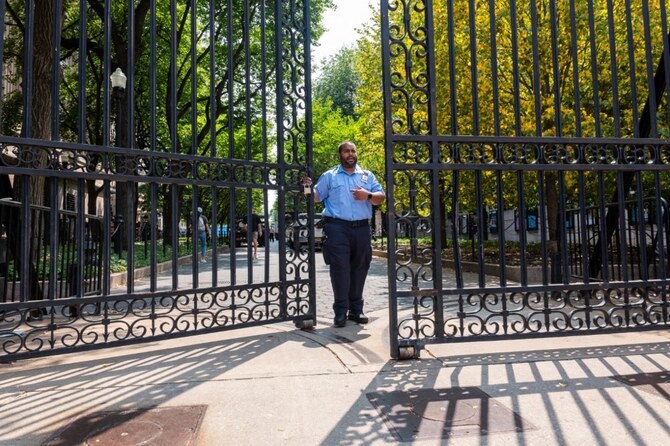
NEW YORK: Columbia University agreed Friday to put its Middle East studies department under new supervision and overhaul its rules for protests and student discipline, acquiescing to an extraordinary ultimatum by the Trump administration to implement those and other changes or risk losing billions of dollars in federal funding.
As part of the sweeping reforms, the university will also adopt a new definition of antisemitism and expand “intellectual diversity” by staffing up its Institute for Israel and Jewish Studies, according to a letter published Friday by the interim president, Katrina Armstrong.
The announcement drew immediate condemnation from some faculty and free speech groups, who accused the university of caving to President Donald Trump’s largely unprecedented intrusion upon the school’s academic freedom.
“Columbia’s capitulation endangers academic freedom and campus expression nationwide,” Donna Lieberman, the executive director of the New York Civil Liberties Union, said in a statement.
Earlier this month, the Trump administration pulled $400 million in research grants and other funding over the university’s handling of protests against Israel’s military campaign in Gaza. As a precondition to restoring those funds — along with billions more in future grants — federal officials last week demanded the university immediately enact nine separate reforms to its academic and security policies.
In her response Friday, Armstrong indicated Columbia would implement nearly all of them. She agreed to reform the college’s long-standing disciplinary process and bar protests inside academic buildings. Students will not be permitted to wear face masks on campus “for the purposes of concealing one’s identity.” An exception would be made for people wearing them for health reasons.
The university will also appoint a new senior provost to review the leadership and curriculum of several international studies departments to “ensure the educational offerings are comprehensive and balanced.”
The appointment appeared to be a concession to the Trump administration’s most contentious demand: that the university places its Middle Eastern, South Asian and African Studies Department under “academic receivership for a minimum of five years.”
“It’s an escalation of a kind that is unheard of,” Joan Scott, a historian and member of the academic freedom committee of the American Association of University Professors, said of the call for receivership last week. “Even during the McCarthy period in the United States, this was not done.”
The Trump administration has repeatedly accused Columbia University of letting antisemitism go unchecked at protests against Israel that began at the university last spring and quickly spread to other campuses.
In her letter, Armstrong wrote that “the way Columbia and Columbians have been portrayed is hard to reckon with. We have challenges, yes, but they do not define us.”
While Trump has made Columbia the most visible target of his crackdown on higher education, he has put other universities on notice that they will face cuts if they do not embrace his agenda.
Last week, his administration announced investigations into 52 universities for their diversity, equity and inclusion programs.


![]()

Under threat from Trump, Columbia University agrees to policy changes
Short Url
https://arab.news/zwzv2
Under threat from Trump, Columbia University agrees to policy changes
- Trump has put other universities on notice that they will face cuts if they do not embrace his agenda


Latest updates


© 2026 SAUDI RESEARCH & PUBLISHING COMPANY, All Rights Reserved And subject to Terms of Use Agreement.