

Israel’s top court halts Netanyahu’s dismissal of the country’s internal security chief

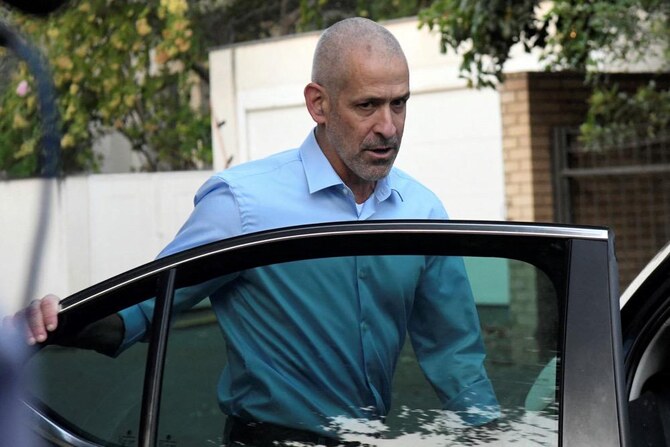
Ronen Bar has led Shin Bet since 2021. (AFP/File)
Short Url
Updated 21 March 2025
Follow

Israel’s top court halts Netanyahu’s dismissal of the country’s internal security chief

  • Netanyahu had said he had lost confidence in Shin Bet head
  • Police fire water cannon, make arrests after scuffles

JERUSALEM: Israel’s top court on Friday ordered a temporary halt to Prime Minister Benjamin Netanyahu’s dismissal of the country’s domestic security chief until his appeal can be heard.

The Supreme Court’s decision came hours after Netanyahu’s Cabinet unanimously approved his request to fire the head of the Shin Bet internal security service, Ronen Bar.

The court said it was delaying the firing until an appeal could be heard no later than April 8. Netanyahu’s office had said Bar’s dismissal was effective April 10, but that it could come earlier if a replacement was found.

Israel’s attorney general has ruled that the Cabinet has no legal basis to dismiss Bar.

A Shin Bet report into Hamas’ Oct. 7, 2023, attack that prompted the war acknowledged failures by the security agency. But it also said policies by Netanyahu’s government created the conditions for the attack.

Netanyahu is also upset that the Shin Bet has launched an investigation into connections between some of his close aides and the Gulf state of Qatar. His office said Bar’s dismissal would take effect on April 10 or before then if a replacement is found.


Death toll rises to at least 10 in violence around Iran protests

Updated 11 sec ago
Follow

Death toll rises to at least 10 in violence around Iran protests

DUBAI: Violence surrounding protests in Iran sparked by the Islamic Republic’s ailing economy killed two other people, authorities said Saturday, raising the death toll in the demonstrations to at least 10 as they showed no signs of stopping.
The new deaths follow US President Donald Trump warning Iran on Friday that if Tehran “violently kills peaceful protesters,” the United States “will come to their rescue.” While it remains unclear how and if Trump will intervene, his comments sparked an immediate, angry response from officials within the theocracy threatening to target American troops in the Mideast.
The weeklong protests, have become the biggest in Iran since 2022, when the death of 22-year-old Mahsa Amini in police custody triggered nationwide demonstrations. However, the protests have yet to be as widespread and intense as those surrounding the death of Amini, who was detained over not wearing her hijab, or headscarf, to the liking of authorities.
The deaths overnight into Saturday involved a new level of violence. In Qom, home to the country’s major Shiite seminaries, a grenade exploded, killing a man there, the state-owned IRAN newspaper reported. It quoted security officials alleging the man carried the grenade to attack people in the city, some 130 kilometers (80 miles) south of the capital, Tehran.
Online videos from Qom purportedly showed fires in the street overnight.
The second death happened in the town of Harsin, some 370 kilometers (230 miles) southwest of Tehran. There, the newspaper said a member of the Basij, the all-volunteer arm of Iran’s paramilitary Revolutionary Guard, died in a gun and knife attack in the town in Kermanshah province.
Demonstrations have reached over 100 locations in 22 of Iran’s 31 provinces, the US-based Human Rights Activists News Agency reported.
Iran’s civilian government under reformist President Masoud Pezeshkian has been trying to signal it wants to negotiate with protesters. However, Pezeshkian has acknowledged there is not much he can do as Iran’s rial has rapidly depreciated, with $1 now costing some 1.4 million rials. That sparked the initial protests.