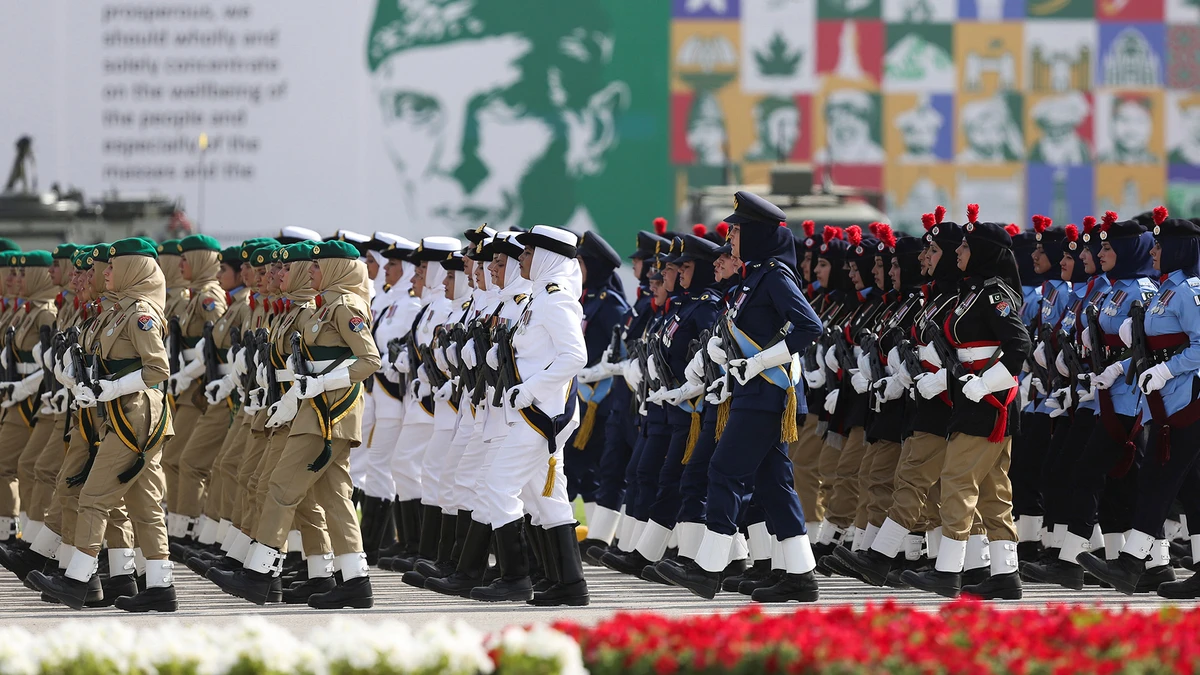
ISLAMABAD: The Pakistan Day military parade will be held this year on Mar. 23 on a “limited scale” due to the holy month of Ramadan, state-run media reported on Thursday, with contingents of the country’s three armed forces set to participate in the spectacle.
The parade will be held on the 85th anniversary of Pakistan’s republic day, marked each year to celebrate the adoption of the Lahore Resolution by the Muslim League party, which called for the creation of an independent state for the Muslims of India on Mar. 23, 1940.
While last year the event was held at the Parade Avenue in Pakistan’s capital Islamabad, this year it is scheduled to take place within the premises of the Aiwan-e-Sadr or the official residence of Pakistan’s president. President Asif Ali Zardari will be the chief guest on the occasion, state broadcaster Radio Pakistan said.
“Pakistan Day Parade will be held on Sunday on a limited scale with traditional enthusiasm,” it said. “The decision to hold the parade on a limited scale was made due to the month of Ramadan,” Radio Pakistan said.
Pakistan Air Force (PAF) fighter jets will also conduct a fly past, a ceremonial or honorific flight by an aircraft or group of aircraft, during the occasion.
“Foreign ambassadors and other distinguished guests have also been invited to the event,” the state media reported.
Pakistan honors foreign dignitaries and national heroes on the occasion with top civilian awards. The parade also features mechanized columns including tanks, armored personnel carriers, rocket launchers, air defense system, guns, UAVs, short-and-long-range Pakistani missiles such as Ra’ad, Nasr, Babur, Shaheen, Ghauri and Ababeel every year.
This year the military parade takes place as Pakistan grapples with surging militancy, especially in its southwestern Balochistan province bordering Iran and Afghanistan. Separatist militants last Tuesday bombed a section of the railway track and stormed the Peshawar-bound Jaffar Express train carrying over 400 passengers in the mountainous Bolan region.
The crisis was resolved the following day when the armed forces carried out a successful operation to rescue the hostages, killing all 33 militants in the process. A final count showed 23 soldiers, three railway employees and five passengers had died in the attack.
Violence persisted in the region days later as a blast killed five, including three paramilitary soldiers, in the province’s Nushki district on Sunday.
Both attacks were claimed by the Baloch Liberation Army (BLA), an ethnic separatist militant outfit in the province. The BLA is the largest and strongest of several ethnic Baloch insurgent groups which have been fighting for decades to win a larger share of the natural resources of mineral-rich Balochistan, which is also home to major China-led projects including a port and gold and copper mines.
Pakistan to hold Mar. 23 military parade on ‘limited scale’ due to Ramadan
https://arab.news/b8smk
Pakistan to hold Mar. 23 military parade on ‘limited scale’ due to Ramadan
- Parade will mark 85th anniversary of Pakistan’s republic day celebrated each year on Mar. 23 to celebrate adoption of Lahore Resolution
- Pakistan honors foreign dignitaries, national heroes with top civilian awards, features tanks, missiles, UAVs, and air defense systems at parade
Pakistan highlights Gwadar transshipment role as shipping routes face disruption over regional tensions
- Pakistani ports possess “untapped potential” to attract global shipping lines for transshipment operations, says minister
- Pakistan eyes leveraging Gwadar as regional transshipment hub as Iran’s closure of Strait of Hormuz disrupts global maritime trade
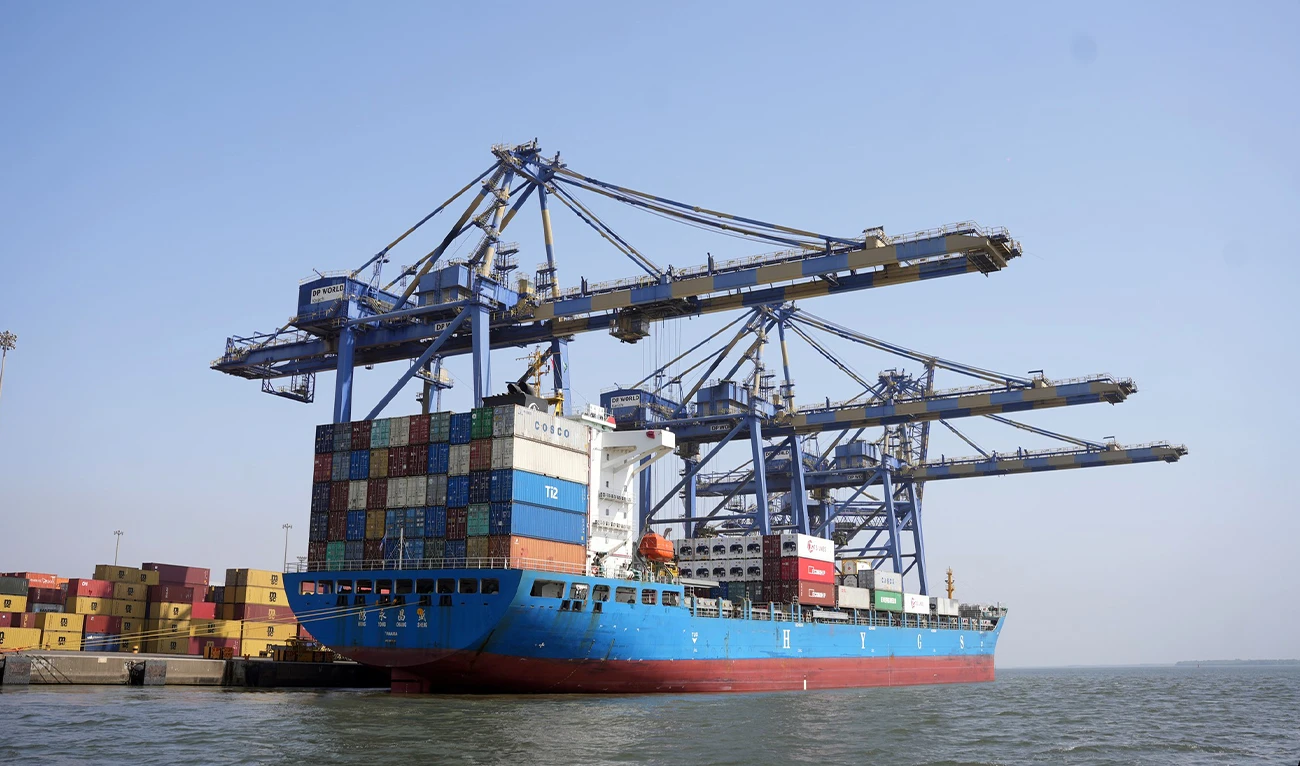
KARACHI: Pakistan’s Maritime Affairs Minister Junaid Anwar Chaudhry on Thursday highlighted the importance of the port city of Gwadar’s transshipment role as major shipping routes, including the Strait of Hormuz, face disruption due to Iran’s ongoing conflict with the US and Israel in the Gulf.
The meeting takes place as Iran has effectively closed the Strait of Hormuz, a strategic waterway that lies between it and Oman. It is one of the world’s most critical oil transit routes, with roughly 20 percent of global oil supplies passing through it. Iran has vowed it will attack any ship that enters the strait, causing energy prices to rise sharply on Monday amid disruptions to tanker traffic in the waterway.
Gwadar is a deep-sea port in Pakistan’s southwestern Balochistan province that lies close to the Strait of Hormuz. Pakistani officials have in the past highlighted Gwadar’s geostrategic position as the shortest trade route to the Gulf and Central Asia, stressing that it has the potential to become a regional transshipment hub.
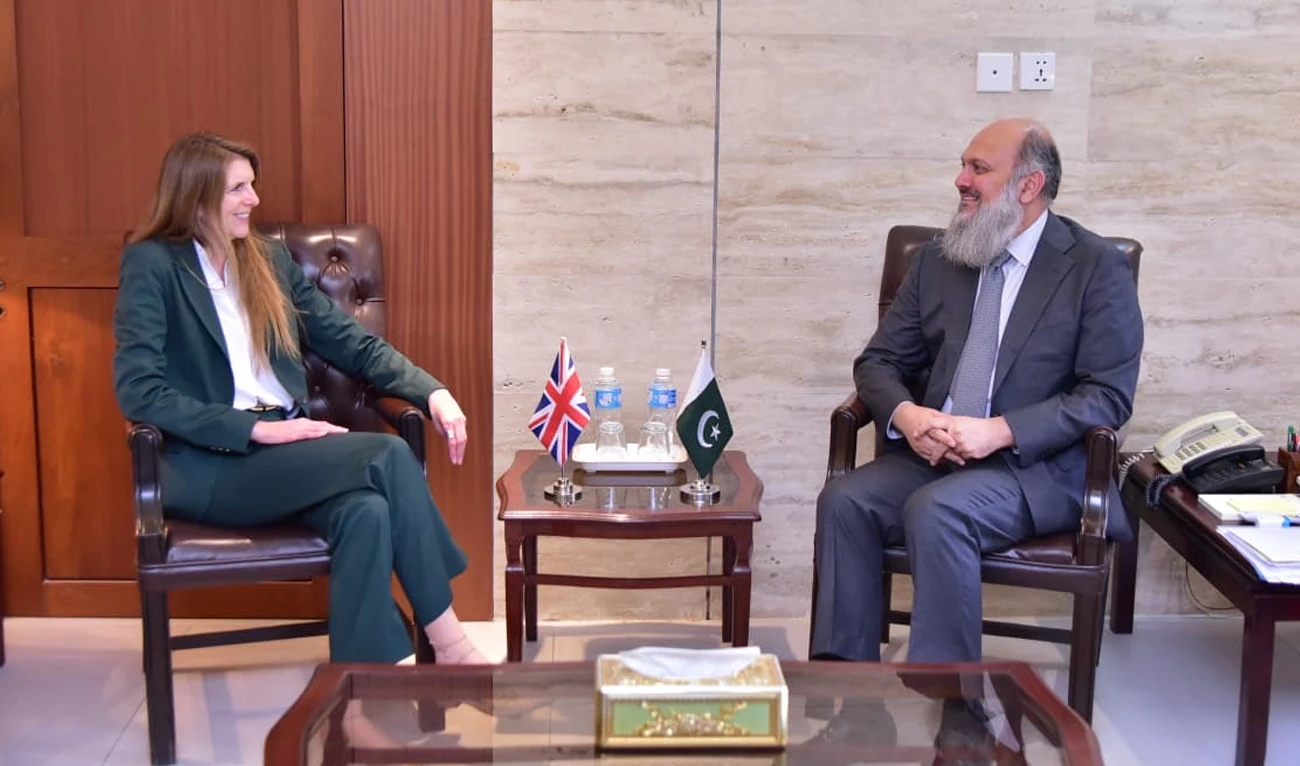
Chaudhry chaired a high-level meeting of government officials to assess emerging logistical challenges facing Pakistan’s trade, particularly in the energy sector, amid tensions in the Gulf.
“Special focus was placed on fully leveraging the potential of Gwadar Port as a regional transshipment hub and positioning it as an alternative of regional instability,” Pakistan’s maritime affairs ministry said in a statement.
The minister said Pakistani ports possessed “significant untapped potential” to attract international shipping lines for transshipment operations, noting that it could also ensure long-term sustainability and growth of the country’s maritime sector.
Participants of the meeting discussed measures to strengthen Pakistan’s position as a viable alternative transit and transshipment destination, as key waterways are affected by the disruption.
The committee also reviewed proposals to amend relevant rules and regulations to facilitate international transshipment operations through on-dock and off-dock terminals.
The chairmen of the Port Qasim Authority, Karachi Port Trust and Gwadar Port Authority attended the meeting, briefing committee members on the current operational readiness of their ports. They spoke about the available capacity for container transshipment, bulk cargo handling and refueling services at Pakistani ports.
The port in Gwadar is a central part of the China-Pakistan Economic Corridor (CPEC), under which Beijing has funneled tens of billions of dollars into massive transport, energy and infrastructure projects in Pakistan.
Pakistan has long eyed the deep-sea port as a key asset that can help boost its trade with Central Asian states, the Gulf region and ensure the country earns valuable foreign exchange.