World Bank approves $102 million for Pakistan’s microfinance sector to bolster climate resilience

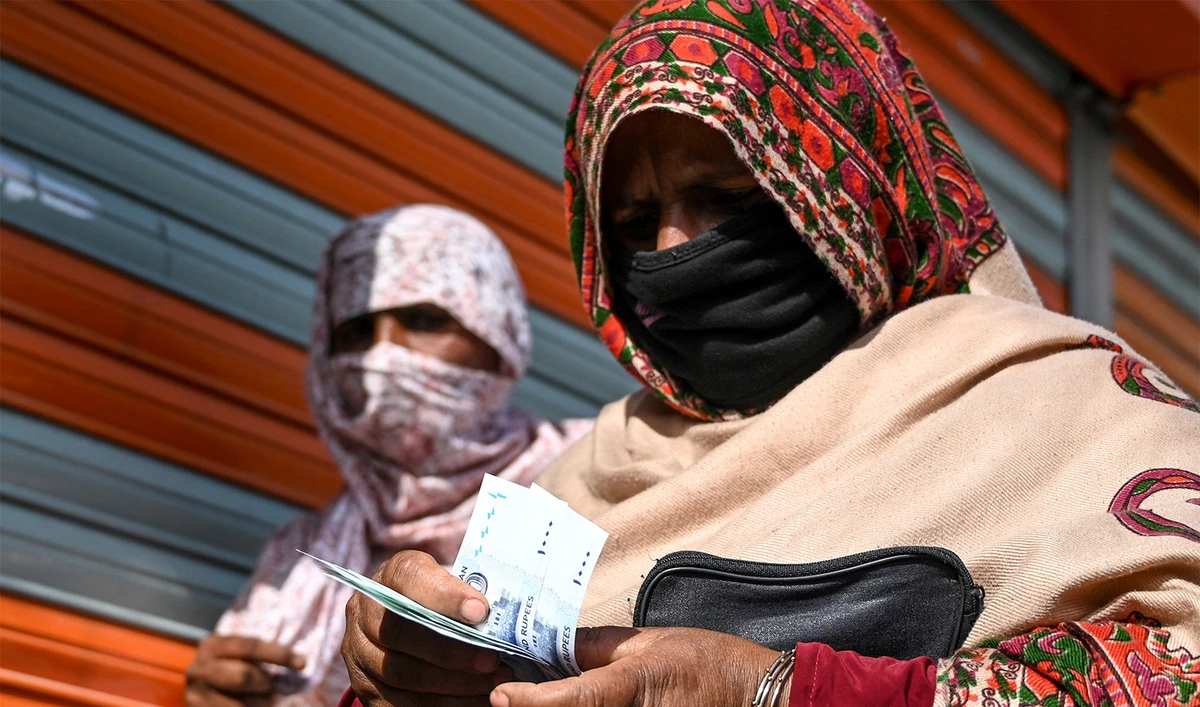
A woman (R) counts rupee notes after collecting cash of financial assistance through a mobile wallet in Islamabad on April 9, 2020. (AFP/File)
Short Url
Updated 19 March 2025
Follow

World Bank approves $102 million for Pakistan’s microfinance sector to bolster climate resilience

  • The initiative aims to provide essential financial services to those in need, especially in rural areas
  • The finance ministry will implement the project that will lead to the establishment of a Climate Risk Fund

ISLAMABAD: The World Bank has approved $102 million for a new project aimed at expanding access to microcredit and strengthening Pakistan’s microfinance sector against climate-related shocks, the global lender said in a statement on Wednesday.

The Resilient and Accessible Microfinance (RAM) Project seeks to support nearly 1.89 million people in the country, including over 1 million women and 350,000 youth, primarily in rural and low-income communities.

By providing funds to microfinance institutions, the project aims to ensure continued financial services for vulnerable populations, especially in times of economic and climate-induced disruptions.

“Microfinance is a critical tool for supporting the livelihoods of vulnerable populations in Pakistan,” the statement quoted World Bank Country Director Najy Benhassine as saying. “This project will help strengthen the resilience of the microfinance sector, particularly in the face of growing climate risks, ensuring that the sector can continue to provide essential financial services to those who need them most, especially in rural areas.”

He said the project was part of the World Bank’s broader commitment to promoting financial inclusion in Pakistan and enhancing resilience to climate change, as outlined in its 10-year Country Partnership Framework.

The RAM Project will focus on expanding access to microcredit, particularly through “recovery loans” for individuals and small businesses seeking financial stability after climate-related disasters.

“The project has been designed based on lessons learned from the devastating floods of 2022 and is a significant step to bolster financial inclusion in Pakistan,” said Namoos Zaheer, Task Team Leader for the project. “It will enhance economic empowerment and resilience of those at the bottom of the economic pyramid, particularly women, small farmers and families in rural areas who are more prone to climate shocks.”

The initiative, to be implemented by Pakistan’s Ministry of Finance through the State Bank of Pakistan, will include the establishment of a Climate Risk Fund, innovative use of agrotechnology solutions, capacity building for microfinance institutions and risk management frameworks to strengthen the sector’s resilience.

Pakistan has been a World Bank member since 1950 and has received more than $48.3 billion in assistance over the years.

The bank’s current portfolio in the country includes 54 projects totaling $15.7 billion.

Pakistan condemns Israeli settler violence in West Bank, storming of Al-Aqsa Mosque

Updated 18 November 2025
Follow

Pakistan condemns Israeli settler violence in West Bank, storming of Al-Aqsa Mosque

  • Attacks on Palestinians by Israeli settlers in West Bank have increased in recent weeks, drawing sharp reactions from Muslim states
  • Pakistan asks international community to take “urgent and effective” steps to protect holy sites, prevent settler violence and incursions

ISLAMABAD: Pakistan’s foreign ministry on Tuesday condemned Israeli forces for their repeated storming of the courtyards of the Al-Aqsa Mosque and “extremist” Israeli settlers for acts of violence against Palestinians in the West Bank, urging the international community to take urgent steps to halt such incidents. 

In recent weeks, attacks by Israeli settlers, notably those living in outposts, have multiplied in the West Bank. These attacks have targeted Palestinians, Israeli and foreign anti-settlement activists and sometimes even Israeli soldiers. Israel has occupied the West Bank since 1967, with more than 500,000 Israelis now living there in settlements.

“Pakistan strongly condemns the continuing violations by the Israeli occupying forces and extremist settlers against the Palestinian people in the occupied West Bank, including repeated storming of the courtyards of Al-Aqsa Mosque, and provocations against worshippers,” the foreign ministry said in a statement.

“Such actions constitute a blatant violation of the international law and the relevant UN resolutions.”

The Al-Aqsa Mosque in Jerusalem is Islam’s third holiest site after the mosques in Makkah and Madinah. It is a revered place of worship for over two billion Muslims worldwide. The mosque also stands at the heart of the Israeli–Palestinian conflict, making it both a spiritual and political symbol for Muslims worldwide.

Israeli forces repeatedly storm the courtyards of the mosque and harass Palestinian worshippers there, drawing angry reactions from Muslim states. 

Pakistan’s foreign office called for ensuring the sanctity of Islam’s holy sites in accordance with international law and the historical status quo. 

“Pakistan calls upon the international community to take urgent and effective measures to ensure protection of the holy sites, prevent further settler violence and incursions, and uphold relevant UN resolutions,” the statement added. 

Pakistan, which does not have diplomatic relations with Israel, has consistently criticized Tel Aviv for its war on Gaza. Israel has killed around 69,000 Palestinians since Oct. 7, 2023 before agreeing to a fragile ceasefire brokered by the US.