

Saudi Arabia now 66% self-sufficient in grape production: MEWA 

1 / 3
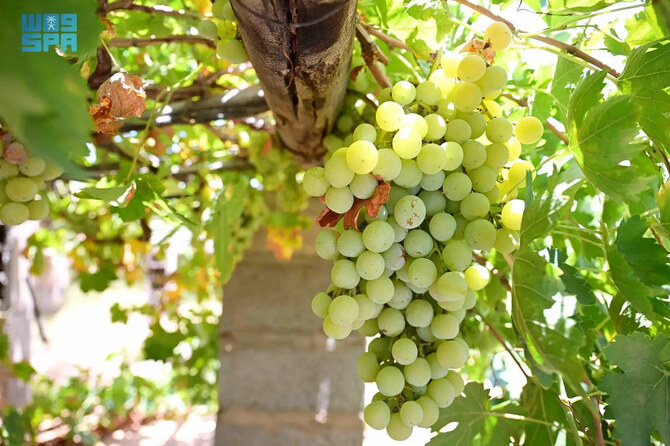
Grape farming is considered profitable because of the ease of cultivation in various soils with minimal water requirements and the plant’s adaptabilty to various climates in the Kingdom. (SPA) 
2 / 3
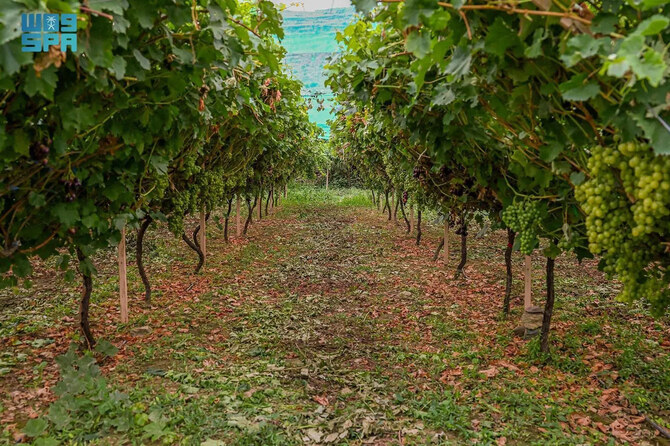
Grape farming is considered profitable because of the ease of cultivation in various soils with minimal water requirements and the plant’s adaptabilty to various climates in the Kingdom. (SPA) 
3 / 3
Grape farming is considered profitable because of the ease of cultivation in various soils with minimal water requirements and the plant’s adaptabilty to various climates in the Kingdom. (SPA) 
Short Url
Updated 17 March 2025
Follow

Saudi Arabia now 66% self-sufficient in grape production: MEWA 

  • National production in 2023 exceeded 122,000 tonnes
  • 7.13 million grapes planted in over 4,720 hectares of land 

RIYADH: Saudi Arabia's grape production surpassed 122,000 tonnes in 2023, reflecting the growth of the local agricultural sector and its ability to meet a big portion of market demands, the Saudi Press Agency (SPA) reported Saturday.

The figure accounts for 66 percent of current market demand in the Kingdom, said the report, citing a statement by the Ministry of Environment, Water and Agriculture, or MEWA.

MEWA said the Kingdom had more than 7.13 million grape plants during that year, with more than 6.1 million bearing fruit. 


Grape farming is considered profitable because of the ease of cultivation in various soils with minimal water requirements and the plant’s adaptabilty to various climates in the Kingdom. (SPA)

In a separate report last year, the ministry listed a grape production area of 4,720 hectares across the Kingdom.

The same report highlighted Tabuk as the top grape-producing region, yielding 46,939 tonnes annually, adding that Qassim, Hail, and Asir also contributed significantly to the national production.

Grape farming is considered profitable because of the ease of cultivation in various soils with minimal water requirements. The plant could easily adapt to the different climates in Saudi Arabia. 

To encourage farmers to plant grapes, the ministry has assured its continuing efforts to support and empower them by providing modern technologies, such as smart irrigation systems and organic farming.

The ministry also aims to encourage increased local fruit consumption, saying that grapes are packed with nutrients, and have health benefits.

The harvest season for grapes is from June to September, the ministry said.


Eritrean president tours Saudi port operations in Jeddah

Updated 7 sec ago
Follow

Eritrean president tours Saudi port operations in Jeddah

  • Afwerki received a presentation on the Red Sea Gateway Terminal, a national company specializing in maritime transport and logistics

JEDDAH: Eritrean President Isaias Afwerki visited Jeddah Islamic Port on Saturday, where he was welcomed by Saudi Ports Authority President Suliman Al-Mazroua.

During the visit, Afwerki received a presentation on the Red Sea Gateway Terminal, a national company specializing in maritime transport and logistics, highlighting its key operations and advanced technological systems.

He toured the company’s facilities and was briefed on the latest technologies and efficiency measures that enhance capacity and competitiveness of Saudi ports, the Saudi Press Agency reported.

The visit reinforces the Kingdom’s commitment to strengthening regional and international cooperation in maritime transport and logistics, supporting its ports as strategic hubs for global trade in line with Vision 2030.

Later on Saturday, the Eritrean president departed Jeddah. He was seen off at King Abdulaziz International Airport by Makkah Deputy Gov. Prince Saud bin Mishaal and other senior officials.

On Wednesday, Crown Prince Mohammed bin Salman met Afwerki in Riyadh. They reviewed bilateral relations, prospects for cooperation across various fields, and other issues of mutual interest.