ISLAMABAD: Pakistan and the International Monetary Fund (IMF) have made “significant progress” on the first review of a $7 billion loan program Islamabad secured last year, the IMF mission chief said on Friday.
The South Asian country, which has faced an economic meltdown in recent years, is treading a long path to economic recovery under the $7 billion IMF program it secured in Sept. last year.
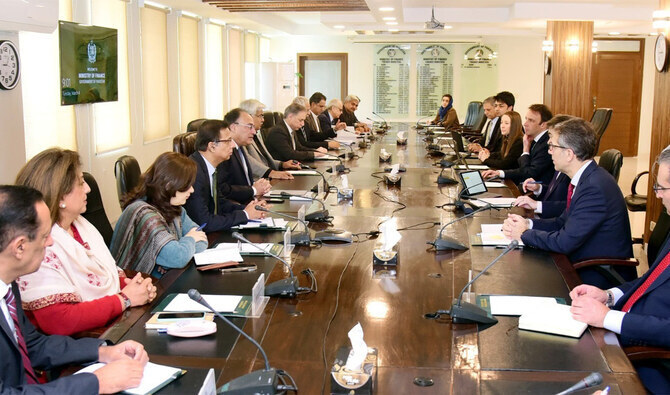
An IMF mission visited Pakistan from Feb. 24 till Mar. 14 to analyze Islamabad’s progress on key conditions as part of the first review of the facility. A successful review will result in the release of around $1 billion as second installment under the program.
In a statement on Friday, IMF Mission Chief Nathan Porter said the two sides made significant progress toward reaching a staff-level agreement on the first review under the 37-month program, and they would continue policy discussions virtually to finalize the review over the coming days.
“Program implementation has been strong, and the discussions have made considerable progress in several areas including the planned fiscal consolidation to durably reduce public debt, maintenance of sufficiently tight monetary policy to maintain low inflation, acceleration of cost-reducing reforms to improve energy sector viability, and implementation of Pakistan’s structural reform agenda to accelerate growth, while strengthening social protection and rebuilding health and education spending,” Porter said.
Pakistan’s Prime Minister Shehbaz Sharif and Finance Minister Muhammad Aurangzeb have previously said they were confident of meeting targets of the IMF program.
The South Asian country was able to build some trust with the IMF by completing a short-term, nine-month program last year. Previous loan programs in Pakistan ended prematurely or saw delays after the governments at the time faltered on meeting key conditions.
Pakistan also seeks to secure an additional $1.5 billion loan from the IMF to deal with climate-related issues under a Resilience and Sustainability Facility (RSF) arrangement.
“Progress has also been made in discussions on the authorities’ climate reform agenda, which aims to reduce vulnerabilities from natural disasters-related risks, and accompanying reforms which could be supported under a possible arrangement under the Resilience and Sustainability Facility (RSF),” Porter said.
“The IMF team is grateful to the Pakistani authorities, private sector, and development partners for fruitful discussions and their hospitality throughout this mission.”


![]()

Pakistan, IMF make ‘significant progress’ on first review of $7 billion program — IMF mission chief
Short Url
https://arab.news/cwub8
Pakistan, IMF make ‘significant progress’ on first review of $7 billion program — IMF mission chief
- The development comes as an IMF mission concluded its weeks-long visit to Pakistan to review Islamabad’s progress on key conditions under the program
- Progress has also been made in discussions on Pakistan’s climate reform agenda, which aims to reduce natural disasters-related vulnerabilities, IMF says

Latest updates


© 2026 SAUDI RESEARCH & PUBLISHING COMPANY, All Rights Reserved And subject to Terms of Use Agreement.