

IEA sees global oil market surplus for 2025 as demand disappoints

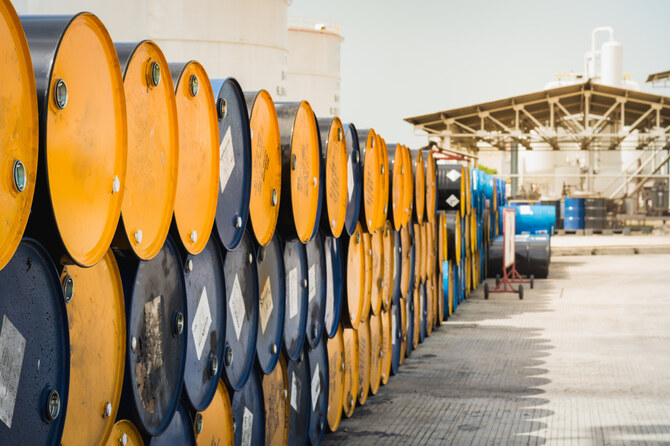
The IEA revised down its 2025 oil demand growth forecast. Shutterstock
Short Url
Updated 13 March 2025
Follow

IEA sees global oil market surplus for 2025 as demand disappoints

LONDON: Global oil supply could exceed demand by around 600,000 barrels per day this year, the International Energy Agency said in a monthly oil market report on Thursday, after a downward revision to its 2025 demand growth forecast.

That surplus could grow by a further 400,000 bpd if OPEC+ extends its unwinding of output cuts, and fails to rein in overproduction against quotas, the Paris-based agency said.

The IEA’s February oil market report had suggested a slightly narrower surplus of around 500,000 bpd, Reuters calculations based on IEA data show.

The IEA revised down its 2025 oil demand growth forecast by 70,000 bpd to around 1 million bpd, with growth driven largely by Asia, specifically China’s petrochemical industry.

Oil ticked lower after the report’s publication. Brent oil futures traded at $70.85 at 12:26 p.m. Saudi time, compared with $71.01 at 12 p.m. Saudi time when the report was published.

The data highlights the task the OPEC+ producer group faces in balancing the oil market this year, as growing global trade tensions could impact demand against a backdrop of robust supply growth.

“The macroeconomic conditions that underpin our oil demand projections deteriorated over the past month as trade tensions escalated between the US and several other countries,” the IEA said, prompting it to revise down its demand growth estimates for the fourth quarter of 2024 and the first quarter of this year.

On the supply side, the IEA sees 2025 global supply growth doubling relative to the 2024 pace of growth, to around 1.5 million bpd, assuming OPEC+ maintains cut levels after its planned April unwinding.

It added that OPEC may actually only add around 40,000 bpd of oil to the market following its April cut unwinding from Saudi Arabia and Algeria, because continued overproduction from other member states leaves no room to open taps further.

“While the actual supply boost from the gradual unwinding of OPEC+ production cuts in April may end up being less than the nominal 138,000 bpd increase, global oil supply is already on the rise,” said the agency.


Emerging markets should depend less on external funding, says Nigeria finance minister

Updated 5 sec ago
Follow

Emerging markets should depend less on external funding, says Nigeria finance minister

RIYADH: Developing economies must rely less on external financing as high global interest rates and geopolitical tensions continue to strain public finances, Nigeria’s finance minister told Al-Eqtisadiah.

Asked how Nigeria is responding to rising global interest rates and conflicts between major powers such as the US and China, Wale Edun said that current conditions require developing countries to rethink traditional financing models.

“I think what it means for countries like Nigeria, other African countries, and even other developing countries is that we have to rely less on others and more on our own resources, on our own devices,” he said on the sidelines of the AlUla Conference for Emerging Market Economies.

He added: “We have to trade more with each other, we have to cooperate and invest in each other.” 

Edun emphasized the importance of mobilizing domestic resources, particularly savings, to support investment and long-term economic development.

According to Edun, rising debt servicing costs are placing an increasing burden on developing economies, limiting their ability to fund growth and social programs.

“In an environment where developing countries as a whole — what we are paying in debt service, what we are paying in terms of interest costs and repayments of our debt — is more than we are receiving in what we call overseas development assistance, and it is more than even investments by wealthy countries in our economies,” he said.

Edun added that countries in the Global South are increasingly recognizing the need for deeper regional integration.

His comments reflect growing concern among developing nations that elevated borrowing costs and global instability are reshaping development finance, accelerating a shift toward domestic resource mobilization and stronger economic ties among emerging markets.