

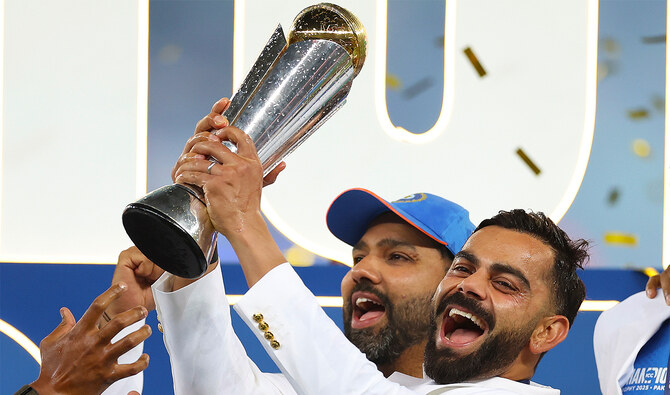

DUBAI: India beat New Zealand by four wickets in the final of the Champions Trophy on Sunday in Dubai.
AFP Sport looks at five storylines from the 50-over tournament.
Virat Kohli silenced the critics over his poor form in Test cricket with an unbeaten 100 against arch-rivals Pakistan.
Kohli took time to get into the groove on a sluggish Dubai pitch to anchor India’s chase of 242 with key stands.
His mastery of the conditions, combined with his ability to rotate the strike, took India to victory with six wickets and 45 balls to spare.
Kohli was also India’s savior in the semifinal against Australia when his 84 steered another successful chase.
Opposition skipper Steve Smith called the 36-year-old “arguably the best chaser the game has seen.”

Indian players celebrate with the trophy on the podium after winning the ICC Men's Champions Trophy against New Zealand at the Dubai International Stadium in Dubai, United Arab Emirates, on March 9, 2025. (REUTERS)
Pakistan hosted a major cricket event for the first time in three decades and excitement there was sky-high, despite India’s refusal to tour and instead play all their matches in Dubai.
But the Pakistan team’s poor showing on the field deflated the spirits of the cricket-crazy nation with successive losses to New Zealand and India.
That signalled the end of Pakistan’s title defense, and to add insult to injury, their dead-rubber final group match against Bangladesh was washed out.

An auto-rickshaw drives past a billboard depicting portraits of the captains of participating cricket teams in ICC Champions Trophy 2025, installed at a roadside, in Lahore, Pakistan, on Feb. 16, 2025. (AP)
One disappointed fan called the tournament a “wedding where you don’t know the bride or groom.”
New Zealand’s Glenn Phillips lit up the tournament with his fielding heroics, notably against India in the group phase for the key wicket of Kohli.
Phillips dived full stretch to his right at backward point and somehow held on to the ball to send Kohli back for 11 off fast bowler Matt Henry.
Kohli stood in disbelief for a few seconds before trudging back to the pavilion as the fans in Dubai fell silent.
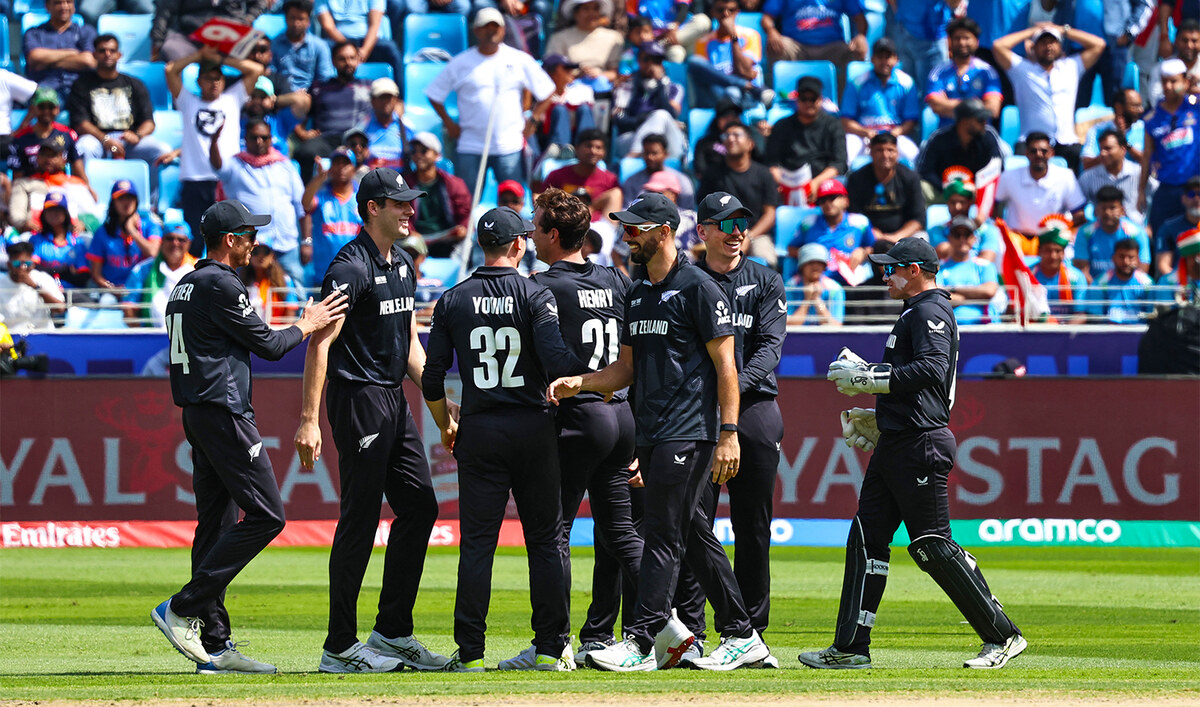
New Zealand's players celebrate after dismissing India's Virat Kohli during the ICC Champions Trophy one-day international (ODI) cricket match between New Zealand and India at the Dubai International Stadium in Dubai on March 2, 2025. (AFP)
Social media was abuzz with reactions to the catch, with one fan on X calling Phillips “the Superman of the tournament.”
Jos Buttler’s England came into the competition off the back of a 3-0 ODI whitewash in India, but piled on a mammoth 351 in their opener against Ashes rivals Australia.
England still managed to lose as Australia chased down the target to leave Buttler’s side on the brink.
Defeat to Afghanistan put England out of the tournament after just two matches.
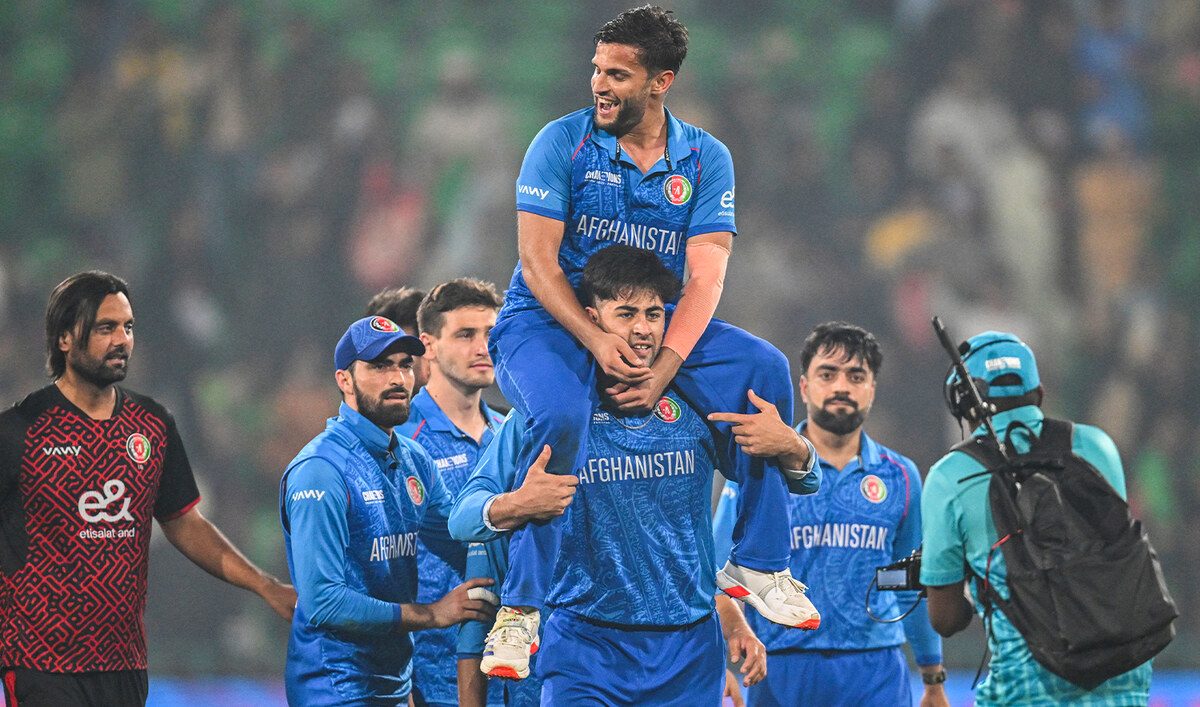
Afghanistan's players celebrate after winning the ICC Champions Trophy one-day international (ODI) cricket match between England and Afghanistan at the Gaddafi Stadium in Lahore on February 26, 2025. (AFP)
Two days later Buttler quit as England’s white-ball captain after three successive flops in ICC events, including their failed T20 and 50-over World Cup title defenses.
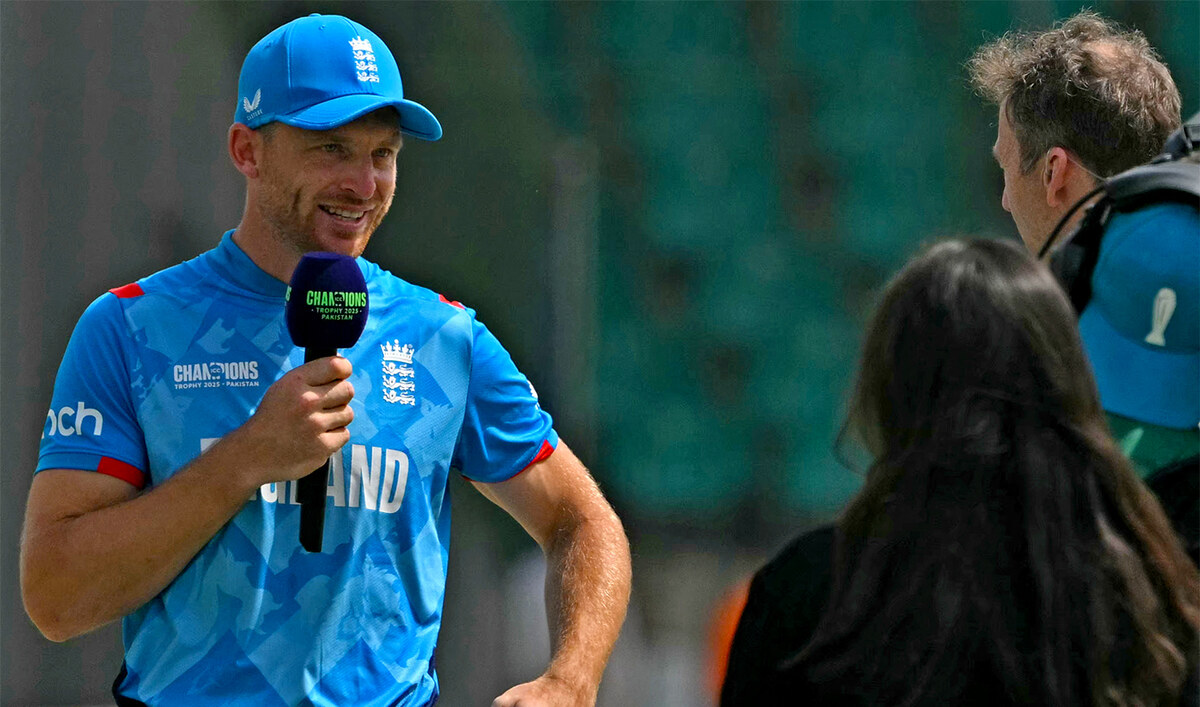
England's captain Jos Buttler (L) talks to the media at the start of the ICC Champions Trophy one-day international (ODI) cricket match between England and South Africa at National Stadium in Karachi on March 1, 2025. (AFP)
Veteran batsman Steve Smith, 35, called time on his ODI career a day after Australia lost in the semifinals to India.
Smith top-scored for Australia with 73, but his knock was in vain after India overhauled Australia’s 264 and the captain’s innings turned out to be his last in the format.
Another retirement seemed highly likely after the final with intense speculation that India skipper Rohit Sharma would end his one-day career if they won.
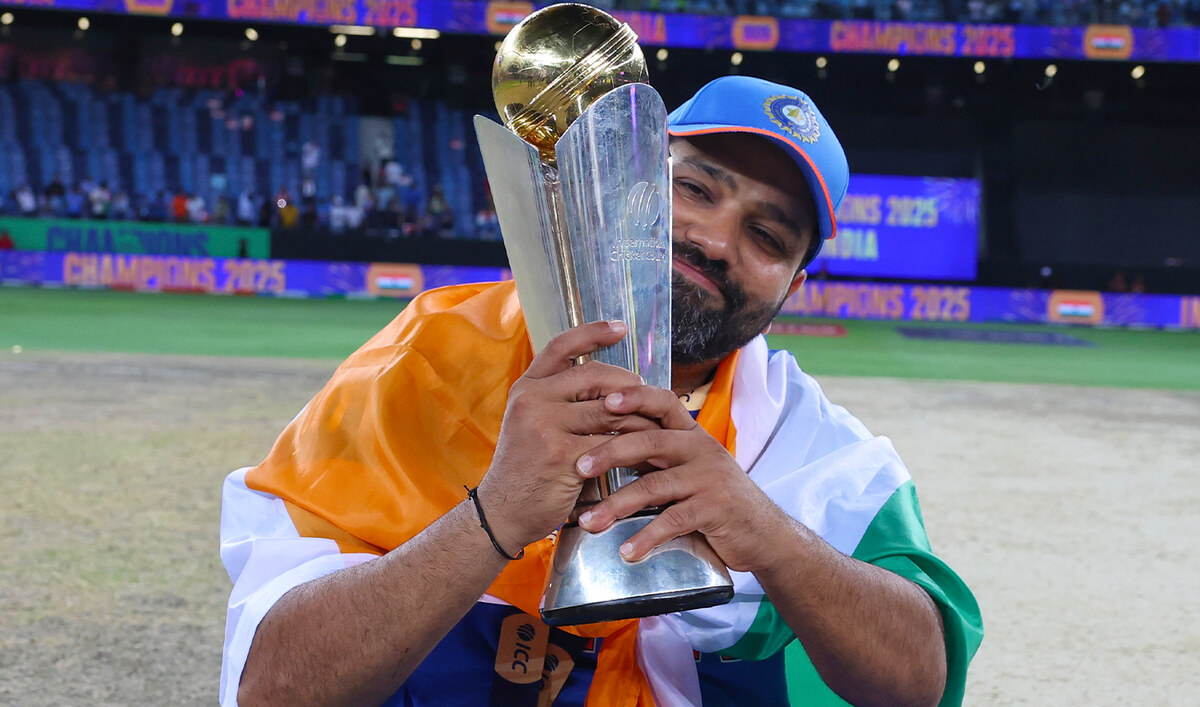
India's captain Rohit Sharma poses with the winners trophy after defeating New Zealand in the final cricket match of the ICC Champions Trophy at Dubai International Cricket Stadium in Dubai, United Arab Emirates, on March 9, 2025. (AP)
Opener Rohit top-scored with 76 in the final and declared afterwards that he was not going anywhere, leaving Indian media stumped and fans relieved.


