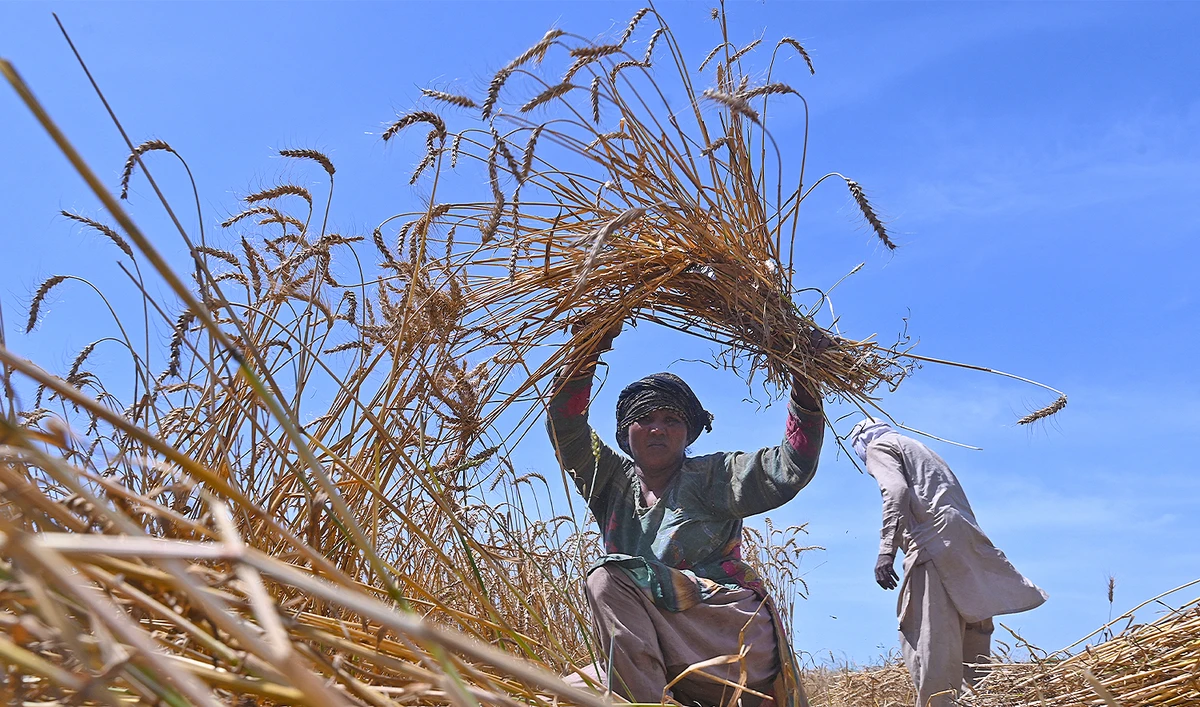
ISLAMABAD: Pakistan’s National Food Security Minister Rana Tanveer Hussain on Sunday asked authorities to ensure timely sale of stored wheat to avoid financial losses to the country and to benefit farmers and consumers, ahead of the arrival of new crop.
Hussain issued the directives while presiding over a meeting to review wheat reserves, management strategies, and the selling process to avoid any future crises.
In Pakistan, wheat crop is planted in mid-December and the harvest usually begins in March, with the majority of the crop harvested between April and early June.
Last year, farmers in Pakistan held several protests over lower wheat prices due to the import of excess amounts of the commodity that flooded local markets.
“There would be zero tolerance for any delays in the wheat sale process as prolonged storage could impact the quality of wheat and lead to financial losses for the national treasury,” Hussain was quoted as saying by the government’s Press Information Department (PID).
Agriculture is the backbone of Pakistan’s economy and constitutes its largest sector. According to the Pakistan Bureau of Statistics (PBS), agriculture contributes about 24 percent of the Gross Domestic Product (GDP) and accounts for half of the employed labor force in the country.
However, the prices of wheat last year dropped significantly in Pakistan and were much below the government’s support price of Rs3,900 ($14) per 40-kilogram bag.
During Sunday’s meeting, Pakistan Agricultural Storage & Services Corporation (PASSCO) officials informed the minister they had strengthened coordination with different agencies and provincial authorities to accelerate the sale of wheat.
“Various measures have been implemented to ensure transparency in the wheat sale process, benefiting both farmers and consumers,” they were quoted as saying.
Hussain instructed PASSCO officials to devise effective policies to address administrative and financial challenges, ensuring smooth operations in the future, according to the PID. He reaffirmed the government’s commitment to agricultural development, food security, and farmers’ welfare.
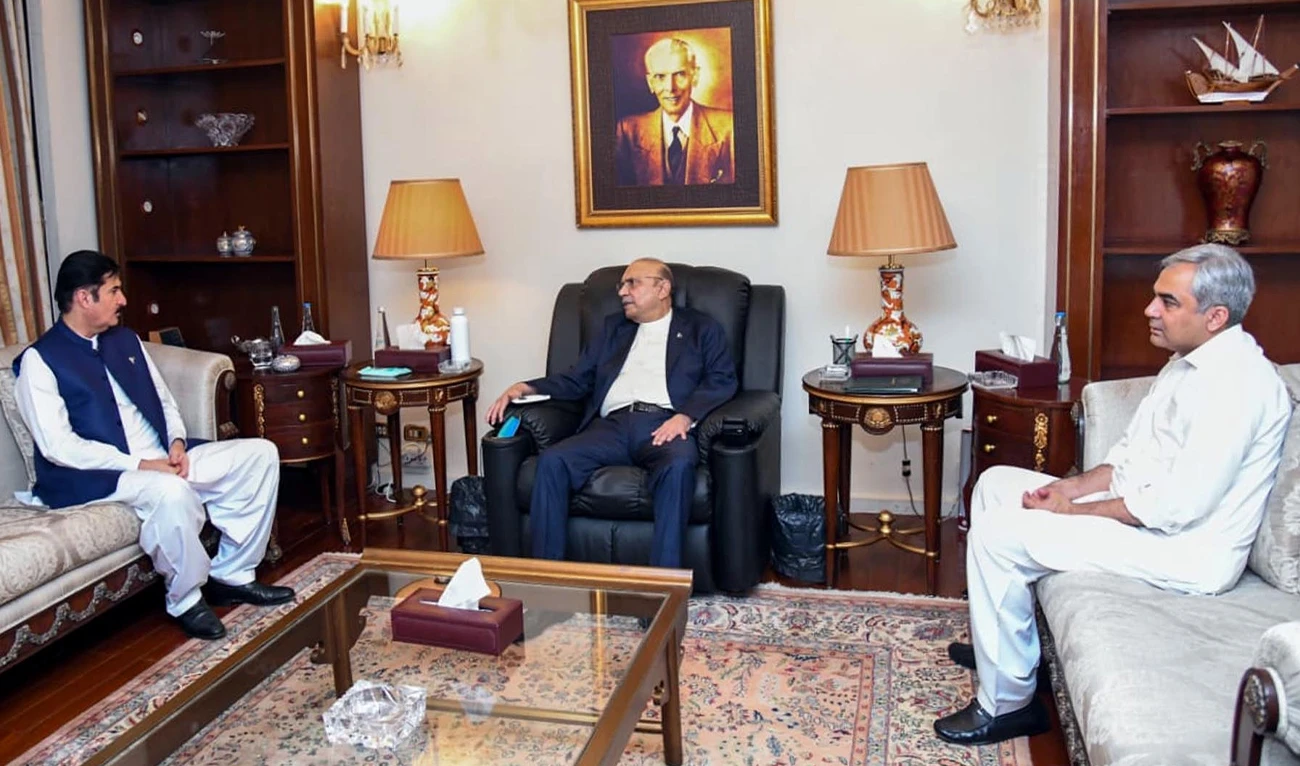
Pakistan minister urges timely sale of stored wheat to avoid financial losses, benefit farmers
https://arab.news/6mw55
Pakistan minister urges timely sale of stored wheat to avoid financial losses, benefit farmers
- In Pakistan, the wheat crop is planted in mid-December and the majority of the crop is harvested between April and early June
- Pakistani farmers last year held several protests over lower wheat prices due to the import of excess wheat that flooded markets
Pakistan terms climate change, demographic pressures as ‘pressing existential risks’
- Pakistan has suffered frequent climate change-induced disasters, including floods this year that killed over 1,000
- Pakistan finmin highlights stabilization measures at Doha Forum, discusses economic cooperation with Qatar
ISLAMABAD: Pakistan’s Finance Minister Muhammad Aurangzeb on Saturday described climate change and demographic pressures as “pressing existential risks” facing the country, calling for urgent climate financing.
The finance minister was speaking as a member of a high-level panel at the 23rd edition of the Doha Forum, which is being held from Dec. 6–7 in the Qatari capital. Aurangzeb was invited as a speaker on the discussion titled: ‘Global Trade Tensions: Economic Impact and Policy Responses in MENA.’
“He reaffirmed that while Pakistan remained vigilant in the face of geopolitical uncertainty, the more pressing existential risks were climate change and demographic pressures,” the Finance Division said.
Pakistan has suffered repeated climate disasters in recent years, most notably the 2022 super-floods that submerged one-third of the country, displaced millions and caused an estimated $30 billion in losses.
This year’s floods killed over 1,000 people and caused at least $2.9 billion in damages to agriculture and infrastructure. Scientists say Pakistan remains among the world’s most climate-vulnerable nations despite contributing less than 1 percent of global greenhouse-gas emissions.
Aurangzeb has previously said climate change and Pakistan’s fast-rising population are the only two factors that can hinder the South Asian country’s efforts to become a $3 trillion economy in the future.
The finance minister noted that this year’s floods in Pakistan had shaved at least 0.5 percent off GDP growth, calling for urgent climate financing and investment in resilient infrastructure.
When asked about Pakistan’s fiscal resilience and capability to absorb external shocks, Aurangzeb said Islamabad had rebuilt fiscal buffers. He pointed out that both the primary fiscal balance and current account had returned to surplus, supported significantly by strong remittance inflows of $18–20 billion annually from the Middle East and North Africa (MENA) and Gulf Cooperation Council (GCC) regions.
Separately, Aurangzeb met his Qatari counterpart Ali Bin Ahmed Al Kuwari to discuss bilateral cooperation.
“Both sides reaffirmed their commitment to strengthening economic ties, particularly by maximizing opportunities created through the newly concluded GCC–Pakistan Free Trade Agreement, expanding trade flows, and deepening energy cooperation, including long-term LNG collaboration,” the finance ministry said.
The two also discussed collaboration on digital infrastructure, skills development and regulatory reform. They agreed to establish structured mechanisms to continue joint work in trade diversification, technology, climate resilience, and investment facilitation, the finance ministry said.