

Fitch affirms Kuwait’s rating at AA-, outlook stable

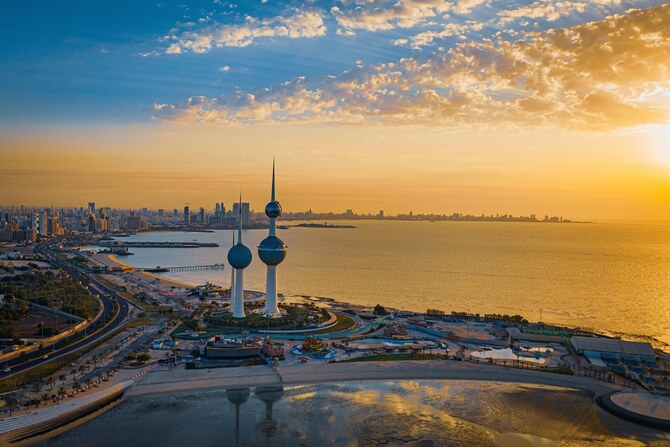
Kuwait’s overall revenue is expected to decline in the financial year 2025 due to oil revenue loss from lower crude prices. Shutterstock
Short Url
Updated 09 March 2025
Follow

Fitch affirms Kuwait’s rating at AA-, outlook stable

  • Assets projected to rise to 601% of GDP this year from an estimated 582% in 2024
  • Government planning to introduce long-delayed excise tax in fiscal year ending March 2026

RIYADH: Fitch Ratings has reaffirmed Kuwait’s Long-Term Foreign-Currency Issuer Default Rating at AA-, with a stable outlook due to the country’s strong fiscal position and external financial consistency. 

The US-based agency said Kuwait’s external balance sheet remains the strongest of all Fitch-rated sovereigns, with the nation’s net foreign assets projected to rise to 601 percent of the gross domestic product this year from an estimated 582 percent in 2024. 

According to Fitch, an AA- ranking indicates expectations of very low credit risk and a strong capacity for payment of financial commitments. 

Kuwait’s strong rating aligns with the broader trend in the Middle East region, where countries steadily diversify their economies by reducing their dependence on crude revenues. 

In February, Fitch Ratings affirmed Saudi Arabia’s IDR at A+ with a stable outlook, while the UAE was rated AA-. 

The Kingdom’s A+ ranking indicates Saudi Arabia’s strong capacity to pay financial commitments while signifying low default risk. 

“The recently-appointed government has initiated reforms aimed at reducing reliance on oil revenue, improving government efficiency, and rationalizing spending, capping it at 24.5 billion dinars ($79.53 billion), accounting for about 51 percent of GDP,” said Fitch Ratings. 

The report further said that the Kuwaiti government’s introduction of a 15 percent domestic minimum top-up tax on multinational companies came into effect on Jan. 1. It is expected to generate about 0.5 percent of GDP, amounting to 250 million dinars annually, with collections expected to commence by 2027. 

The government is also planning to introduce the long-delayed excise tax in the fiscal year ending March 2026. 

“Fitch views the pick-up in reform efforts as positive. However, a significant overhaul of generous public wages and welfare spending (79 percent of total expenditure; 40 percent of GDP) is unlikely in the short term, given the state’s deep-rooted generosity toward Kuwaiti citizens and still favorable oil prices,” the analysis added. 

The Kuwaiti government is also planning to pass a liquidity/debt law, which will enable the country to raise new debt. 

The agency said even without a liquidity law, the government would still be able to meet its financing obligations in the coming years, given the substantial assets at its disposal.

Kuwait’s overall revenue is expected to decline in the financial year 2025 due to oil revenue loss from lower crude prices as OPEC+ continues production cuts to maintain market stability, according to Fitch.

The country’s non-oil revenues are expected to grow modestly in the financial year but fall short of the government’s target of 2.9 billion dinars. 

The study further said that the Kuwait government’s debt to GDP rose to 6 percent in FY25 and 9.2 percent in FY26, despite a $4.5 billion Eurobond maturing in March 2027. 

The report also outlined some constraints that affected Kuwait’s rating, including the country’s weaker governance than peers, heavy dependence on oil, and its generous welfare system and large public sector, which could result in long-term fiscal pressure. 

“Prospects remain unclear for meaningful fiscal adjustment to address long-term challenges and legislation to allow debt issuance and improve fiscal financing flexibility, although there are emerging signs of progress,” said Fitch. 


Saudi investment pipeline active as reforms advance, says Pakistan minister

Updated 09 February 2026
Follow

Saudi investment pipeline active as reforms advance, says Pakistan minister

ALULA: Pakistan’s Finance Minister Mohammed Aurangzeb described Saudi Arabia as a “longstanding partner” and emphasized the importance of sustainable, mutually beneficial cooperation, particularly in key economic sectors.

Speaking to Arab News on the sidelines of the AlUla Conference for Emerging Market Economies, Aurangzeb said the relationship between Pakistan and Saudi Arabia remains resilient despite global geopolitical tensions.

“The Kingdom has been a longstanding partner of Pakistan for the longest time, and we are very grateful for how we have been supported through thick and thin, through rough patches and, even now that we have achieved macroeconomic stability, I think we are now well positioned for growth.”

Aurangzeb said the partnership has facilitated investment across several sectors, including minerals and mining, information technology, agriculture, and tourism. He cited an active pipeline of Saudi investments, including Wafi’s entry into Pakistan’s downstream oil and gas sector.

“The Kingdom has been very public about their appetite for the country, and the sectors are minerals and mining, IT, agriculture, tourism; and there are already investments which have come in. For example, Wafi came in (in terms of downstream oil and gas stations). There’s a very active pipeline.”

He said private sector activity is driving growth in these areas, while government-to-government cooperation is focused mainly on infrastructure development.

Acknowledging longstanding investor concerns related to bureaucracy and delays, Aurangzeb said Pakistan has made progress over the past two years through structural reforms and fiscal discipline, alongside efforts to improve the business environment.

“The last two years we have worked very hard in terms of structural reforms, in terms of what I call getting the basic hygiene right, in terms of the fiscal situation, the current economic situation (…) in terms of all those areas of getting the basic hygiene in a good place.”

Aurangzeb highlighted mining and refining as key areas of engagement, including discussions around the Reko Diq project, while stressing that talks with Saudi investors extend beyond individual ventures.

“From my perspective, it’s not just about one mine, the discussions will continue with the Saudi investors on a number of these areas.”

He also pointed to growing cooperation in the IT sector, particularly in artificial intelligence, noting that several Pakistani tech firms are already in discussions with Saudi counterparts or have established offices in the Kingdom.

Referring to recent talks with Saudi Minister of Economy and Planning Faisal Alibrahim, Aurangzeb said Pakistan’s large freelance workforce presents opportunities for deeper collaboration, provided skills development keeps pace with demand.

“I was just with (Saudi) minister of economy and planning, and he was specifically referring to the Pakistani tech talent, and he is absolutely right. We have the third-largest freelancer population in the world, and what we need to do is to ensure that we upscale, rescale, upgrade them.”

Aurangzeb also cited opportunities to benefit from Saudi Arabia’s experience in the energy sector and noted continued cooperation in defense production.

Looking ahead, he said Pakistan aims to recalibrate its relationship with Saudi Arabia toward trade and investment rather than reliance on aid.

“Our prime minister has been very clear that we want to move this entire discussion as we go forward from aid and support to trade and investment.”