



DUBAI: For the first time since its creation in 1982, Lebanon’s Iran-backed Hezbollah militia has seen its political and military clout diminished after a devastating war with Israel gutted its leadership, emptied its coffers, and depleted its once formidable arsenal.
Despite the grand funeral of its slain leader, Hassan Nasrallah, attended by thousands of mourners at Beirut’s Camille Chamoun Stadium on Feb. 23 to project an image of resilience and strength, the group’s influence over Lebanon and the wider region is undoubtedly on the wane.
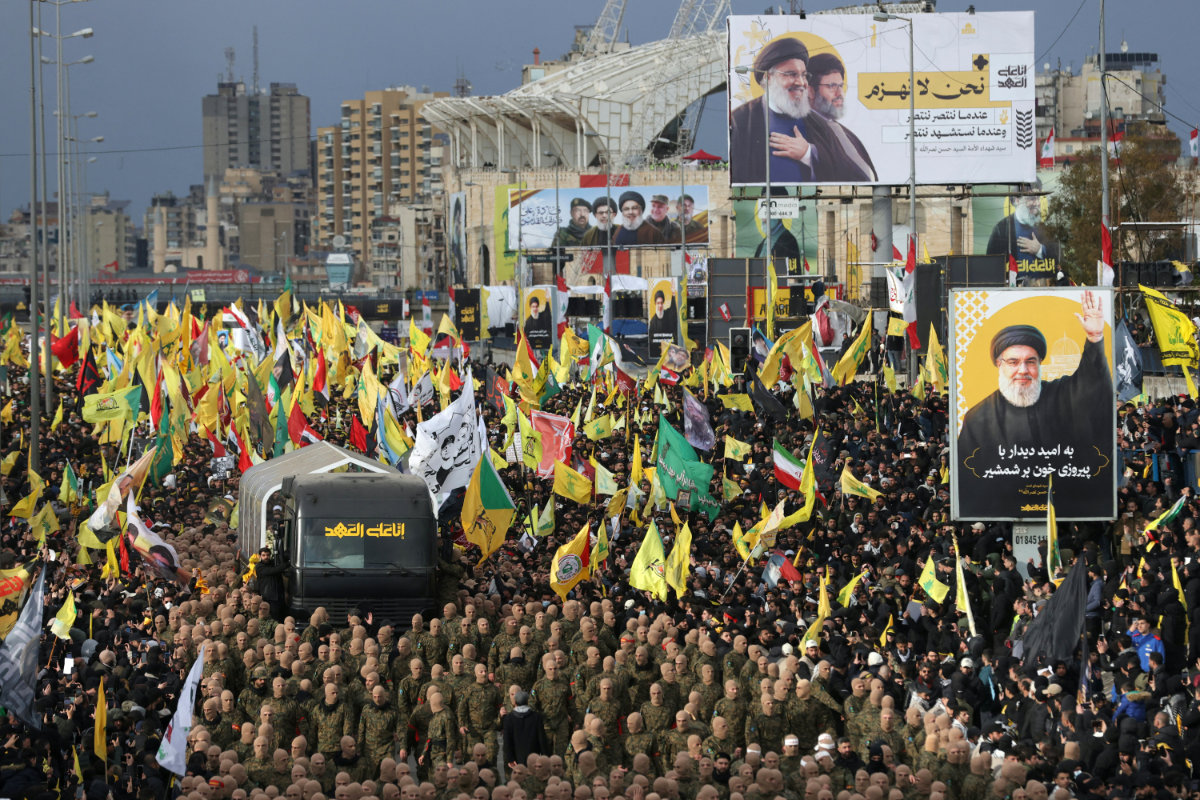
Mourners walk during the funeral procession with the vehicle carrying the coffins of Hezbollah's slain leaders Hassan Nasrallah and Hashem Safieddine from the Camille Chamoun Sports City Stadium towards the burial place on the outskirts of Beirut on February 23, 2025. (AFP/File)
“The Lebanese are certainly ready for a new period in the country where the state has a monopoly over weapons,” Michael Young, a senior editor at the Beirut-based Malcolm H. Kerr Carnegie Middle East Center, told Arab News.
“As for Hezbollah, it is not going to disappear, on the contrary, it is still around. The big question is whether it can transform itself or not.”
The fall of the Bashar Assad regime in neighboring Syria — once a critical supply line for weapons from Iran — has compounded Hezbollah’s woes, leaving it isolated, unable to rearm, and increasingly powerless to dictate Lebanese affairs.
Hezbollah is reportedly facing a financial crisis, leaving it scrambling to provide monetary support to the families of its injured members and to finance reconstruction work in its southern and eastern strongholds devastated by Israeli bombardment.

People sit outside a cafe along Beirut's Hamra street on June 20, 2024. (AFP/File)
“Some Hezbollah supporters have embraced the change while others are still screaming,” a waiter at one of the cafes along Beirut’s Hamra Street who did not wanted to be identified told Arab News.
“If we have to drag them into this new era kicking and screaming, then we will. It has been about them for so many decades. They left the country broken and darkened. It’s time to move on.”
Many Lebanese have warmly welcomed the end of Iranian hegemony and the crippling of its biggest proxy in the Middle East. The election of former army chief Joseph Aoun as president and ICJ judge Nawaf Salam as prime minister in January is emblematic of this shift.
Backed by the US, France, and Saudi Arabia, Aoun’s election by Lebanese lawmakers is the clearest indication yet that Iran’s influence in Lebanon is spent, opening the way to reforms and international support to help pull the nation out of the mire.
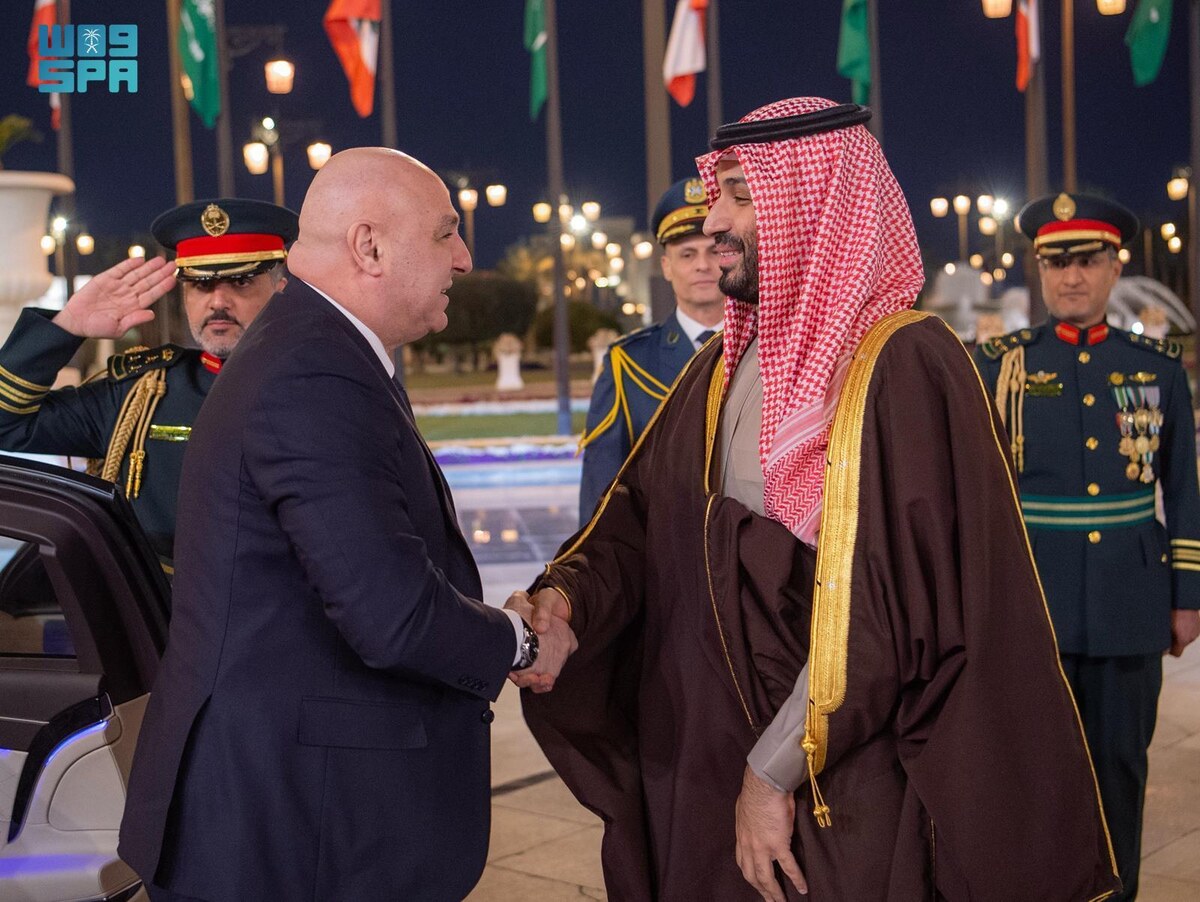
Saudi Crown Prince Mohammed bin Salman receives Lebanon's President Joseph Aoun (L) at Al-Yamamah Palace in Riyadh on March 3, 2025. (SPA)
Aoun’s recent visit to Saudi Arabia — the first by a Lebanese leader in eight years — has been regarded as a positive step in resetting ties between the two countries.
During the visit, Prime Minister and Crown Prince Mohammed bin Salman promised to reactivate a $3 billion funding package for the Lebanese army, and a released joint statement declared both sides are looking into ways to allow Saudi citizens to visit Lebanon again.
Both countries are also looking into the resumption of Lebanese imports into the Kingdom, which had been halted due to the smuggling of millions of amphetamine and Captagon pills into the Arab Gulf states via Lebanon, often hidden in regular cargo.
Opinion
This section contains relevant reference points, placed in (Opinion field)
To be sure, not everyone in Lebanon is pleased with the dramatic political shift taking place. Hezbollah supporters have been left reeling since the loss of their charismatic leader and the forced acceptance of the US-brokered ceasefire with Israel, which has been interpreted as a major blow to the “Axis of Resistance” of Iran-backed proxies throughout the region.
“The Shiite community in Lebanon had their golden days under Nasrallah, and now it’s a new phase where they’re mourning the golden days,” Hanin Ghaddar, a senior fellow at the Washington Institute, said in an interview with an Israeli TV channel.
Ghaddar, who is originally from southern Lebanon, said that Hezbollah called for a mass demonstration in downtown Beirut on March 8, 2005, to “ascertain that they’re taking over, inheriting the Syrian army and taking over the Lebanese institutions.”

Hezbollah supporters wave the yellow flag of the Lebanese militant group as they parade on motorbikes past buildings destroyed in recent Israeli strikes on November 27, 2024, after a ceasefire between Israel and Hezbollah took effect. (AFP)
The war between Israel and the Lebanese militia began on Oct. 8, 2023, when fighters in south Lebanon began firing rockets into northern Israel in solidarity with the Palestinian militant group Hamas, which a day earlier had attacked southern Israel, triggering the war in Gaza.
What began as a tit-for-tat exchange of fire along the Israel-Lebanon border suddenly escalated in September 2024 when Israel intensified its aerial bombardment of Hezbollah positions, attacked its communications networks, and mounted a ground offensive.
IN NUMBERS
• Real GDP (PPP): $65.8 billion
• Total population: 5.36 million
• Public debt: 146.8% of GDP
• Total refugees: 1.27 million+
Source: The World Factbook (CIA)
On Sept. 17-18, thousands of pagers and hundreds of walkie-talkies in the possession of Hezbollah members suddenly exploded in synchronized waves after being sabotaged by Israel. The attack killed 42 and injured 3,500, crippling the militia’s communications.
According to one of Nasrallah’s sons, Jawad, his father was left spiritually broken by the pager and walkie-talkie attack and the death of Fuad Shukr, a senior commander and long-time Hezbollah member, in an Israeli strike.
In an interview with Lebanese television network Al-Manar, Jawad described his father as “spiritless and sad” after these blows.
“You could see that he was hurt,” he said. “There were times I could not bear to hear his voice when he was in that state. You listen to him trying to seek encouragement, but once you hear his voice, it hurts your heart. Later, I learned that he was crying.”

A flag bearing a portrait of slain Hezbollah leader Hassan Nasrallah is displayed during the funeral on February 28, 2025 of 95 Hezbollah fighters and civilians killed in Israeli airstrikes during hostilities that lasted more than a year between Israel and Hezbollah, in the southern Lebanese border town of Aitaroun. (AFP)
On Sept. 27, 2024, Nasrallah was killed in an Israeli airstrike on an underground Hezbollah headquarters in Beirut’s Dahiyeh suburb. The attack, carried out by Israeli F-15I fighter jets, involved more than 80 bombs, destroying the bunker and nearby buildings.
The Israel military confirmed Nasrallah’s death on Sept. 28, and his body was recovered the following day. The strike resulted in at least 33 deaths and nearly 200 injuries, including civilians.
As the conflict threatened to drag the US and Iran into direct confrontation, with the Islamic Revolutionary Guard Corps and Israel trading missile strikes, the international community acted to secure a ceasefire in November 2024, which has by and large held.
Hezbollah’s battering by Israel has left it politically enfeebled, allowing independent lawmakers and parties not affiliated with the militia to establish a new government after more than two years of political deadlock.

“Up to now there are no signs that the party is going through a reassessment of its previous strategy, although some say within the party such discussions are taking place,” Carnegie Middle East Center’s Young told Arab News.
“Given the hardening of the Iranian position recently, with Supreme Leader of Iran Ayatollah Ali Khamenei saying there can be no negotiations with America, I am not sure that is correct.”
Lebanon remains in the midst of a devastating economic crisis, with the local currency having lost more than 90 percent of its value since 2019 and up to 80 percent of the population living in poverty — at least 40 percent of them in extreme poverty.
Unemployment rates have skyrocketed and banks continue to impose strict controls on withdrawals and transfers. Meanwhile, the World Bank estimates it will cost $8.5 billion to repair the damage of the Israel-Hezbollah conflict.
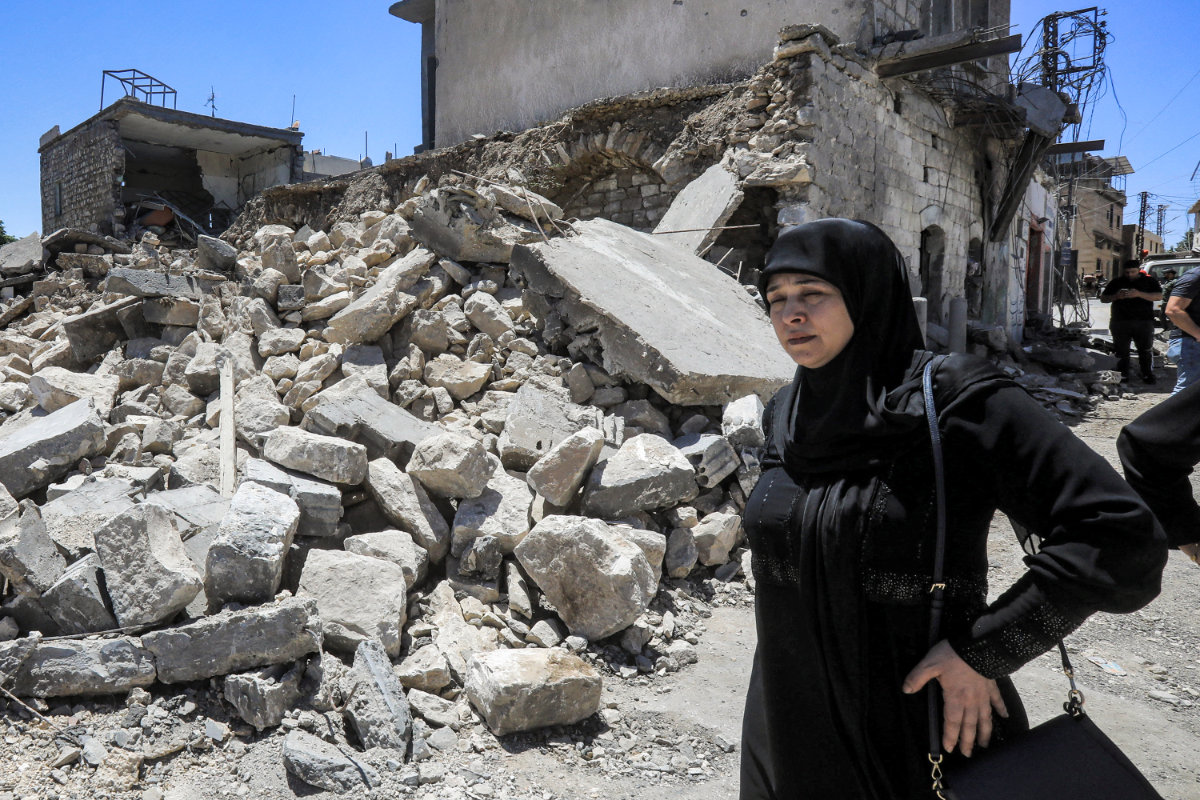
A woman walks past the rubble of a building that was destroyed by previous Israeli bombardment in the village of Yaroun in south Lebanon near the border with Israel on June 21, 2024. (AFP file)
For the thousands of Lebanese who were forced to flee their homes in the south under Israel’s bombardment, the mere suggestion that Hezbollah was somehow victorious in the conflict, as some hardline supporters like to claim, is utterly delusional.
“If my parents return to their village, when should we expect them to be expelled again?” Ali, a university student who now lives with his parents in a cramped Beirut apartment and did not want to give his full name, told Arab News.
“How many more times? We are caught in the crossfire, doomed to be a football between Hezbollah and Israel.
“We are tired of being kicked around. It is shameful. Then you get a deluded supporter who tells you we’ve won. What did we win?”
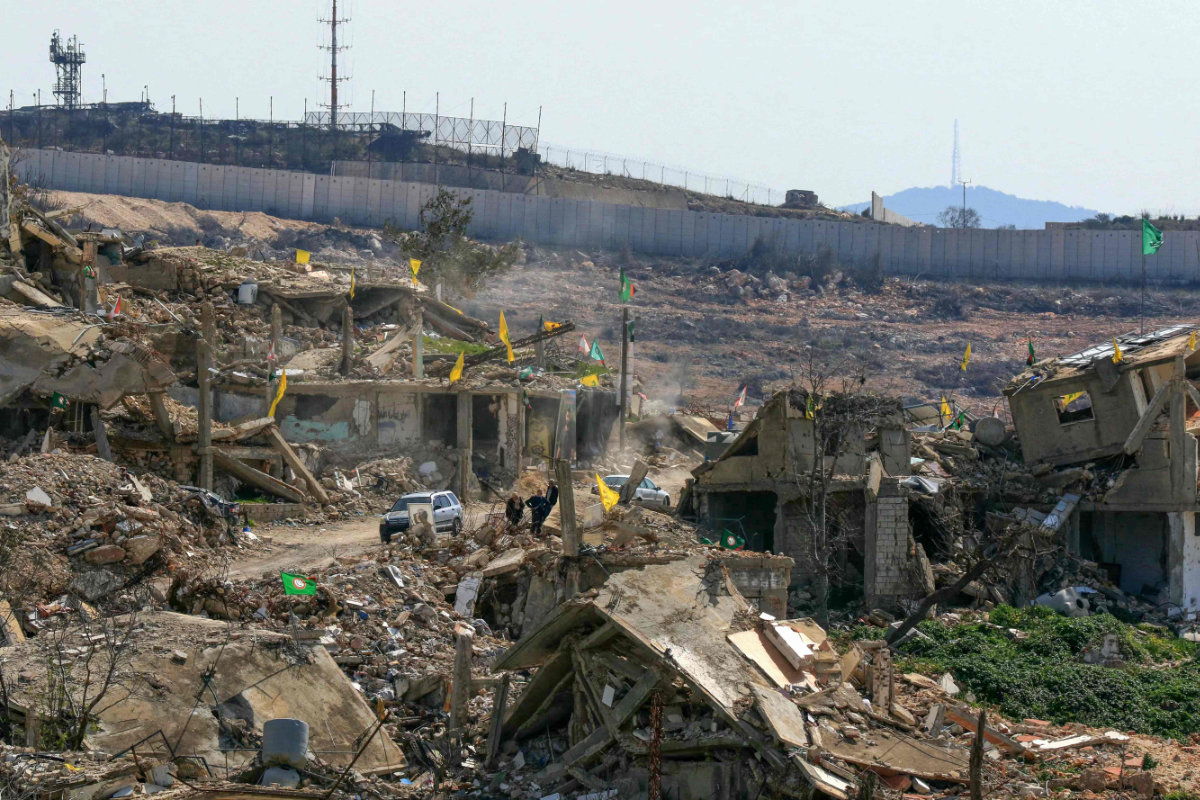
A vehicle drives past buildings destroyed in Israeli strikes during the latest war, near the border wall in the southern Lebanese village of Ramia. (AFP)
The international community and Arab donors have so far refused to release any aid funds until UN Security Council Resolution 1701 is fully implemented, which calls for the disarmament and disbanding of all armed groups in the country except for the Lebanese army.
After several years of political gridlock and a power vacuum once filled by Hezbollah and the Amal bloc led by Nabih Berri, Lebanon is now in a unique position to stabilize and integrate itself once again into the Arab fold.
President Aoun’s remarks during the Arab League summit in Cairo on March 4 reflect his apparent determination to set Lebanon on this new course, with some describing his speech as “resistance through diplomacy.”
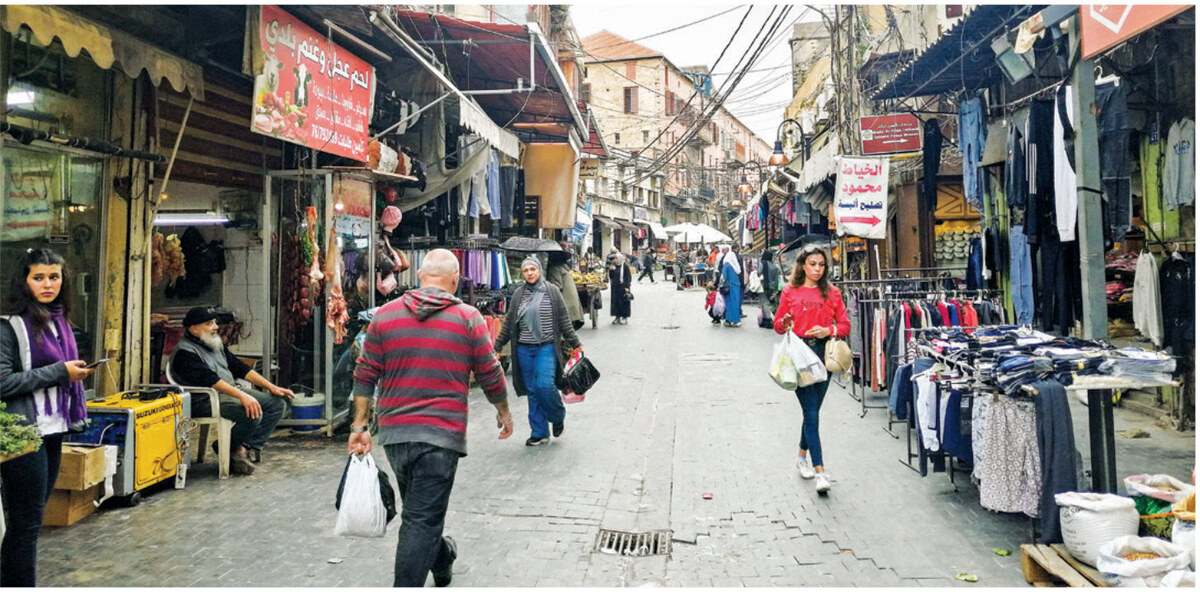
'with the Hezbollah sidelined, hopes are high that Lebanon would stabilize and integrate itself once again into the Arab fold. (Universal Images Group via Getty Images)
The Washington Institute’s Ghaddar believes that while the current phase may not be “the end of Hezbollah for the (Lebanese Shiite) community,” the lack of money, jobs, services, and reconstruction has led people to seek alternatives.
“It’s very clear that Hezbollah is no longer an option for them,” she said in the interview with the Israeli TV channel.
Today, “Hezbollah is a new entity, which cannot provide, cannot protect, obviously cannot preserve, and cannot rebuild.”


