
Islamabad: Pakistan and seven other Muslim nations on Tuesday condemned Israel’s recent move to approve land registration in the West Bank, saying the action aims to accelerate illegal settlement activity in Palestinian territory and undermines the two-state solution in the Middle East.
Members of the Israeli cabinet on Sunday voted in favor of beginning a land registration process in the West Bank for the first time since 1967. The move is being seen by many, including the Palestinian Authority (PA), as measures to tighten Israel’s control over the West Bank area by making it easier for Jewish settlers to buy land and ultimately annex the area. The Israeli media has reported that the process will take place only in Area C, which constitutes some 60 percent of the West Bank and is under Israeli security and administrative control.
“The foreign ministers of the Kingdom of Saudi Arabia, the Hashemite Kingdom of Jordan, the United Arab Emirates, the State of Qatar, the Republic of Indonesia, the Islamic Republic of Pakistan, the Arab Republic of Egypt, and the Republic of Türkiye strongly condemn the decision issued by Israel to designate lands in the occupied West Bank as so called ‘state land’ and approve procedures for the registration and settlement of land ownership across extensive areas of the occupied West Bank for the first time since 1967,” the joint statement issued by Pakistan’s foreign ministry said.
The statement said the move constitutes an escalation aimed at accelerating illegal settlement activity, land confiscation and applying unlawful Israeli sovereignty over Palestinian territory. It further said the Israeli decision undermines legitimate rights of the people of Palestine.
“This step reflects an attempt to impose a new legal and administrative reality designed to consolidate control over the occupied land, thereby undermining the two-state solution, eroding the prospects for the establishment of an independent and viable Palestinian State, and jeopardizing the attainment of a just and comprehensive peace in the region,” the statement said.
The joint statement said Israel’s actions violate international law, particularly the Fourth Geneva Convention and the United Nations Security Council resolutions. It added that such policies by Israel constitute a “dangerous escalation” that will further increase tensions and cause more instability in Palestine and the Middle East.
The foreign ministers called on the international community to take “clear and decisive” steps to halt Israel’s violations, ensure respect for international law and safeguard the inalienable rights of the Palestinian people.
The ruling Israeli coalition includes many pro-settler members who want Israel to annex the West Bank, land captured in the 1967 Middle East war to which Israel cites biblical and historical ties.
The West Bank is among the territories that Palestinians seek for a future independent state. Much of it is under Israeli military control, with limited Palestinian self-rule in some areas run by the PA.
The land registration approval comes after Israel’s security cabinet approved a series of measures backed by far-right ministers earlier this month. These measures were aimed at tightening control over areas of the West Bank administered by the PA under the Oslo accords in place since the 1990s.
Those measures, which also sparked international backlash, include allowing Jewish Israelis to buy West Bank land directly and allowing Israeli authorities to administer certain religious sites in areas under the PA’s control.
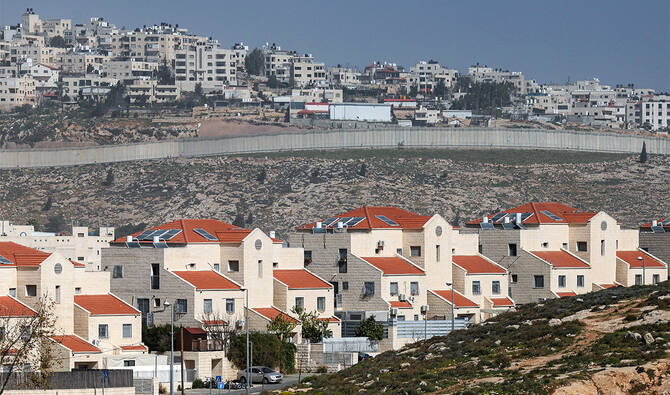
Excluding Israeli-annexed east Jerusalem, more than 500,000 Israelis live in West Bank settlements and outposts, which are illegal under international law. Around three million Palestinians live in the territory.