- Yemen’s pro-Iran Houthi rebels this month said they would blockade Bab El-Mandeb strait
- Separately, Pakistan’s energy ministry notifies increase in price of diesel to $1.39 per liter
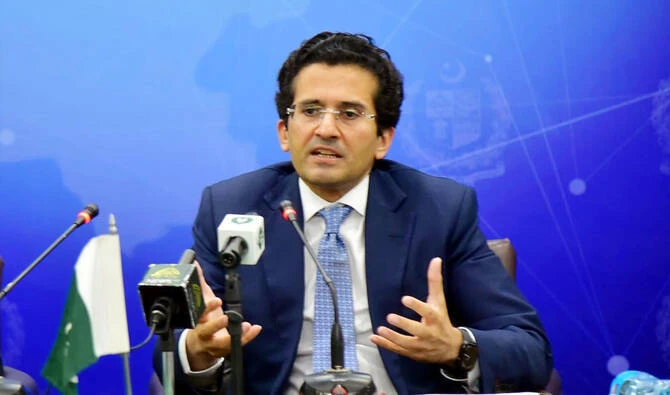
ISLAMABAD: Pakistan expects domestic fuel prices to ease as its ships have exited the Bab El-Mandeb strait, Petroleum Minister Ali Pervaiz Malik said on Monday, citing hopes that easing US-Iran tensions will further lower pressure on global oil markets.
Known as the “Gate of Tears” in Arabic, the Bab El-Mandeb strait sits at the southern tip of the Red Sea, connecting it with the Gulf of Aden in the Indian Ocean. About 100 kilometres (62 miles) long and 30 kilometers (18 miles) wide at its narrowest, it separates Yemen on the Arabian Peninsula from Djibouti and Eritrea on the Horn of Africa.
Yemen’s pro-Iranian Houthi rebels this month claimed attacks in the Red Sea on multiple Saudi oil tankers and said they would blockade the Bab El-Mandeb strait, a crucial passage into the Red Sea, as part of a maritime blockade of Saudi Arabia.
Iran’s closure of the Strait of Hormuz during the conflict with the United States ramped up Bab El-Mandeb’s importance once again. Saudi exports via the Red Sea port of Yanbu approximately tripled to a record high of around four million barrels a day in the spring, according to analysts, before falling back slightly.
“The ships that had been stranded near the Bab El-Mandeb have safely passed through today. In the international market, crude oil, diesel and petrol prices are also moving downward again,” Pakistan Petroleum Minister Malik told reporters on Monday, without elaborating on the number of ships.
“At the same time, since a transparent pricing formula is now in place, you will see that the upward trend in prices witnessed over the past few days is expected to start reversing.”
Pakistan shifted from weekly to daily revisions of petroleum prices in response to renewed hostilities between the US and Iran this month, which drove volatility in global oil markets. The attacks have been paused by both sides for the last three days.
The South Asian country imports most of its petroleum requirements from the Middle East and adjusts domestic fuel prices in line with international oil prices and the rupee-dollar exchange rate.
On Monday, the country’s energy ministry notified an increase in the price of high-speed diesel by Rs3.37 to Rs386.83 ($1.39) per liter, reducing the price of petrol by Re1 to Rs334.18 ($1.20) per liter for next 24 hours.