The Taliban issued a message on International Women’s Day, saying Afghan women live in security with their rights protected, even as the UN condemned ongoing employment and education bans.
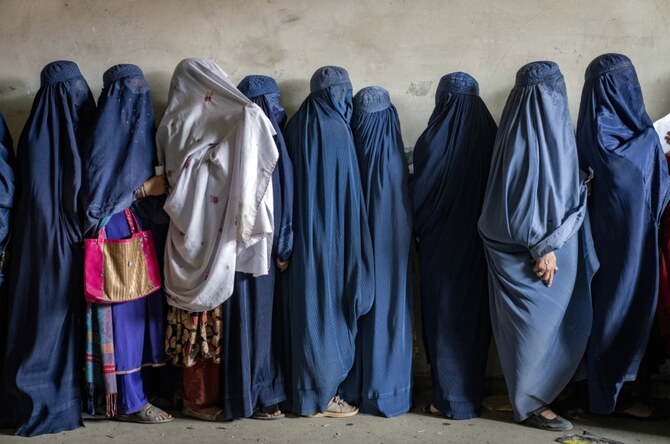
Since the Taliban took control of Afghanistan in 2021, they have barred education for women and girls beyond sixth grade, most employment, and many public spaces. Last August, the Vice and Virtue Ministry published laws that ban women’s voices and bare faces outside the home.
The Taliban’s chief spokesman Zabihullah Mujahid released a statement on his official X account, without specifically mentioning International Women’s Day, which is celebrated on March 8.
He said the dignity, honor, and legal rights of women were a priority for the Islamic emirate, the term used by the Taliban to describe their government.
Afghan women lived in security, both physically and psychologically, he added.
“In accordance with Islamic law and the culture and traditions of Afghan society, the fundamental rights of Afghan women have been secured. However, it should not be forgotten that the rights of Afghan women are being discussed within an Islamic and Afghan society, which has clear differences from Western societies and their culture,” said Mujahid.
Also Saturday, the UN renewed its call for the Taliban to lift the bans.
“The erasure of women and girls from public life cannot be ignored,” said Roza Otunbayeva, the head of the UN mission in Afghanistan. “We remain committed to investing in their resilience and leadership, as they are key to Afghanistan’s future.”
Alison Davidian, special representative for UN Women Afghanistan, said the world could not accept a future for Afghan women that would never be tolerated elsewhere.
“Our response to their erasure is a test of our commitment to women and girls everywhere,” said Davidian. “We must stand with Afghan women as if our own lives depend on it — because they do.”
The Taliban remain isolated from the West — and without international recognition as the country’s official government — because of their restrictions on women and girls.
The Afghanistan Journalists Support Organization said 893 women were currently employed in the media sector. That’s a drop from 2,756 who were working before 2021, according to Reporters Without Borders.
There were nine provinces where there were no women in the media industry, the Afghan support organization said. The declining participation of female journalists, driven by the Taliban’s discriminatory policies, signalled a “concerted effort” to erase women from the media landscape, it said.
On Friday in Paris, UNESCO hosted a high-level conference on women and girls in Afghanistan. Participants included Hamida Aman, the founder of the women-only station Radio Begum, Fawzia Khoofi, a parliamentarian from the former Western-backed government, and rights experts including Richard Bennett, who is barred from entering Afghanistan.
In an apparent dig at the event, the spokesman for the Vice and Virtue Ministry Saif ul-Islam Khyber said recent international conferences held under the name of women’s rights exposed the hypocrisy of certain organizations and European Union foundations.

Taliban insist Afghan women’s rights are protected as UN says their bans cannot be ignored
Short Url
https://arab.news/b88pz
Taliban insist Afghan women’s rights are protected as UN says their bans cannot be ignored
- The Taliban say Afghan women live in security with their rights protected
- The UN renewed its call for bans on women and girls to be reversed, saying the erasure of Afghan females from public life should not be tolerated
Ukraine accuses Hungary, Slovakia of ‘blackmail’ over threats to cut electricity
KYIV: Ukraine’s Foreign Ministry condemned what it described as “ultimatums and blackmail” by the governments of Hungary and Slovakia on Saturday, after they threatened to stop electricity supplies to Ukraine unless Kyiv restarts flows of Russian oil.
Shipments of Russian oil to Hungary and Slovakia have been cut off since January 27, when Kyiv says a Russian drone strike hit pipeline equipment in Western Ukraine. Slovakia and Hungary say Ukraine is to blame for the prolonged outage.
Slovakia’s Prime Minister Robert Fico said on Saturday that he would cut off emergency electricity supplies to Ukraine within two days unless Kyiv resumes Russian oil transit to Slovakia over Ukraine’s territory. Hungary’s Viktor Orban made a similar threat days earlier.
The issue has become one of the angriest disputes yet between Ukraine and two neighbors that are members of the EU and NATO but whose leaders have bucked the largely pro-Ukrainian consensus in Europe to cultivate warm ties with Moscow.
Slovakia and Hungary are the only two EU countries that still rely on significant amounts of Russian oil shipped via the Soviet-era Druzhba pipeline over Ukraine.
“Ukraine rejects and condemns the ultimatums and blackmail by the governments of Hungary and the Slovak Republic regarding energy supplies between our countries,” the Ukrainian Foreign Ministry said in a statement. “Ultimatums should be sent to the Kremlin, and certainly not to Kyiv.”
HUNGARY, SLOVAKIA ARE KEY FOR UKRAINE’S ELECTRICITY IMPORTS
Between them, Hungary and Slovakia have been providing around half of European emergency electricity exports to Ukraine, which Kyiv increasingly relies on as Russian attacks have damaged its grid.
“If oil supplies to Slovakia are not resumed on Monday, I will ask SEPS, the state-owned joint-stock company, to stop emergency electricity supplies to Ukraine,” Fico said in a post on X.
Kyiv said that such actions were “provocative, irresponsible, and threaten the energy security of the entire region.”
Throughout the war that began with the full-scale Russian invasion whose fourth anniversary falls on Tuesday, Ukraine has allowed its territory to be used for Russian energy exports to Europe, which have been sharply curtailed but not halted.
Ukraine has proposed alternative transit routes to ship oil to Europe while emergency pipeline repair works are under way.
In a letter seen by Reuters, the Ukrainian mission to the EU proposed shipments through Ukraine’s oil transportation system or a maritime route, potentially including the Odesa-Brody pipeline linking Ukraine’s main Black Sea port to the EU.
Since October last year, Russia has intensified its drone and missile attacks on the Ukrainian energy system, knocking out electricity and heat and plunging millions of Ukrainians into long blackouts during bitterly cold winter temperatures.
Shipments of Russian oil to Hungary and Slovakia have been cut off since January 27, when Kyiv says a Russian drone strike hit pipeline equipment in Western Ukraine. Slovakia and Hungary say Ukraine is to blame for the prolonged outage.
Slovakia’s Prime Minister Robert Fico said on Saturday that he would cut off emergency electricity supplies to Ukraine within two days unless Kyiv resumes Russian oil transit to Slovakia over Ukraine’s territory. Hungary’s Viktor Orban made a similar threat days earlier.
The issue has become one of the angriest disputes yet between Ukraine and two neighbors that are members of the EU and NATO but whose leaders have bucked the largely pro-Ukrainian consensus in Europe to cultivate warm ties with Moscow.
Slovakia and Hungary are the only two EU countries that still rely on significant amounts of Russian oil shipped via the Soviet-era Druzhba pipeline over Ukraine.
“Ukraine rejects and condemns the ultimatums and blackmail by the governments of Hungary and the Slovak Republic regarding energy supplies between our countries,” the Ukrainian Foreign Ministry said in a statement. “Ultimatums should be sent to the Kremlin, and certainly not to Kyiv.”
HUNGARY, SLOVAKIA ARE KEY FOR UKRAINE’S ELECTRICITY IMPORTS
Between them, Hungary and Slovakia have been providing around half of European emergency electricity exports to Ukraine, which Kyiv increasingly relies on as Russian attacks have damaged its grid.
“If oil supplies to Slovakia are not resumed on Monday, I will ask SEPS, the state-owned joint-stock company, to stop emergency electricity supplies to Ukraine,” Fico said in a post on X.
Kyiv said that such actions were “provocative, irresponsible, and threaten the energy security of the entire region.”
Throughout the war that began with the full-scale Russian invasion whose fourth anniversary falls on Tuesday, Ukraine has allowed its territory to be used for Russian energy exports to Europe, which have been sharply curtailed but not halted.
Ukraine has proposed alternative transit routes to ship oil to Europe while emergency pipeline repair works are under way.
In a letter seen by Reuters, the Ukrainian mission to the EU proposed shipments through Ukraine’s oil transportation system or a maritime route, potentially including the Odesa-Brody pipeline linking Ukraine’s main Black Sea port to the EU.
Since October last year, Russia has intensified its drone and missile attacks on the Ukrainian energy system, knocking out electricity and heat and plunging millions of Ukrainians into long blackouts during bitterly cold winter temperatures.
© 2026 SAUDI RESEARCH & PUBLISHING COMPANY, All Rights Reserved And subject to Terms of Use Agreement.


