



NEW DELHI: As Umar Mehraj arranged fruits at his shop in Srinagar, the capital of Jammu and Kashmir, he displayed at least a dozen varieties of dates, carefully sourcing them from various places in the Middle East — making sure none came from Israel.
Dates are a staple food for breaking the fast during Ramadan in the Indian-controlled Himalayan region, where the majority of the population is Muslim.
In previous years, Israeli-labeled fruits have entered the local market, but traders are now trying to prevent that — a gesture of solidarity with Palestine in response to Israel’s ongoing genocidal assault on the people of Gaza and the West Bank.
“We have taken the initiative to boycott Israeli products as much as possible. Thank God, we are successful 100 percent,” Mehraj told Arab News.
“How do we know whether it is from Israel or not? You can see that all the boxes have labels, you can know where they are packaged and what the origin is. This is the time of the Internet ... we know (Israeli brands) through WhatsApp groups, Facebook, or Instagram. We avoid dates from those companies in our shops.”
Attacks by Israeli forces have killed at least 61,700 people in Gaza since October 2023, according to the latest estimates by the enclave government’s media office. Most of the civilian infrastructure in Gaza has been either damaged or destroyed, including hospitals, with none remaining fully functional.
“You can see what the global situation is right now. You can see the unprecedented torture being inflicted on our Palestinian brothers and sisters,” said Mohammad Ibrahim Beigh, another dry fruit seller in Srinagar.
“As a trader community, we don’t have any political influence, but we can play our role at the level of commerce. We can boycott.”
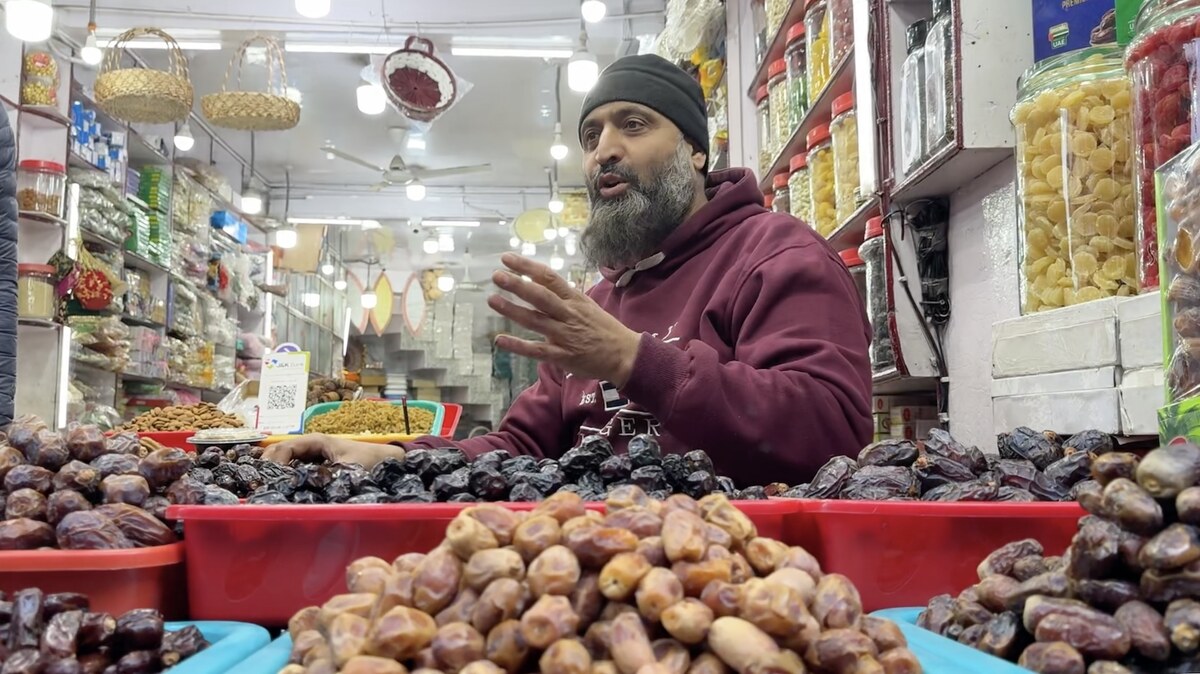
A Kashmiri dry fruit trader sells dates at his shop in Srinagar on March 6, 2025. (Ubaid Mukhtar)
Despite Israeli dates entering the Indian market at lower prices than other fruits, Kashmiri traders opt for the more expensive Saudi Arabia or North African varieties.
“Israeli dates are procured at cheaper rates. If we wanted, we could double our profit. Still, we are bringing only Saudi or Moroccan dates, or dates from other Middle Eastern countries,” Beigh said, adding that traders were also involved in raising awareness about how for decades Israel has occupied Palestinian lands, harvested them and labeled the produce as its own.
Amir Salam, who also sells other food products besides dates at his shop, has gone a step further by removing goods from major Western companies featured on the Boycott, Divestment and Sanctions movement’s lists.
“I used to have the dealership of Coke and Pepsi, but ever since Israel started attacking Gaza and killing innocent people, I have given up the dealership of these drinks,” he said.
The efforts resonate well with the people of Kashmir, who like Nasir Khuehami, national convenor of the Jammu and Kashmir Students’ Association, have for decades “seen echoes of their own struggle in Palestine’s fight for dignity and justice.”
The boycott was for him a “peaceful yet powerful assertion” that systematic oppression cannot be normalized.
And it was also one of the means through which Kashmiris could show their support.
“People in Jammu and Kashmir feel strongly about the atrocities happening in Gaza and the suffering the Palestinian people are going through,” said Aijaz Ahamad, a business professional.
“We don’t have power, but we have this weapon of boycott, and we are boycotting Israeli products as a mark of resistance, and in solidarity with the Palestinian people.”


