How Saudi Arabia’s mission to become a global AI hub sparked a race for tech talent

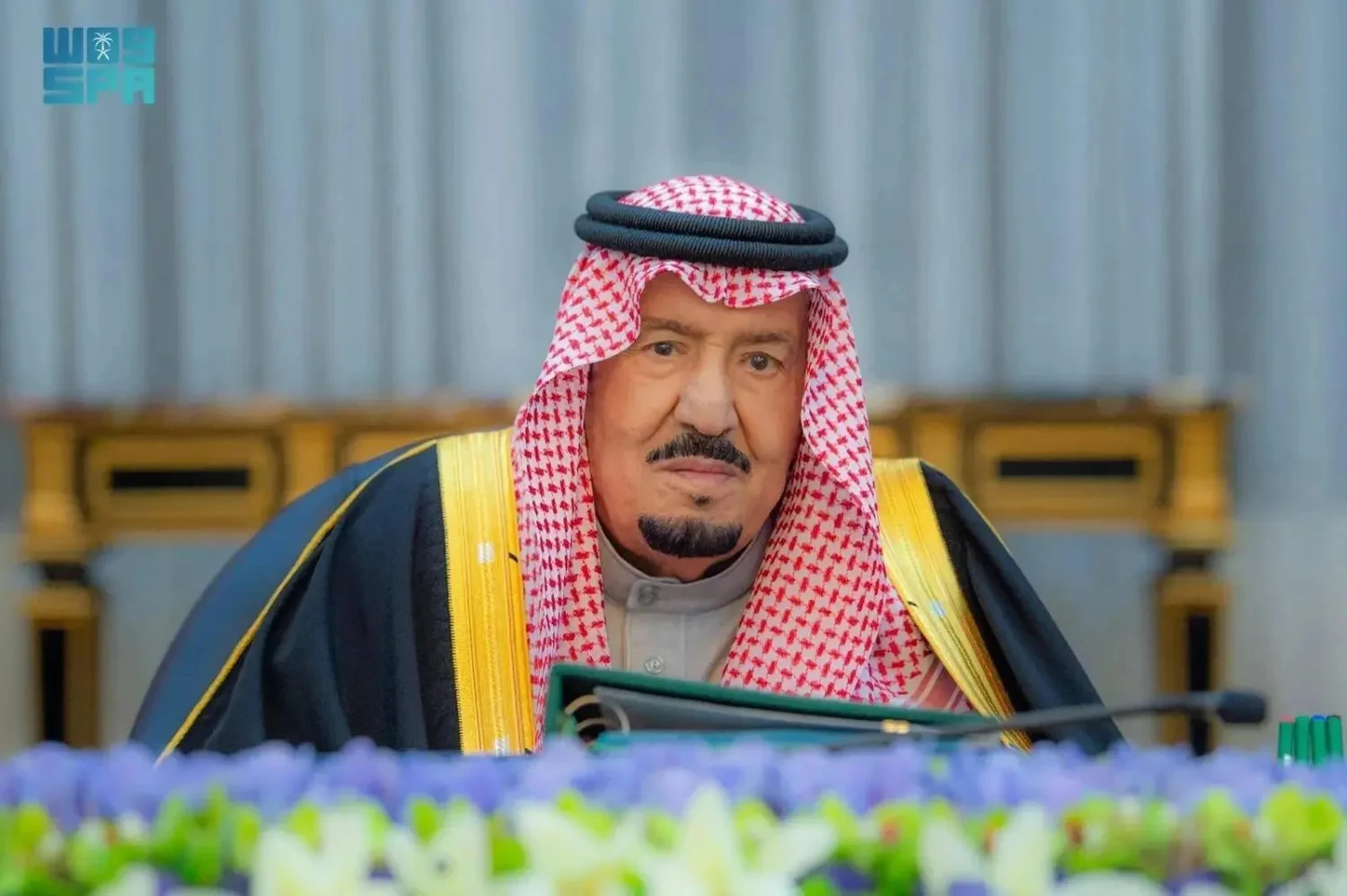
Established in 2019, the Saudi Data and Artificial Intelligence Authority aims to train 20,000 specialists to ensure that Saudis can fill highly skilled AI roles by 2030. (SPA)
Short Url
Updated 07 March 2025
Follow

How Saudi Arabia’s mission to become a global AI hub sparked a race for tech talent

  • Investment, education, and innovation are closing the skills gap and creating a globally competitive workforce
  • Graduates and job postings in AI fields have boomed, highlighting surging demand for skilled professionals

RIYADH: Saudi Arabia’s multibillion-dollar investment in artificial intelligence, which is central to its Vision 2030 economic transformation, faces a significant hurdle: a shortage of skilled professionals to drive the nation’s high-tech ambitions.

From cognitive cities such as NEOM to AI-driven healthcare innovations, the Kingdom’s future depends on bridging this skills gap through the implementation of three key strategies: government-led policies, private-sector innovation, and expanded academic opportunities.
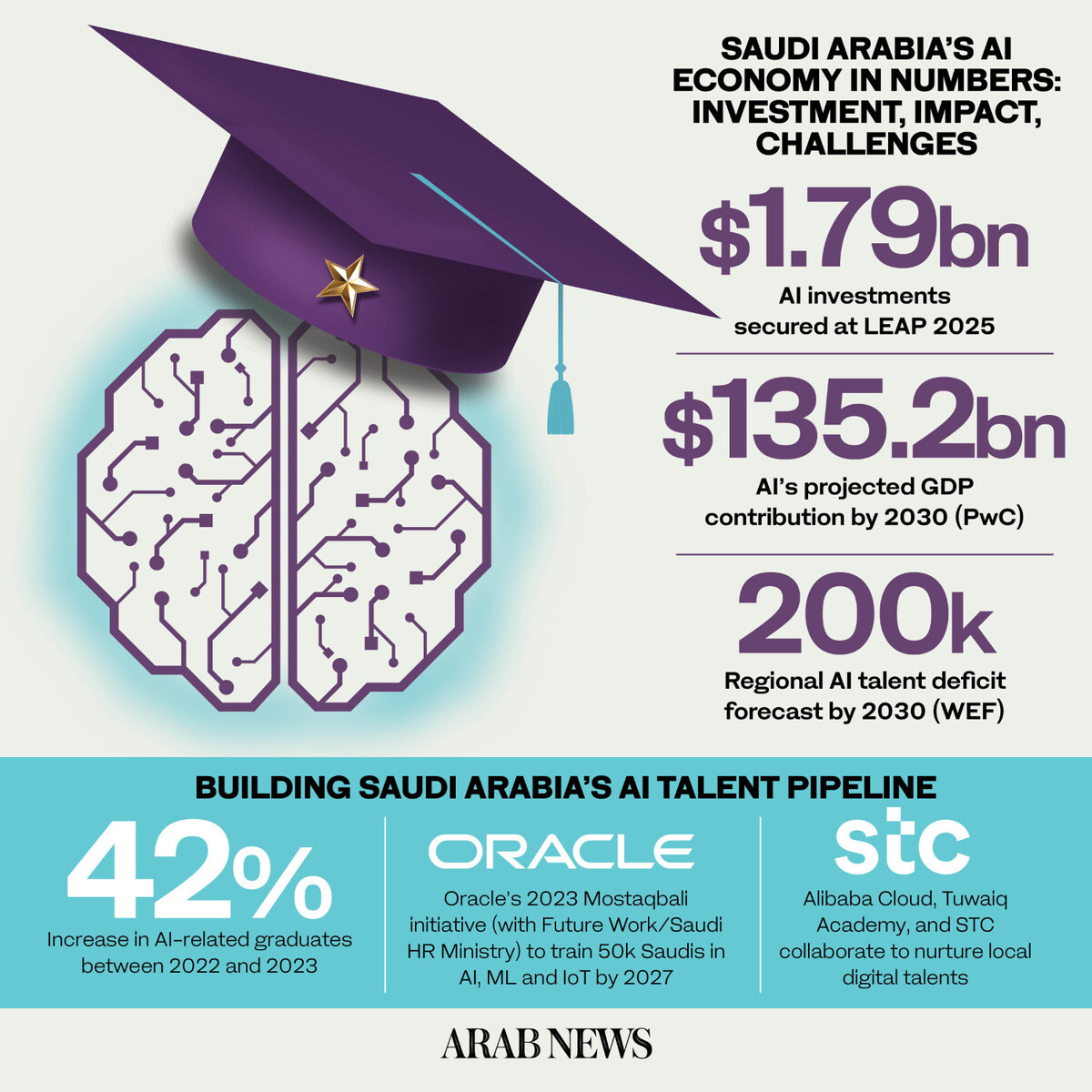
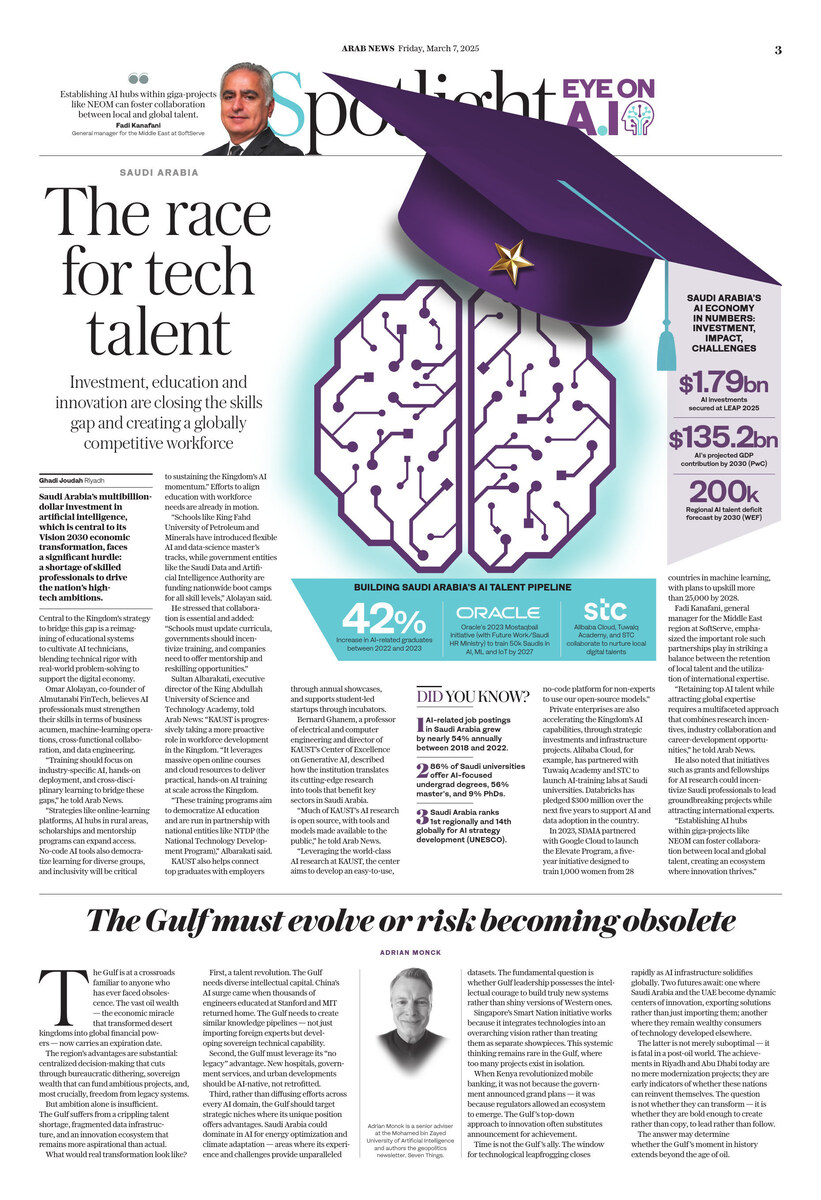
A report titled “The State of AI in Saudi Arabia,” published ahead of the 2024 GAIN Summit in Riyadh, highlighted the surging demand for expertise in the field, with AI-related job postings increasing by nearly 54 percent annually between 2018 and 2022.

In 2019, the government established the Saudi Data and Artificial Intelligence Authority to oversee the National Strategy for Data and AI, with the aim of training 20,000 specialists to ensure that Saudis can fill highly skilled AI roles by 2030.

The Kingdom is already leading the region in AI strategy development, ranking first in the Arab world and 14th globally, according to a 2024 report by UNESCO.

Opinion

This section contains relevant reference points, placed in (Opinion field)

This confidence has translated into considerable investments. Saudi Arabia secured $1.79 billion in AI-focused funding at the 2025 LEAP tech conference last month, for example, reinforcing the country’s status as a growing hub for innovation.

The 2024 GAIN Summit report also revealed a 42 percent increase in the number of graduates in AI-related subjects between 2022 and 2023, reflecting the Kingdom’s focus on the development of homegrown tech talent.

At the academic level, 86 percent of Saudi universities now offer AI-focused undergraduate degrees, 56 percent have master’s programs, and 9 percent provide opportunities to study for a doctorate.
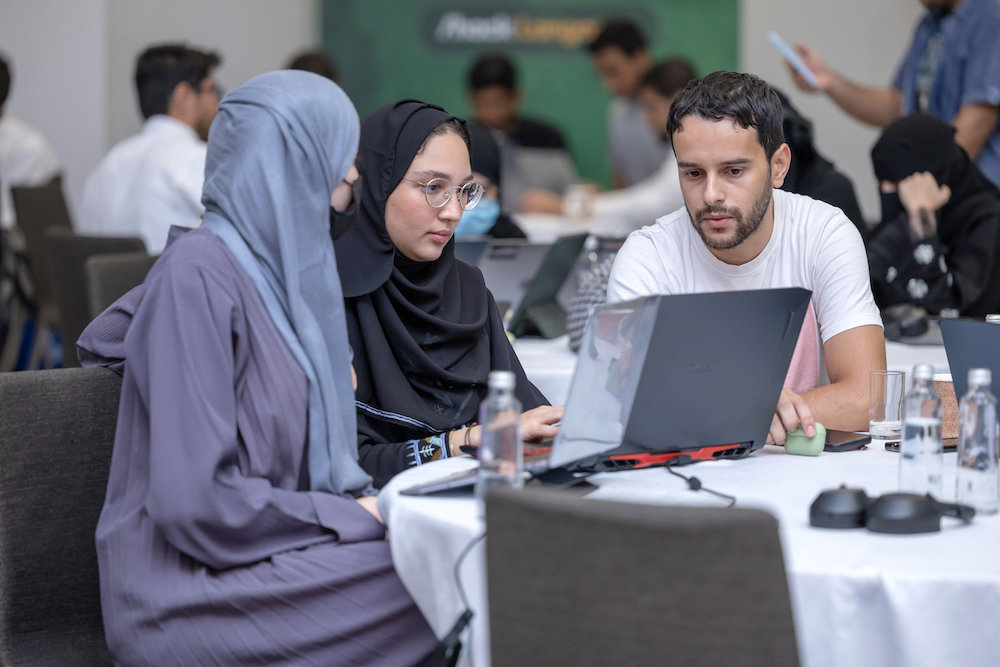


Central to the Saudi Arabia’s strategy is a reimagining of educational systems to cultivate AI technicians, blending technical rigor with real-world problem-solving to support the digital economy. (Supplied)

Central to the Kingdom’s strategy is a reimagining of educational systems to cultivate AI technicians, blending technical rigor with real-world problem-solving to support the digital economy.

Omar Alolayan, co-founder of Almutanabi FinTech, believes AI professionals must strengthen their skills in terms of business acumen, machine-learning operations, cross-functional collaboration, and data engineering.

“Training should focus on industry-specific AI, hands-on deployment, and cross-disciplinary learning to bridge these gaps,” he told Arab News, adding that scalable, accessible AI education is key to closing the talent divide.

“Strategies like online-learning platforms, AI hubs in rural areas, scholarships and mentorship programs can expand access. No-code AI tools also democratize learning for diverse groups, and inclusivity will be critical to sustaining the Kingdom’s AI momentum.”



The SDAIA funds nationwide boot camps for all skill levels. (SDAIA photo)

Efforts to align education with workforce needs are already in motion.

“Schools like King Fahd University of Petroleum and Minerals have introduced flexible AI and data-science master’s tracks, while government entities like SDAIA are funding nationwide boot camps for all skill levels,” Alolayan said.

He stressed that collaboration is essential and added: “Schools must update curricula, governments should incentivize training, and companies need to offer mentorship and reskilling opportunities.”

The GAIN Summit report also noted that between 2019 and 2023, more than 38,000 students graduated with AI-related degrees, including computer science and engineering, 6,500 of whom studied abroad.
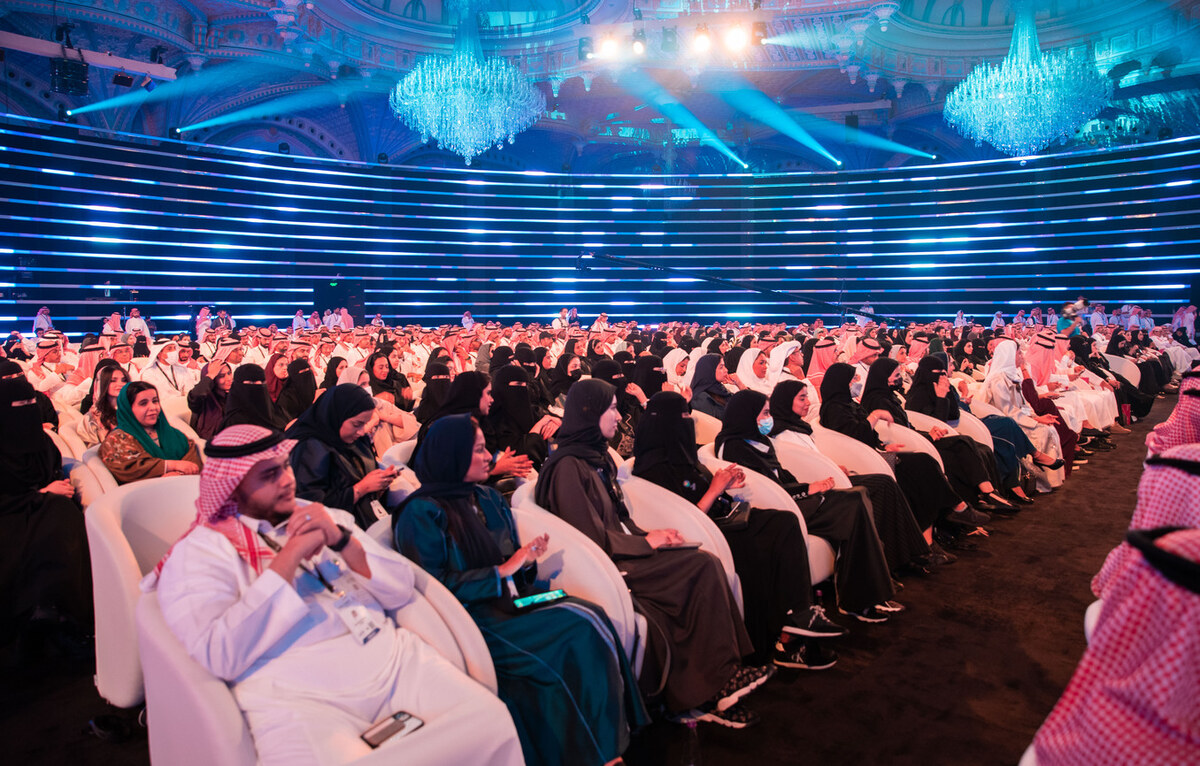


Saudi youth attending a forum during the 2024 GAIN Summit in Riyadh. (SDAIA photo)

Sultan Albarakati, executive director of the King Abdullah University of Science and Technology Academy, told Arab News: “KAUST is progressively taking a more proactive role in workforce development in the Kingdom.

“It leverages massive open online courses and cloud resources to deliver practical, hands-on AI training at scale across the Kingdom.”

KAUST partners with the public and private sectors to create tailored upskilling programs for Saudi professionals, he added.

“These training programs aim to democratize AI education and are run in partnership with national entities like NTDP (the National Technology Development Program),” Albarakati said.
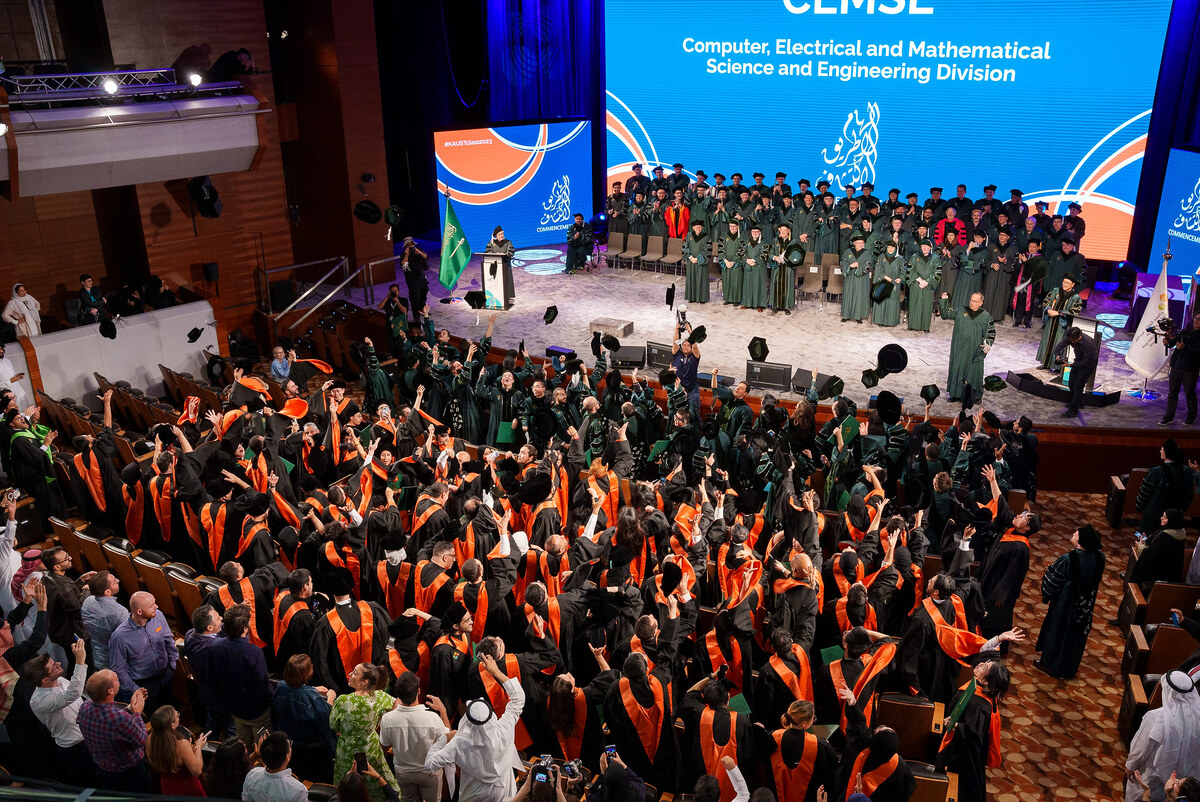


KAUST partners with the public and private sectors to create tailored upskilling programs for Saudi professionals. (KAUST photo)

KAUST also helps connects top graduates with employers through annual showcases, and supports student-led startups through incubators.

Bernard Ghanem, a professor of electrical and computer engineering and director of KAUST’s Center of Excellence on Generative AI, described how the institution translates its cutting-edge research into tools that benefit key sectors in Saudi Arabia.

“Much of KAUST’s AI research is open source, with tools and models made available to the public,” he told Arab News.

“Leveraging the world-class AI research at KAUST, the center aims to develop an easy-to-use, no-code platform for non-experts to use our open-source models.”

Private enterprises are also accelerating the Kingdom’s AI capabilities, through strategic investments and infrastructure projects. Alibaba Cloud, for example, has partnered with Tuwaiq Academy and STC to launch AI-training labs at Saudi universities. Databricks has pledged $300 million over the next five years to support AI and data adoption in the country.
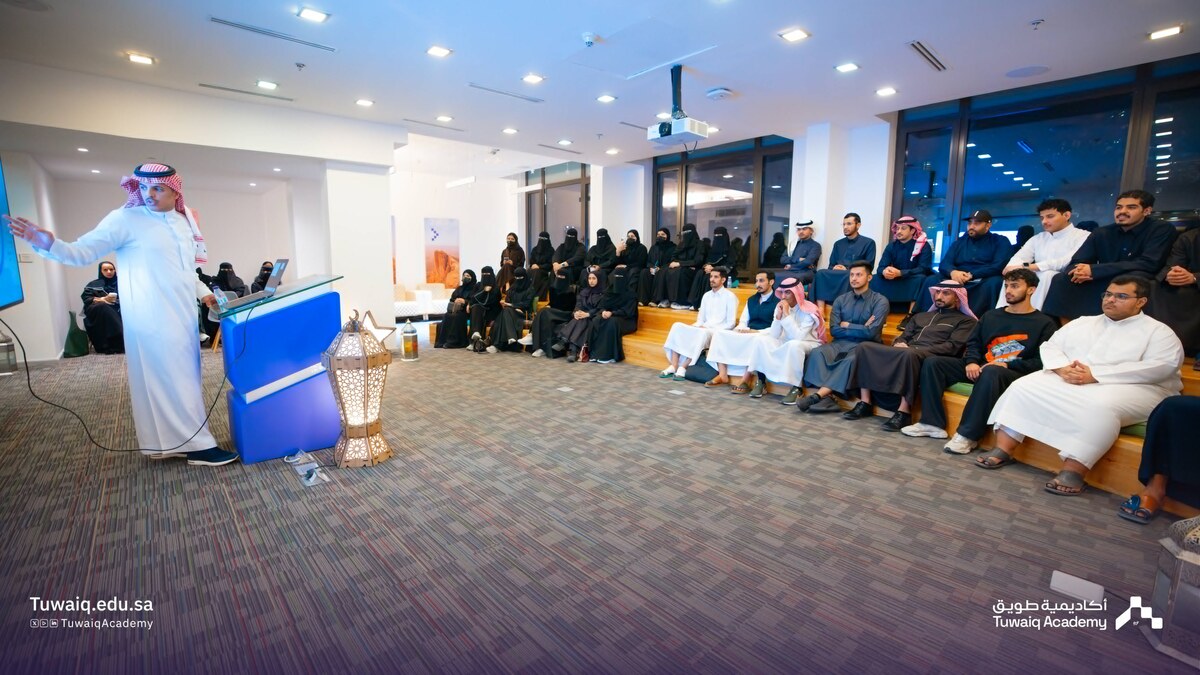


Bootcamp at Tuwaiq Academy in Riyadh. (X: @TuwaiqAcademy)

In 2023, SDAIA partnered with Google Cloud to launch the Elevate Program, a five-year initiative designed to train 1,000 women from 28 countries in machine learning, with plans to upskill more than 25,000 by 2028.

Fadi Kanafani, general manager for the Middle East region at SoftServe, emphasized the important role such partnerships play in striking a balance between the retention of local talent and the utilization of international expertise.

“Retaining top AI talent while attracting global expertise requires a multifaceted approach that combines research incentives, industry collaboration and career-development opportunities,” he told Arab News.
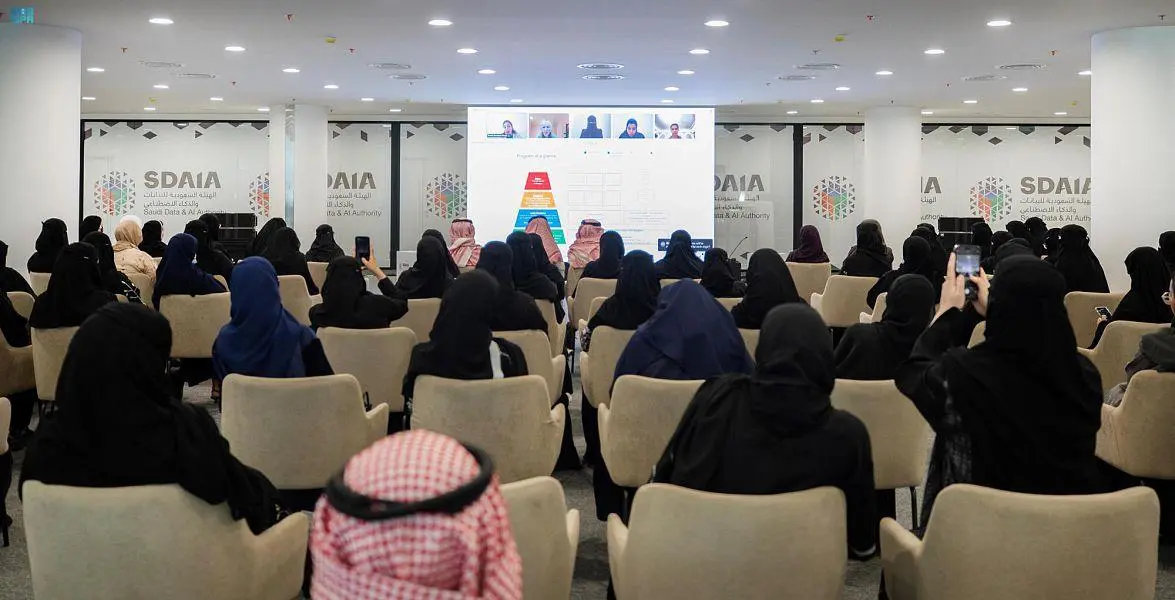


A joint undertaking of the SDAIA and Google Cloud, the Elevate Program aims to train over 25,000 women from various nations in advanced technical domains in five years. (SPA/file)

He also noted that initiatives such as grants and fellowships for AI research could incentivize Saudi professionals to lead groundbreaking projects while attracting international experts.

“Establishing AI hubs within giga-projects like NEOM can foster collaboration between local and global talent, creating an ecosystem where innovation thrives,” Kanafani said.

Career-acceleration programs, developed with partners such as Aramco and the Ministry of Investment, are also vital for efforts to provide Saudis with world-class domestic opportunities, he added.


Shaping future society: How intellectual forums contribute to cultural development

Updated 7 sec ago
Follow

Shaping future society: How intellectual forums contribute to cultural development

RIYADH: Modern nations do not transform on technological progress alone, but evolve through various factors such as values, religion, culture and assumptions that guide how societies interpret development.

Philosophy is one aspect of understanding civilization. Although it is often seen as abstract or far from reality, it plays an essential role in shaping a nation’s understanding of modernization.

It impacts how people see progress and discuss cultural identity, along with measuring the ethical implications of joining the global mindset.

Yet, by examining the philosophical thoughts that shape national narratives, people gain a deeper understanding of why societies adopt certain ideologies for development, resist others, and struggle to balance tradition with innovation.

Saudi Arabia, for example, defines its place on the global stage and navigates the complex tensions between heritage, aspiration and global responsibility through its own philosophy.

The Philosophy Forum, organized in Riyadh this week for the fifth year, witnessed the attendance of both local and international thinkers. During the conference, some Arab philosophers shared their beliefs in the idea that there is no absolute truth; while other philosophers differed, considering the Arab view on truth, culture and relativism.

“We must distinguish between the existence of relativity in science — the world is changing because it is relative — and our belief in absolute truths within our culture. For example, the only truly absolute thing in the world is death, which is mentioned in the Holy Qur’an,” Essam Gameil, professor of logic and critical thinking at Cairo University, told Arab News on the sidelines of the forum.

He added: “Our morals are unchanging; ethical principles are fixed. For example, respecting others is a fundamental principle; how can it be altered?

“Some concepts can be changed within the framework of science, but not in the humanities, not in religion, not in ethics. There are constants.

“It is the moral principles and rules that drive me forward,” Gameil said, adding that philosophy was created to solve issues that occurred in society during the time of Aristotle and Plato.

“It appeared to solve social problems … it was created to address lying, deception and more. Socrates was a moral philosopher and nothing else,” he said.

Gameil described Saudi Arabia as an example of “an extraordinary leap” in the Arab world in terms of development and philosophy.

He said that the Kingdom’s interest in philosophy and its organization of a major conference in the field stems from a crucial concept discovered by the Saudi leadership, which is that humanity has two aspects: A spiritual aspect and a material aspect, represented by the body.

“Studies typically focus on the body — artificial intelligence, engineering, and so on — but have often neglected the spiritual dimension. Philosophy is a human science; the more you emphasize it, the more certain concepts become firmly established and ingrained,” said Gameil.

Eman Al-Mulhem, a researcher in the philosophy of science at King Faisal University in Al-Ahsa, believes that the Kingdom’s situation presents three very promising paths: The philosophy and ethics of artificial intelligence, science and technology studies, and a re-reading of the Arab philosophical heritage using contemporary methodologies.

“This field is no longer a luxury, but a necessity. The question is no longer: What can a machine do? Rather, it has become: How do we preserve our humanity in a world where we share the power of decision-making with machines?” she said, highlighting the philosophy and ethics of AI.

She added: “We have a rich heritage, but we need modern tools to understand and reconstruct it, not just explain it. These fields are not only promising, but they are also capable of reshaping the role of philosophy in the Arab world.”

Al-Mulhem also works to connect Arab philosophical heritage to questions of contemporary science. She believes that philosophy is not detached from reality, but rather helps to reevaluate our relationship with science, humanity and the world.

On the question of whether Arab philosophical heritage is still suffering from global misconceptions, she said: “(It) still suffers some global misconceptions, such as being reduced to a mere extension of Greek philosophy or a stagnant tradition.”

However, the Riyadh International Philosophy Conference, which hosts philosophical minds from around the world, is helping to correct this image, she added.

“They present Arab heritage in a dynamic context, through the voices of its own scholars. At this conference, the world encounters Arab thoughts that engage in dialogue, produce ideas and critique — not as a static heritage, but as an integral part of contemporary global philosophy,” said Al-Mulhem.

“Philosophy is not far removed from humanity; it is closer than we imagine. Every question we ask, every attempt to understand the world, is a philosophical step,” she said.

“I believe that the Arab region today has a great opportunity to reclaim its role in producing knowledge, not just consuming it. And the Arab researcher is capable — given the right environment — of making a lasting impact that transcends geographical boundaries,” she added.