


DUBAI: Pregnant players on the women’s tennis tour now can receive 12 months of paid maternity leave, and those who become parents via partner pregnancy, surrogacy or adoption can get two months off with pay, under a program sponsored by the Public Investment Fund of Saudi Arabia and announced Thursday by the WTA.
“Independent contractors and self-employed individuals don’t typically have these kinds of maternity benefits provided and available to them. They have to go out and sort of figure out those benefits for themselves,” WTA CEO Portia Archer said. “This is really sort of novel and groundbreaking.”
More than 300 players are eligible for the fund, which is retroactive to Jan. 1. The WTA would not disclose how much money is involved.
The program — which the WTA touted as “the first time in women’s sports history that comprehensive maternity benefits are available to independent, self-employed athletes” — also provides grants for fertility treatments, including egg freezing and IVF.
It’s part of a wider trend: As women’s sports rise, there is an emphasis on meeting maternity and parental needs.
How many mothers are on the women’s tennis tour now?
The WTA says 25 moms are active on tour; one, Tokyo Olympics gold medalist Belinda Bencic, won a title last month after returning from maternity leave in October.
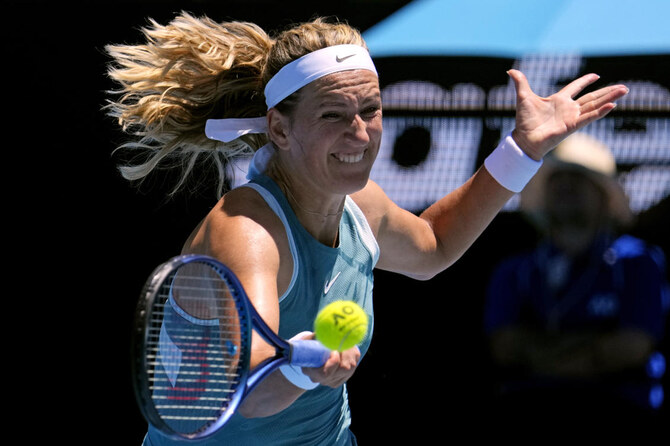
More and more pros in tennis have returned to action after having children, including past No. 1-ranked players and Grand Slam title winners such as Serena Williams, Naomi Osaka, Kim Clijsters, Caroline Wozniacki and Victoria Azarenka.
Azarenka — a member of the WTA Players’ Council, which Archer acknowledged played a key role in pushing for this fund — thinks these benefits will encourage lower-ranked or lower-earning athletes to take as much time off as they feel they need after becoming a parent, rather than worrying about losing out on income while not entering tournaments.
“That’s certainly one of the aims of the program: to provide the financial resources, the flexibility, the support, so that these athletes, regardless of where they’re ranked, but particularly those who earn less, will have that agency ... to decide when and how they want to start their families,” Archer said.
And, Azarenka said, this could lead some players to decide to become parents before retiring from the sport for good.
“Every feedback we’ve heard from players who are mothers — or who are not mothers — is like, ‘Wow, this is an incredible opportunity for us,’” said 2012-13 Australian Open champion Azarenka, whose son, Leo, is 8. “I believe it’s really going to change the conversation in sports. But going beyond sports, it’s a global conversation, and I’m happy that we’re (part of it).”
Other steps the WTA has taken in recent years to benefit players include steering more women into coaching, implementing safeguarding, attempting to stem cyberbullying, and increasing prize money with an eye to pay that equals what men receive in the sport.
What role does Saudi Arabia have in tennis?
The Public Investment Fund, or PIF, became the WTA’s global partner last year.
The kingdom now hosts the season-ending WTA Finals and an ATP event for rising stars of men’s tennis. The PIF sponsors the WTA and ATP rankings.
“We wouldn’t have been able to provide the benefits were it not for this relationship and the funding that PIF provides,” Archer said.
What are maternity leave policies in golf, soccer and basketball?
In golf, which like tennis is an individual sport without guaranteed salaries, the LPGA introduced an updated maternity leave policy in 2019 that lets athletes have the same playing status when they return.
In soccer, both the NWSL and the US women’s national team have collective bargaining agreements that allow for pregnancy leave and parental leave; the NWSL pays the full base salary while an athlete is pregnant.
In basketball, the WNBA’s CBA guarantees full pay during maternity leave.
For tennis, Azarenka said, the PIF WTA Maternity Fund Program is “just the beginning.”
“It’s an incredible beginning. Monumental change,” she said. “But I think we can look into how we can expand this fund for bigger, better things.”


