- Chandrayaan-2 orbiter has been studying moon’s surface, polar regions since 2019
- New finding has ‘significant implications for future lunar exploration missions,’ says ISRO
NEW DELHI: Indian scientists have discovered signs of possible presence of ice beneath shadowed craters near the moon’s south pole using data from a lunar orbiter launched almost seven years ago, the country’s space agency has announced.
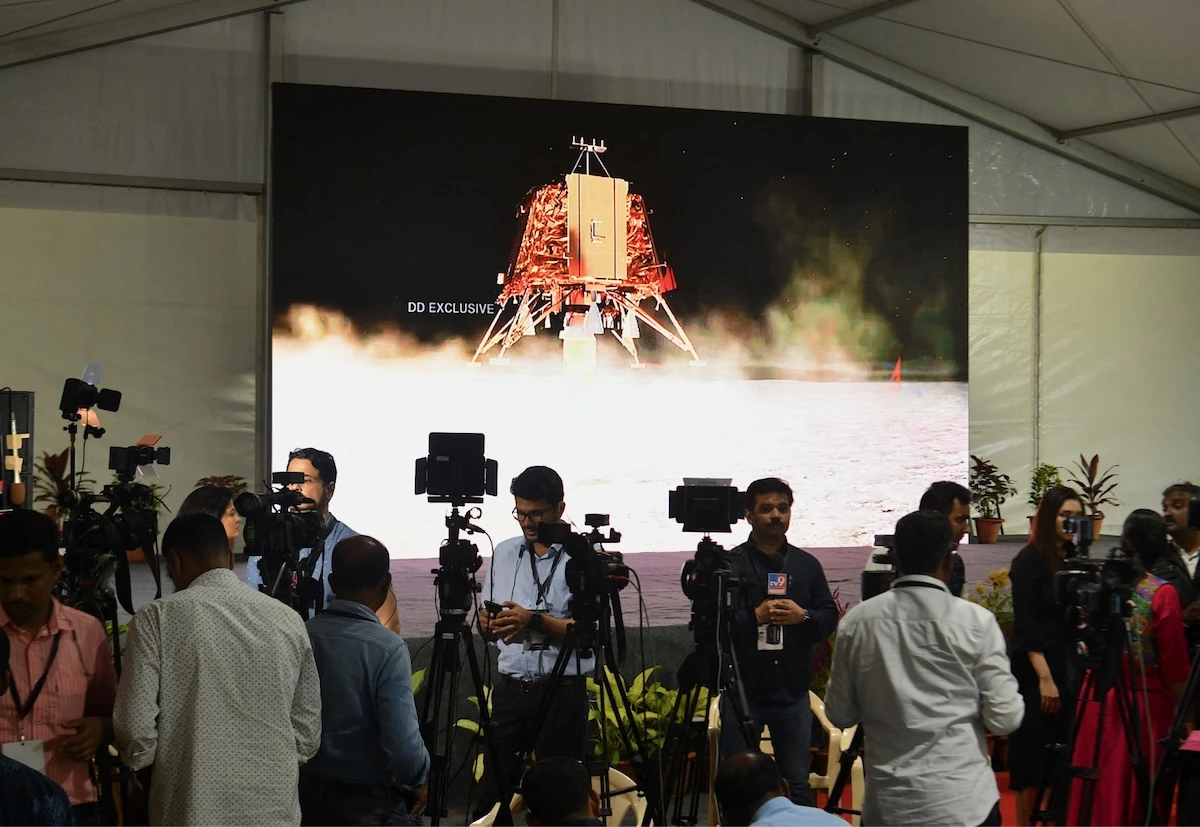
The Chandrayaan-2 orbiter was part of a mission that included a lander and rover, aimed at exploring the south pole of the moon. Since reaching lunar orbit in 2019, it has been mapping the moon’s surface and studying its polar region with the highest resolution camera in any lunar mission.
Using radar data from the spacecraft, scientists at the Indian Space Research Organization investigated a 1.1 km region, shielded from sunlight and radiation, inside the Moon’s Faustini crater that showed “particularly strong evidence of subsurface ice” through radar observations and surface features.
“Using advanced radar polarimetric analysis, scientists identified radar signatures consistent with the possible presence of subsurface ice beneath the floors of four doubly shadowed craters in the lunar South Polar Region,” the ISRO said in a statement on Wednesday evening.
“These findings provide important new insights into the distribution of lunar polar volatiles and have significant implications for future lunar exploration missions.”
This includes identification of potential ice-bearing regions for future landing, the agency added.
India’s lunar exploration program, known as Chandrayaan, launched its first mission back in 2008, which played a crucial role in the discovery of water molecules on the Moon.
Chandrayaan-2 was launched over a decade later but was only partially successful, as the lander-rover failed to make a soft landing and crashed during touchdown. However, the orbiter has continued its work for almost seven years.
In 2023, the Chandrayaan-3 moon rover made history by landing on the lunar surface, making India the first country to land near the lunar south pole and the fourth to land on the moon, after the US, the former Soviet Union and China.
India’s lunar missions form only a part of its ambitious space program, which has marked other major milestones over the past few years.
Last year alone, India sent the first Indian astronaut to the International Space Station, autonomously docked two satellites and launched its heaviest payload to date.
The ISRO has been preparing for a number of space missions this year, including the first uncrewed test flight of India’s Gaganyaan human spaceflight program.