WASHINGTON: President Donald Trump on Wednesday issued what he called a “last warning” to Hamas to release all remaining hostages held in Gaza, directing a sharply worded message after the White House confirmed that he had recently dispatched an envoy for unprecedented direct talks with the militant group.
Trump, in a statement on his Truth Social platform soon after meeting at the White House with eight former hostages, added that he was “sending Israel everything it needs to finish the job.”
“Release all of the Hostages now, not later, and immediately return all of the dead bodies of the people you murdered, or it is OVER for you,” Trump said. “Only sick and twisted people keep bodies, and you are sick and twisted!”
The pointed language from Trump came after the White House said Wednesday that US officials have engaged in “ongoing talks and discussions” with Hamas officials, stepping away from a long-held US policy of not directly engaging in the militant group.
Confirmation of the talks in the Qatari capital of Doha come as the Israel-Hamas ceasefire remains in the balance. It’s the first known direct engagement between the US and Hamas since the State Department designated the group a foreign terrorist organization in 1997.
White House press secretary Karoline Leavitt declined to provide detail on the the substance of talks, but said President Donald Trump has authorized his envoys to “talk to anyone.” Egyptian and Qatari intermediaries have served as mediators with Hamas for the US and Israel since the group launched its Oct. 7, 2023, attack on Israel that sparked the war.
“Look, dialogue and talking to people around the world to do what’s in the best interest of the American people is something that the president ... believes is a good-faith effort to do what’s right for the American people,” she said.
Leavitt added that Israel has been consulted about the direct engagement with Hamas officials, and noted that there are “American lives at stake.” Israeli Prime Minister Benjamin Netanyahu’s office offered a terse acknowledgement of the US-Hamas talks. “Israel has expressed to the United States its position regarding direct talks with Hamas,” the prime minister’s office said.
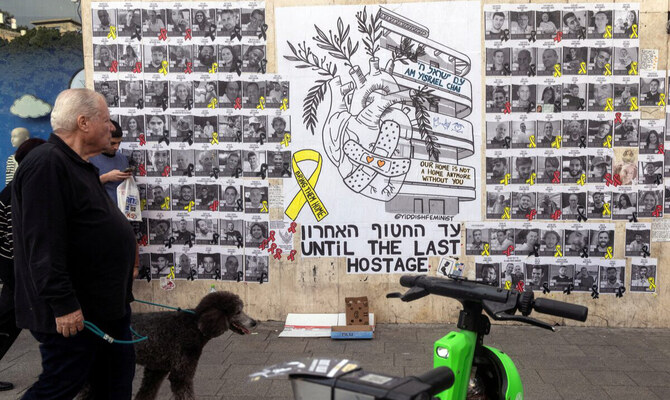
Israeli officials say about 24 living hostages — including Edan Alexander, an American citizen — as well as the bodies of at least 35 others are believed to still be held in Gaza.
Adam Boehler, Trump’s nominee to be special envoy for hostage affairs, led the direct talks with Hamas. Boehler, founder and CEO of Rubicon Founders, a health care investment firm, was a lead negotiator on the Abraham Accords team during Trump’s first term that strove to win broader recognition of Israel in the Arab world.
The talks, which took place last month, focused mainly on the release of American hostages, and a potential end of the war without Hamas in power in Gaza, according to a Hamas official who was not authorized to comment publicly and spoke on the condition of anonymity.
The official added that no progress was made but “the step itself is promising” and more talks are expected. Egyptian and Qatari mediators helped arrange the talks.
The direct engagement comes as continuation of the Israel-Hamas ceasefire remains uncertain. Trump has signaled that he has no intentions of pushing Netanyahu away from a return to combat if Hamas doesn’t agree to terms of a new ceasefire proposal, which the Israelis have billed as being drafted by US envoy Steve Witkoff.
The new plan would require Hamas to release half its remaining hostages — the militant group’s main bargaining chip — in exchange for a ceasefire extension and a promise to negotiate a lasting truce. Israel made no mention of releasing more Palestinian prisoners, a key component of the first phase.
Trump on Wednesday welcomed eight former hostages — Iair Horn, Omer Shem Tov, Eli Sharabi, Keith Siegel, Aviva Siegel, Naama Levy, Doron Steinbrecher and Noa Argamani — to the White House.
“The President listened intently to their heartbreaking stories,” Leavitt said. “The hostages thanked President Trump for his steadfast efforts to bring all of the hostages home.”
The talks between US and Hamas officials were first reported earlier Wednesday by the news site Axios.
Leavitt, the White House press secretary, is one of three administration officials who face a lawsuit from The Associated Press on First- and Fifth-Amendment grounds. The AP says the three are punishing the news agency for editorial decisions they oppose. The White House says the AP is not following an executive order to refer to the Gulf of Mexico as the Gulf of America.


![]()

Trump issues 'last warning' to Hamas to release all remaining hostages held in Gaza
Short Url
https://arab.news/j72p4
Trump issues 'last warning' to Hamas to release all remaining hostages held in Gaza
- “Release all of the Hostages now, not later, and immediately return all of the dead bodies of the people you murdered, or it is OVER for you,” Trump says


Latest updates




Recommended


© 2026 SAUDI RESEARCH & PUBLISHING COMPANY, All Rights Reserved And subject to Terms of Use Agreement.