

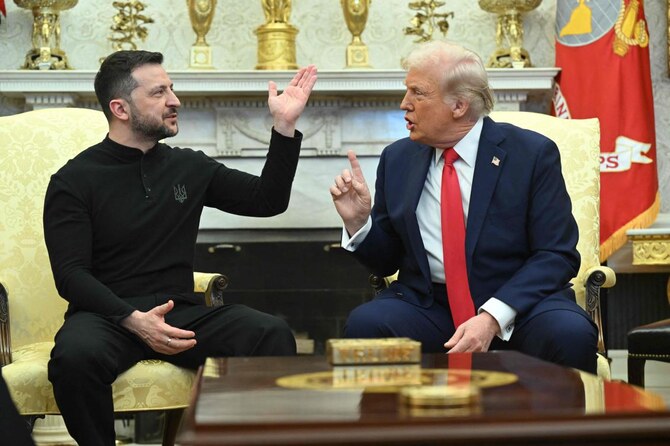

WASHINGTON/NEW YORK: The US has paused intelligence-sharing with Ukraine, CIA Director John Ratcliffe said on Wednesday, piling pressure on Ukrainian President Volodymyr Zelensky to cooperate with US President Donald Trump in convening peace talks with Russia.
The suspension, which could cost lives by hurting Ukraine’s ability to defend itself against Russian missile strikes, followed a halt this week to US military aid to Kyiv. It underscores Trump’s willingness to play hardball with an ally as he pivots to a more conciliatory approach to Moscow from previously strong US support for Ukraine.
The pressure appears to have worked, with Trump on Tuesday saying he received a letter from Zelensky in which the Ukrainian leader said he was willing to come to the negotiating table.
“I think on the military front and the intelligence front, the pause I think will go away,” Ratcliffe told Fox Business Network.
“I think we’ll work shoulder to shoulder with Ukraine as we have to push back on the aggression that’s there, but to put the world in a better place for these peace negotiations to move forward,” he said.

This handout satellite image released and collected by American firm Maxar Technologies on December 5, 2022 shows an overview of Engels Airbase, in Russia which is home to a strategic bomber military base. (Satellite image ©2022 Maxar Technologies / AFP)
A source familiar with the situation, speaking on condition of anonymity, said the Trump administration had halted “everything,” including targeting data that Ukraine has used to strike Russian targets.
A second source said intelligence-sharing had only “partially” been cut but was unable to provide more detail.
Washington on Monday halted military aid to Kyiv following a disastrous Oval Office meeting on Friday when Trump and Zelensky engaged in a shouting match before the world’s media.
The clash delayed the signing of a deal that would give the US rights to revenue from Ukraine’s critical mineral deposits, which Trump has demanded to repay US military aid.
Zelensky said on Wednesday there had been “positive movement” on the issue and officials from the two countries could meet again soon.
The White House said it is reconsidering its pause in funding for Ukraine and talks between the two countries over a minerals deal were ongoing.
A senior administration official said on Wednesday that the signing was expected to happen soon and to be the first step in a longer negotiation between Ukraine, Washington and Russia on ending the war.
The Ukrainian embassy in Washington and Ukraine’s foreign ministry did not immediately respond to a request for comment.
In an address to Congress on Tuesday evening, Trump said Kyiv was ready to sign a minerals deal.

A Ukrainian member an Azov Brigade drone team launches a surveillance drone towards Russian positions in eastern Donetsk region on February 4, 2025. (AFP)
Trump also said he had been in “serious discussions with Russia” and received strong signals that it was ready for peace.
“It’s time to end this senseless war. If you want to end wars, you have to talk to both sides,” he said.
Europe scrambling
Several Democrats criticized the intelligence-sharing suspension. Senator Mark Warner, the vice chairman of the Senate intelligence committee, said the “ill-advised decision” showed that Trump had given American power to Russia.
“Let me be clear: Cutting off intelligence support to our Ukrainian partners will cost (Ukrainian) lives,” the Virginia Democrat said in a statement.
A Russian missile struck a hotel in the central Ukrainian city of Kryvyi Rih late on Wednesday, killing two people and injuring seven, emergency officials said.
European countries are scrambling to boost defense spending and maintain support for Ukraine. Diplomats said France and Britain are aiming to finalize a peace plan to present to the US, while the Dutch government said it will reserve 3.5 billion euros ($3.8 billion) for Ukraine aid in 2026.
The US has provided critical intelligence to Ukraine for its fight against Moscow’s forces, including information that helped thwart Russian President Vladimir Putin’s drive to seize Kyiv at the start of his full-scale invasion in February 2022.
But in less than two months in office, Trump has upended US policy, stunning and alienating European allies and raising concerns about the future of the NATO alliance.
He has also ended Putin’s isolation through phone calls with the Russian leader and talks between Russian and US aides in Saudi Arabia and Turkiye, from which Ukraine and its European allies were excluded.
Some experts said the US intelligence-sharing suspension would hurt Ukraine’s ability to strike Russian forces, which occupy about 20 percent of the country’s territory, and defend itself.
“Unfortunately, our dependence in this regard is quite serious,” said Mykola Bielieskov, a research fellow at Ukraine’s National Institute for Strategic Studies.


