

Housing demand in Saudi Arabia surges as 72% look to own homes: report 

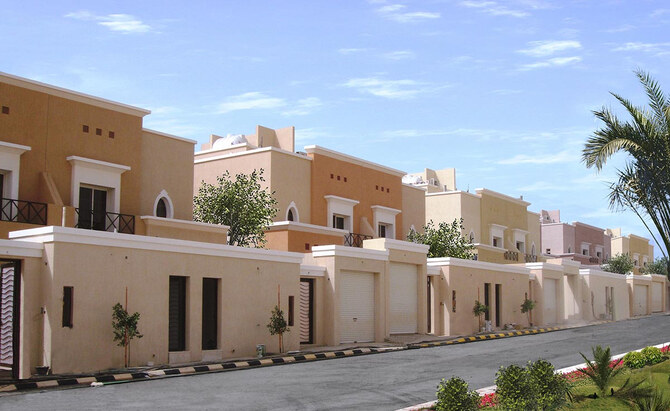
Homeownership in Saudi Arabia reached 63.7 percent by the end of 2023, nearing the government’s Vision 2030 target of 70 percent. File
Short Url
Updated 04 March 2025
Follow

Housing demand in Saudi Arabia surges as 72% look to own homes: report 

RIYADH: Saudi Arabia’s housing market is witnessing a surge in demand, with 72 percent of Saudis and expatriates expressing interest in homeownership, according to a new report.  

Knight Frank’s Saudi Report 2025 found that demand is particularly strong among high-income nationals earning over SR50,000 ($13,300) per month, with 93 percent looking to buy property. 

The survey of 1,037 respondents — 835 Saudis and 100 expatriates — also revealed growing interest among expatriates, with 77 percent aspiring to own homes in the Kingdom. 

Homeownership in Saudi Arabia reached 63.7 percent by the end of 2023, nearing the government’s Vision 2030 target of 70 percent. However, affordability remains a challenge, prompting some buyers to explore rental options. 

The total value of housing transactions in 2024 stood at SR267.8 billion across 236,690 sales, marking a 37 percent increase in transaction volume and a 27 percent rise in value compared to the previous year. 

The desire for homeownership is largely driven by investment opportunities, family-friendly communities, and access to high-quality housing. 

According to the survey, 48 percent of respondents cited the need for a primary residence, while 31 percent were looking for a home for their children or extended family. 

Saudi Arabia’s residential property market has experienced significant price growth, particularly in major cities. 

In Riyadh, apartment prices have surged 75 percent since 2019, while villa prices have risen 40 percent. In Jeddah, residential transactions jumped 53 percent in 2024, with total property values increasing by 43 percent. 

Dammam also saw a notable rise, with residential transactions up 49 percent and apartment prices increasing by 6.2 percent. 

Despite government efforts to boost supply, affordability remains a challenge, particularly for middle-income buyers. 

The report highlights a growing supply of premium and luxury housing, yet many buyers struggle to find homes within their budgets. 

According to Knight Frank’s survey, most homebuyers plan to spend between SR750,000 and SR2.5 million. However, the report highlights a mismatch between market pricing and buyers’ budgets, with the average price of a four-bedroom villa in Riyadh standing at SR2.8 million. 

In terms of financing, 58 percent of Saudi buyers rely on family support to fund their home purchases, while 40 percent opt for self-sought financing solutions. 

Mortgage-backed transactions are also rising, driven by government-backed programs such as Sakani and Dhamanat, which continue to improve access to home loans. 

The report also identifies a shift in housing preferences among Saudi nationals and expatriates. More than half of the respondents prefer villas, with higher-income Saudis favoring larger homes. 

Townhouses and apartments are growing in popularity among younger buyers and middle-income families. Riyadh and Jeddah remain the top choices, with 54 percent of respondents favoring the capital. 

While demand for property ownership remains strong, rental demand is also increasing, particularly among younger Saudis and expatriates who are exploring flexible living options due to rising property prices. 

With the Kingdom investing heavily in its real estate sector as part of Vision 2030, homeownership and rental markets continue to evolve. 

As Saudi Arabia nears its 70 percent homeownership target, affordability challenges, rising prices, and shifting consumer preferences will shape the housing sector’s trajectory in the coming years. 


AI will never replace human creativity, says SRMG CEO 

Updated 30 January 2026
Follow

AI will never replace human creativity, says SRMG CEO 

  • Speaking to Maya Hojeij, senior business anchor at Asharq with Bloomberg, Jomana R. Alrashid expressed pride in SRMG platforms that had absorbed and adopted AI

RIYADH: Jomana R. Alrashid, CEO of Saudi Research and Media Group, highlighted how AI cannot replace human creativity during a session at The Family Office’s “Investing Is a Sea” summit at Shura Island on Friday. 

“You can never replace human creativity. Journalism at the end of the day, and content creation, is all about storytelling, and that’s a creative role that AI does not have the power to do just yet,” Alrashid told the investment summit. 

“We will never eliminate that human role which comes in to actually tell that story, do the actual investigative reporting around it, make sure to be able to also tell you what’s news or what’s factual from what’s wrong ... what’s a misinformation from bias, and that’s the bigger role that the editorial player does in the newsroom.”

Speaking on the topic of AI, moderated by Maya Hojeij, senior business anchor at Asharq with Bloomberg, the CEO expressed her pride in SRMG platforms that had absorbed and adopted AI in a way that was “transformative.”

“We are now translating all of our content leveraging AI. We are also now being able to create documentaries leveraging AI. We now have AI-facilitated fact-checking, AI facilities clipping, transcribing. This is what we believe is the future.”

Alrashid was asked what the journalist of the future would look like. “He’s a journalist and an engineer. He’s someone who needs to understand data. And I think this is another topic that is extremely important, understanding the data that you’re working with,” she said.

“This is something that AI has facilitated as well. I must say that over the past 20 years in the region, especially when it comes to media companies, we did not understand the importance of data.”


The CEO highlighted that previously, media would rely on polling, surveys or viewership numbers, but now more detailed information about what viewers wanted was available. 

During the fireside session, Alrashid was asked how the international community viewed the Middle Eastern media. Alrashid said that over the past decades it had played a critical role in informing wider audiences about issues that were extremely complex — politically, culturally and economically — and continued to play that role. 

“Right now it has a bigger role to play, given the role again of social media, citizen journalists, content creators. But I also do believe that it has been facilitated by the power that AI has. Now immediately, you can ensure that that kind of content that is being created by credible, tier-A journalists, world-class journalists, can travel beyond its borders, can travel instantly to target different geographies, different people, different countries, in different languages, in different formats.”

She said that there was a big opportunity for Arab media not to be limited to simply Arab consumption, but to finally transcend borders and be available in different languages and to cater to their audiences. 


The CEO expressed optimism about the future, emphasizing the importance of having a clear vision, a strong strategy, and full team alignment. 

Traditional advertising models, once centered on television and print, were rapidly changing, with social media platforms now dominating advertising revenue.

“It’s drastically changing. Ultimately in the past, we used to compete with one another over viewership. But now we’re also competing with the likes of social media platforms; 80 percent of the advertising revenue in the Middle East goes to the social media platforms, but that means that there’s 80 percent interest opportunities.” 

She said that the challenge was to create the right content on these platforms that engaged the target audiences and enabled commercial partnerships. “I don’t think this is a secret, but brands do not like to advertise with news channels. Ultimately, it’s always related with either conflict or war, which is a deterrent to advertisers. 

“And that’s why we’ve entered new verticals such as sports. And that’s why we also double down on our lifestyle vertical. Ultimately, we have the largest market share when it comes to lifestyle ... And we’ve launched new platforms such as Billboard Arabia that gives us an entry into music.” 

Alrashid said this was why the group was in a strong position to counter the decline in advertising revenues across different platforms, and by introducing new products.

“Another very important IP that we’ve created is events attached to the brands that have been operating in the region for 30-plus years. Any IP or any title right now that doesn’t have an event attached to it is missing out on a very big commercial opportunity that allows us to sit in a room, exchange ideas, talk to one another, get to know one another behind the screen.” 

The CEO said that disruption was now constant and often self-driving, adding that the future of the industry was often in storytelling and the ability to innovate by creating persuasive content that connected directly with the audience. 

“But the next disruption is going to continue to come from AI. And how quickly this tool and this very powerful technology evolves. And whether we are in a position to cope with it, adapt to it, and absorb it fully or not.”