

Pakistan Navy ship participates in UAE defense exhibition to bolster maritime ties

This handout photo shows Romanian Naval Force Chief Vice Admiral Mihai Panait onboard Pakistan Navy Ship Yarmook during International Defense Exhibition (IDEX) & Naval Defense Exhibition (NAVDEX) in Abu Dhabi, UAE. (Photo courtesy: Handout/Pakistan Navy)
Short Url
Updated 01 March 2025
Follow

Pakistan Navy ship participates in UAE defense exhibition to bolster maritime ties

  • The UAE event features naval vessels from eight nations and participation from 65 countries
  • PNS Yarmouk has carried out joint exercises with the UAE Navy’s ship Al Emarat, ISPR says

KARACHI: A Pakistan Navy ship is participating in an international defense exhibition in the United Arab Emirates (UAE) as part of efforts to strengthen maritime relations with the Gulf nation, the military’s media wing said on Saturday.
The Pakistan Navy ship Yarmouk arrived in the UAE for the International Defense Exhibition (IDEX) and the Naval Defense Exhibition (NAVDEX 25), the Inter-Services Public Relations (ISPR) said in a statement.
Several high-profile officials, including the UAE’s minister for tolerance and the defense ministers of Romania and Yemen, visited the vessel.
“Participation in the defense exhibition reflects Pakistan’s strong defense ties with the UAE and its active role in global maritime security initiatives,” the ISPR said.
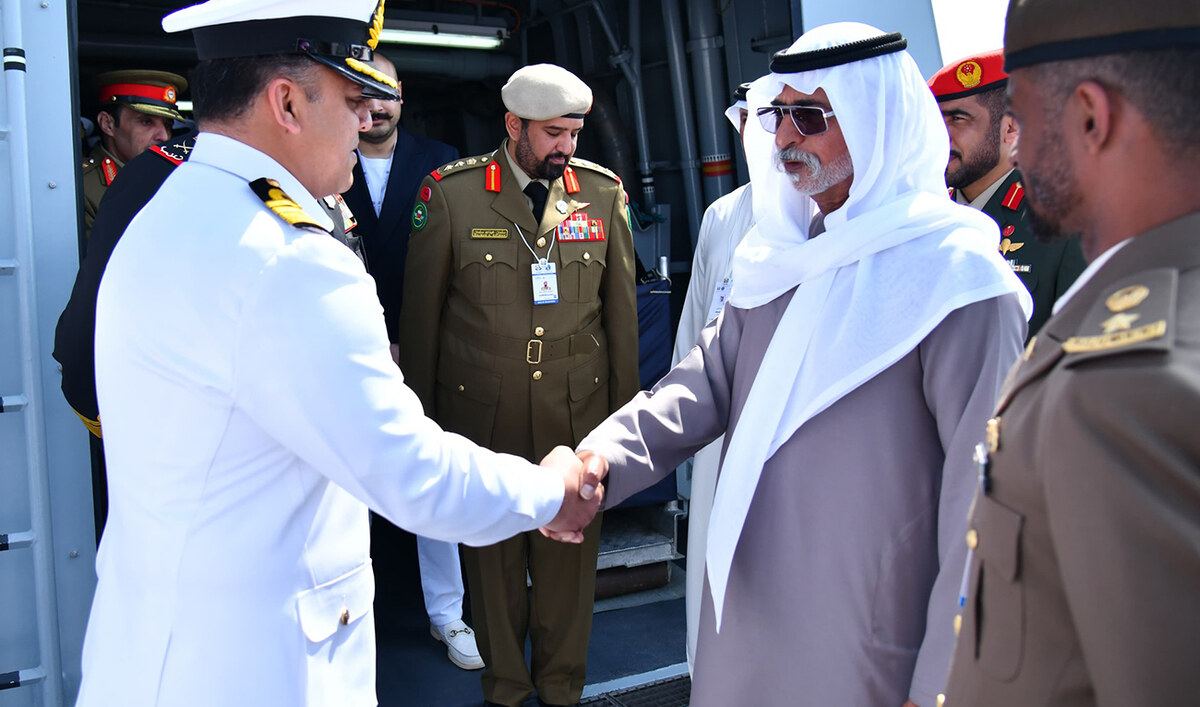


This handout photo shows UAE Tolerance and Coexistance Minister Sheikh Nahyan bin Mubarak Al Nahyan onboard Pakistan Navy Ship Yarmook during International Defense Exhibition (IDEX) & Naval Defense Exhibition (NAVDEX) in Abu Dhabi, UAE. (Photo courtesy: Handout/Pakistan Navy)

Pakistan has intensified its naval diplomacy in the region and beyond in recent years, particularly with Gulf nations, as part of efforts to enhance maritime security and defense collaboration.
The growing engagement aligns with Islamabad’s broader strategy of maintaining stability in regional waters and securing trade routes amid evolving geopolitical dynamics.
The UAE event, which features naval vessels from eight nations and participation from 65 countries, comes weeks after Pakistan hosted the AMAN-25 multinational exercise, where 60 countries took part in maritime drills aimed at enhancing interoperability and regional security.
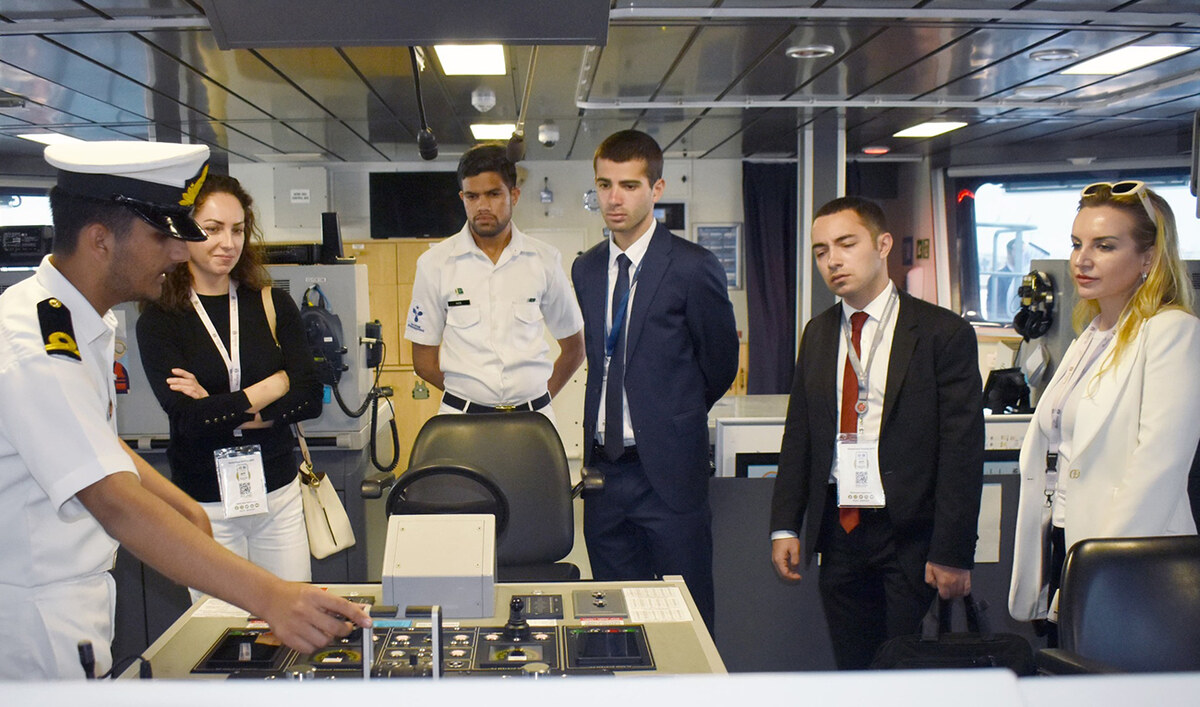


In this handout photo, released on February 28, 2025, Pakistan Navy official briefs visitors onboard Pakistan Navy Ship Yarmook during International Defense Exhibition (IDEX) & Naval Defense Exhibition (NAVDEX) in Abu Dhabi, UAE. (Photo courtesy: Handout/Pakistan Navy)

Following AMAN-25, Pakistan and Saudi Arabia conducted the Affaa Al Sahil bilateral naval exercise, which concluded in Karachi last month with a demonstration of firepower and combat tactics.
During its visit to the UAE, PNS Yarmouk also carried out joint exercises with the UAE Navy’s ship Al Emarat.


Pakistan courts Chinese fintech investment as digital push widens

Updated 11 sec ago
Follow

Pakistan courts Chinese fintech investment as digital push widens

  • Fintopia delegation explores digital lending, SME finance opportunities in Pakistan
  • China’s vast fintech ecosystem contrasts with Pakistan’s fast-growing, underbanked market

ISLAMABAD: Pakistan is seeking to attract Chinese fintech investment as it accelerates a broader push to expand digital finance, improve access to credit for small businesses and modernize its largely cash-based economy, the information ministry said on Thursday.

The move was underscored during a meeting in Islamabad between Federal Minister for the Board of Investment Qaiser Ahmed Sheikh and a delegation from Fintopia China, a financial technology firm exploring potential entry into Pakistan’s digital finance market. The outreach comes as the government places increasing emphasis on technology-led growth and foreign investment, particularly in financial services, amid efforts to boost financial inclusion and support small and medium-sized enterprises. Pakistan has in recent years expanded branchless banking, digital wallets and mobile payment systems, while also rolling out regulatory reforms aimed at improving the ease of doing business.

Fintopia is a China-based financial technology group that operates digital lending and consumer finance platforms across several emerging markets, according to company information. China hosts one of the world’s largest fintech ecosystems, driven by mass adoption of mobile payments, digital credit and data-driven financial services, while Pakistan’s fintech sector, though far smaller, has grown rapidly as smartphone use rises and demand for digital financial services expands.

“The delegation expressed keen interest in initiating its digital financing venture in Pakistan and in exploring structured collaboration with relevant public and private sector stakeholders,” the information ministry said, quoting minister Sheikh.

The meeting between Sheikh and the Fintopia China delegation took place in Islamabad and followed the company’s participation in a Pakistan-China business-to-business investment conference held in Beijing in September during Prime Minister Shehbaz Sharif’s visit to China, according to the ministry.

During the talks, Pakistani officials highlighted the country’s market potential, noting that Pakistan is the world’s fifth most populous nation and presents growing opportunities for digital financial services, particularly for small businesses and youth-led enterprises. The delegation was briefed on government reforms, including the Business Facilitation Center and the Asaan Karobar Act, aimed at reducing regulatory hurdles for investors.

Officials also outlined investment incentives available in Pakistan’s special economic zones and reiterated government support for foreign companies seeking to launch pilot projects or long-term digital financing operations in the country, the ministry said.

Pakistan has repeatedly described technology and digital finance as central to its long-term economic strategy, as it seeks to widen the tax base, formalize the economy and improve access to credit for underserved segments of the population.