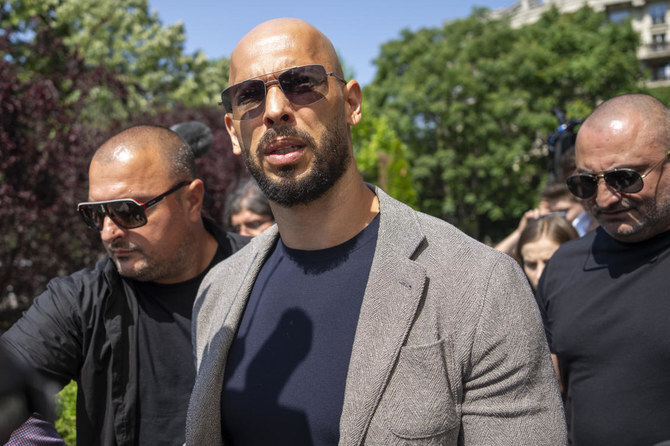
FLORIDA: A travel ban was lifted on influencer brothers Andrew and Tristan Tate, who are both charged with human trafficking in Romania, and they are headed to the United States, officials said Thursday.
The brothers are avid supporters of President Donald Trump and have millions of online followers. It wasn’t clear under what conditions the Tates were allowed to leave Romania, or where in the United States they were headed.
Andrew Tate, 38, and Tristan Tate, 36 are dual US-British citizens.
Andrew Tate is a former professional kickboxer and self-described misogynist who has amassed more than 10 million followers on X. He also runs an online academy where he says he teaches young men how to get rich and attract women. Tristan Tate is also a former kickboxer.
The Tates are avid supporters of President Donald Trump.
What are they charged with in Romania?
The Tate brothers and two Romanian women were arrested in Bucharest in late 2022.
The Directorate for Investigating Organized Crime and Terrorism alleged the four defendants formed a criminal group in 2021 “in order to commit the crime of human trafficking” in Romania as well as the United States and Britain.
They were initially formally indicted last year. In April, the Bucharest Tribunal ruled that a trial could start but didn’t set a date.
In December, a court in Bucharest ruled that the case against the Tates and the two Romanian women couldn’t go to trial because of multiple legal and procedural irregularities on the part of the prosecutors.
The case hasn’t been closed, and there is also a separate legal case against the brothers in Romania.
Andrew Tate has repeatedly claimed that prosecutors in Romania have no evidence against him and that there is a political conspiracy to silence him. But they were charged with forming a criminal gang to sexually exploit women, among other charges.
What led to the travel ban being lifted?
DIICOT, Romania’s anti-organized crime agency, said in a statement Thursday that prosecutors approved a “request to modify the obligation preventing the defendants from leaving Romania,” but that judicial control measures remained in place. The agency didn’t say who had made the request.
The control measures include the requirement to “appear before judicial authorities whenever summoned,” the statement read.
The agency said the Tates were “warned that deliberately violating these obligations may result in judicial control being replaced with a stricter deprivation of liberty measure.”
Their departure came after Foreign Minister Emil Hurezeanu said this month that a US official in the current Trump administration had expressed interest in the brothers’ legal case in Romania at the Munich Security Conference. The minister insisted it didn’t amount to pressure.


![]()

Influencer brothers Andrew and Tristan Tate head to US after travel ban is lifted in Romania
Short Url
https://arab.news/vbdtd
Influencer brothers Andrew and Tristan Tate head to US after travel ban is lifted in Romania
- The brothers are avid supporters of President Donald Trump
- The case hasn’t been closed, and there is also a separate legal case against the brothers in Romania


Latest updates


© 2026 SAUDI RESEARCH & PUBLISHING COMPANY, All Rights Reserved And subject to Terms of Use Agreement.