Pakistan to host summit in April to seek investments in $6 trillion minerals sector 

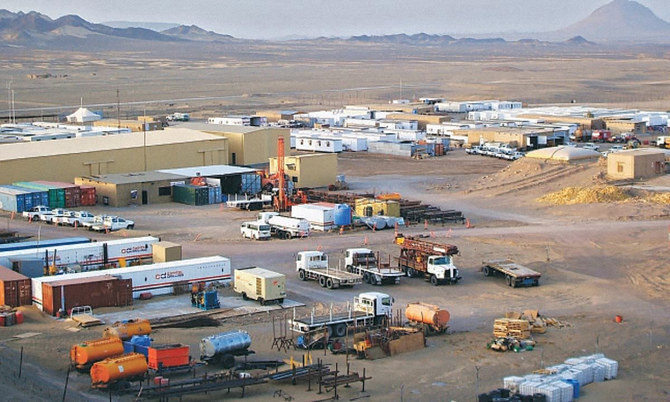
A file photo of the site of the gold and copper mine exploration project of Tethyan Copper Company (TCC) in Reko Diq, in Balochistan, Pakistan. (Photo courtesy: TCC)
Short Url
Updated 27 February 2025
Follow

Pakistan to host summit in April to seek investments in $6 trillion minerals sector 

  • Government’s National Minerals Harmonization Framework 2025 to be unveiled at summit 
  • Reko Diq mine is considered one of the world’s largest underdeveloped copper-gold areas

ISLAMABAD: Pakistan will host a minerals summit in April this year, state media reported on Thursday, as the cash-strapped South Asian nation seeks investments in its vast natural reserves estimated to be worth $6 trillion.

Pakistan has enormous reserves of minerals and natural resources, which the government hopes can become a key source of economic development in the future. The country has one of the world’s largest porphyry copper-gold mineral zones. The Reko Diq mine in southwestern Balochistan has an estimated 5.9 billion tons of ore. Barrick Gold, which owns a 50 percent stake in the Reko Diq mines, considers them one of the world’s largest underdeveloped copper-gold areas, and their development is expected to have a significant impact on Pakistan’s struggling economy. The Kalabagh iron ore deposits are the largest known deposits in the country.

Pakistan also has vast, untapped reserves of rare earth elements, industrial minerals, non-metallic resources, and gemstones. Northern regions like Gilgit-Baltistan and Khyber Pakhtunkhwa are believed to harbor lithium reserves as well.

State-run APP news agency said on Thursday the Oil and Gas Development Company Limited (OGDCL), Pakistan’s leading exploration and production (E&P) company, in collaboration with the government of Pakistan and strategic partners, would organize the Pakistan Minerals Investment Forum 2025 (PMIF25) on April 8-9, 2025, in Islamabad. 

“The forum will serve as a premier platform for global stakeholders to explore investment opportunities in Pakistan’s emerging minerals sector and unlock the country’s vast mineral potential,” the media outlet reported. 

“During the event, the federal government will formally unveil Pakistan’s newly developed, investor-friendly National Minerals Harmonization Framework 2025 which aims to attract investment in the country’s mineral sector.”

Partners for the event include Barrick, Pakistan Petroleum Limited (PPL), Government Holdings (Private) Limited (GHPL), Pakistan Minerals Private Limited (PMPL), Frontier Works Organization (FWO), Mari Energies, and the Reko Diq Mining Company (RDMC).

PMIF25 will bring together high-level government representatives, foreign and local investors, leading corporations, policymakers, international diplomats, financial organizations, and industry experts to explore opportunities in Pakistan’s mining sector. 

“The event will highlight recent policy reforms, large-scale mining potential, and the country’s commitment to sustainable resource development, reinforcing its ambition to become a global mining hub,” APP said, calling the event a “transformative opportunity” for Pakistan’s mining sector that will help foster local and international partnerships and promote responsible mining practices. 


Pakistan seeks to boost coffee, tea imports from Rwanda as café culture grows

Updated 5 sec ago
Follow

Pakistan seeks to boost coffee, tea imports from Rwanda as café culture grows

  • Commerce minister attends Rwanda Coffee Festival being held in Islamabad from Jan. 29-30
  • Coffee culture in Pakistan is on the rise among young residents of major urban centers

ISLAMABAD: Pakistan’s Commerce Minister Jam Kamal Khan has expressed interest in increasing coffee and tea imports from Rwanda, according to an official statement on Thursday, as the country’s coffee culture continues to grow with boutique cafes and specialty roasters.

The Rwanda High Commission has organized a two-day Rwanda Coffee Festival in Islamabad starting today, which was also attended by the minister.

Pakistan has primarily been a tea-drinking nation that has witnessed an ascendance of coffee culture, especially among young people in major cities such as Karachi, Lahore and Islamabad, where the expansion of international coffee chains, boutique cafes and specialty roasters has transformed it from a niche beverage into a lifestyle choice.

“Pakistan is interested in increasing imports of coffee and tea from Rwanda,” Khan said while addressing the coffee festival, according to the commerce ministry.

“The Rwanda Coffee Festival is a symbol of strengthening Pakistan-Africa trade ties,” he added. “The Rwanda Coffee Festival will give a new dimension to cultural and trade partnership.”

The ministry said in the statement Khan called for the establishment of a direct import-export supply line between Pakistan and Rwanda, adding that the country was also keen to sign a memorandum of understanding in the near future.

Rwanda’s Trade Minister Prudence Sebahizi announced on the occasion that his country served as a gateway to Africa’s $1.4 billion consumer market, adding it was open to investment from the Pakistani business community.

The ministry said he highlighted that barrier-free exports to African markets were possible after production in Rwanda.

It added Pakistan already exports high-quality rice, textiles and pharmaceutical products to Rwanda, while noting that more than 200 Rwandan traders have visited the country over the past two years.

Pakistan imported coffee, tea, mate and spices worth $846 million in 2023‑24, according to combined data from the State Bank of Pakistan. According to the World Bank’s international trade database, Pakistan imported roasted coffee from around the world valued at $940,000 in 2023.

Rising social media trends and the popularity of specialty brews, cold coffees and artisanal blends are driving demand, while local entrepreneurs experiment with unique flavors and homegrown beans.