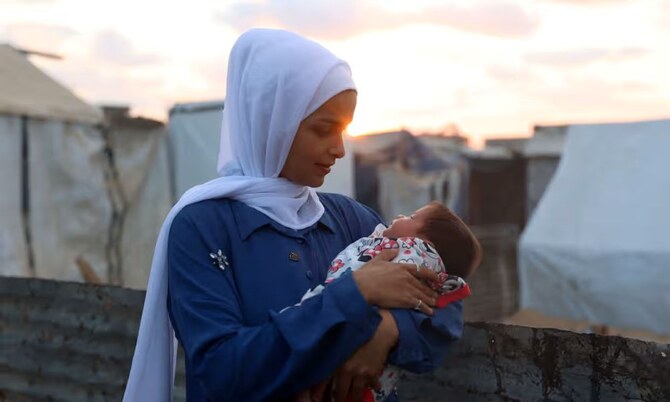

LONDON: Hundreds of media figures have called on the BBC to reinstate its documentary on children and women living in Gaza, condemning its removal as a blow to journalistic integrity.
In an open letter sent to BBC executives on Wednesday, prominent figures — including English sports broadcaster and former footballer Gary Lineker, filmmaker Ken Loach and “Game of Thrones” actor Indira Varma — criticized the network’s decision to pull “Gaza: How to Survive a Warzone,” calling it an “essential piece of journalism.”
The signatories argued that the documentary offers “a rare perspective on the lived experiences of Palestinians” and claimed that some of the criticism against it was rooted in “racist assumptions and the weaponization of identity.”
The BBC removed the documentary from its online platform, iPlayer, after it emerged that the narrator, 14-year-old Abdullah Al-Yazouri, is the son of a Hamas official — a fact the network said had not been disclosed by the film’s producers.
The decision followed backlash from several Jewish journalists and media watchdogs, who questioned whether the BBC had unknowingly paid a Hamas-affiliated individual and criticized the broadcaster for failing to uphold commissioning standards. In response, the BBC pulled the documentary pending a “due diligence” review.
The documentary, produced by independent company Hoyo Films, was based on nine months of footage filmed in the lead-up to last month’s Israel-Hamas ceasefire. It followed the lives of three children as they navigated the war.
The letter — also signed by actors Khalid Abdalla, India Amarteifio, Miriam Margolyes, Ruth Negga and Juliet Stevenson — did not dispute the narrator’s family ties to Hamas but argued that his father, Dr. Ayman Al-Yazouri, served as Gaza’s Deputy Minister of Agriculture, a “civil service role concerned with food production.”
“Conflating such governance roles in Gaza with terrorism is both factually incorrect and dehumanizing,” read the letter. “This broad-brush rhetoric assumes that Palestinians holding administrative roles are inherently complicit in violence — a racist trope that denies individuals their humanity and right to share their lived experiences.”
The signatories also condemned the backlash against Abdullah, saying criticism of his involvement ignored “core safeguarding principles.” They emphasized that children “must not be held responsible for the actions of adults, and weaponizing family associations to discredit a child’s testimony is both unethical and dangerous.”
Warning of the broader implications of the BBC’s decision, the letter argued that removing the documentary “sets a dangerous precedent.”
It added: “As media professionals, we are extremely alarmed by the intervention of political actors, including foreign diplomats, and what this means for the future of broadcasting in this country,” it added. “If every documentary made in conflict zones were subjected to this level of politicized scrutiny regarding contributors, filmmaking in these areas would become virtually impossible.”