DHAKA: Bangladesh and Pakistan have started direct government-to-government trade after decades of troubled relations with imports of 50,000 tons of rice, Dhaka said Tuesday.
The two countries were once one nation but split in a brutal 1971 war, with Bangladesh drawing closer to India.
However, long-time Bangladeshi prime minister Sheikh Hasina was ousted in an August 2024 revolution, fleeing by helicopter to her old ally India, where she has defied extradition requests to face charges of crimes against humanity.
Relations between India and Bangladesh’s new government have been frosty since then, allowing Islamabad and Dhaka to rebuild ties slowly.
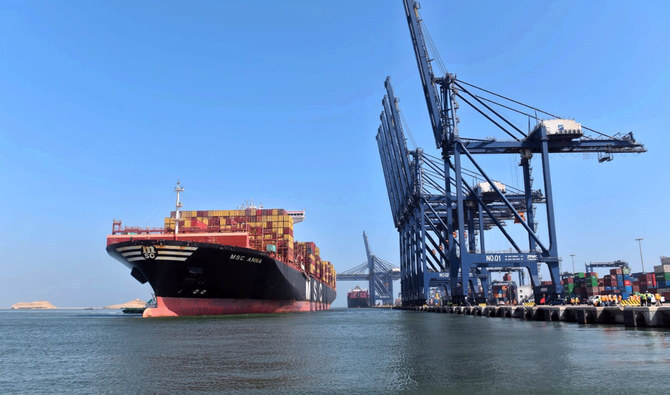
Direct private trade between the countries restarted in November 2024, when a container ship sailed from Pakistan’s Karachi to Bangladesh’s Chittagong.
It was the first cargo ship in decades to sail directly between the countries.
“For the first time we are importing 50,000 tons of rice from Pakistan, and it is the first government-to-government deal between the two countries,” Ziauddin Ahmed, a senior official at the food ministry in Dhaka, said Tuesday.
Bangladesh’s Directorate General of Food signed a memorandum of understanding with the state-owned Trading Corporation of Pakistan (TCP) in January for rice imports.
Ahmed said trade with Pakistan offers a “new avenue of sourcing and competitive pricing,” with state authorities in recent years importing the staple from India, Thailand and Vietnam.
Imports are critical to low-lying Bangladesh, a nation that is among the world’s most vulnerable to climate change, with large areas made up of deltas where the Ganges and the Brahmaputra rivers wind toward the sea.
The country of 170 million is particularly at risk of devastating floods and cyclones — disasters that only stand to accelerate as the planet keeps warming.
Private Bangladeshi companies have imported Pakistani rice for years, but Pakistani goods previously had to be off-loaded onto feeder vessels — usually in Sri Lanka, Malaysia or Singapore — before traveling on.
India and Pakistan — carved out of the subcontinent at the chaotic end of British colonial rule in 1947 — have fought multiple wars and remain bitter foes.
Meanwhile, China is wooing Bangladesh’s leaders, with members of the powerful Bangladesh National Party (BNP) on a visit to Beijing, the latest group offered a tour after trips by members of the Jamaat-e-Islami and other Islamist parties.
India has long been wary of China’s growing regional clout and the world’s two most populous countries compete for influence in South Asia, despite a recent diplomatic thaw.
China said this month that it was preparing dedicated hospitals for Bangladeshi patients after relations soured with India, which was once a major health care destination for them.


![]()

Bangladesh and Pakistan begin direct government-to-government trade
Short Url
https://arab.news/g2k8d
Bangladesh and Pakistan begin direct government-to-government trade
- Senior food ministry official says Bangladesh is importing 50,000 tons of rice from Pakistan
- Private Bangladeshi companies have imported Pakistani rice for years via countries like Sri Lanka
Latest updates


Recommended


© 2026 SAUDI RESEARCH & PUBLISHING COMPANY, All Rights Reserved And subject to Terms of Use Agreement.