
DHAKA: Bangladesh will receive a delivery of 25,000 tonnes of rice from Pakistan next month, its food ministry said on Sunday, confirming the resumption of direct bilateral trade between the two governments after more than five decades.
Following decades of acrimonious ties, Bangladesh-Pakistan relations have started to grow after the ouster of former Prime Minister Sheikh Hasina last August.
Bangladesh’s interim government has had more bilateral exchanges with Pakistan since, with the chief adviser, Nobel laureate Muhammad Yunus, having met twice with Pakistani Prime Minister Shehbaz Sharif.
Earlier this month, Dhaka finalized a deal to import rice from Pakistan, the food ministry said.
“The first consignment of 25,000 tonnes will arrive in Bangladesh on March 3,” Zia Uddin Ahmed, an additional secretary at the ministry, told Arab News.
“Since 1971, this is the first time Bangladesh initiated rice import at (the government-to-government) level from Pakistan.”
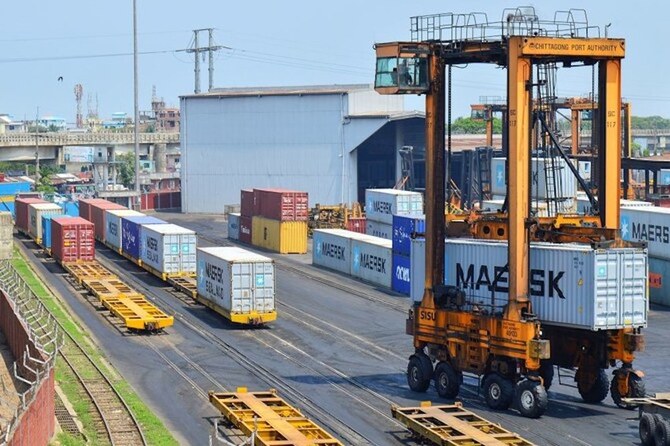
Their growing trade ties followed the two South Asian nations’ direct maritime contact in November, when a Pakistani cargo ship docked in Bangladesh for the first time since 1971 with imports and exports organized by private businesses.
Amena Mohsin, an international relations expert and lecturer at the North South University, said resuming trade with Pakistan is an important move for Bangladesh.
“We want that bilateral relationship with Pakistan to move forward. We always diversify our relationships (but) most importantly, at the moment, we are experiencing a low point row with India … In this context, this latest decision to import rice from Pakistan is very significant,” she told Arab News.
In her 15 years of uninterrupted rule, Hasina’s government was hostile toward Pakistan but closely allied with India, where she fled last year following a student-led popular uprising and remains exiled. Her removal from office was followed by the cooling of relations between Dhaka and New Delhi.
“But (as we move) forward to strengthen the bilateral ties with Pakistan, the issue of 1971 should be resolved at the same time,” Mohsin added, referring to the 1971 war of independence, which he said still weighs heavy on the minds of the people of Bangladesh.
Dhaka’s decision to import rice from Pakistan has significance in addressing an ongoing crisis of the staple due to floods and economic instability, which has led the government to import large quantities from India to avoid shortage.
“At the moment, there is a rice crisis in the Bangladesh market, and we are in need of sourcing rice from different sources at a competitive price,” Dr. Khondaker Golam Moazzem, research director at the Centre for Policy Dialogue in Dhaka, told Arab News.
“From that perspective, finding a new source (for importing rice) is a positive thing for us.”
Now that trade has resumed, Bangladesh and Pakistan have the potential to increase commerce ties in different areas, he added.
“Our businessmen can explore the Pakistan markets and consider the feasibility in terms of costs. With this latest rice import, opportunities to import other goods have increased here,” Moazzem said.
“It’s a new addition to the market, especially considering Bangladesh’s ongoing trade diversification efforts.”