


LONDON: Saudi Arabia’s ambassador to the UK, Prince Khalid bin Bandar, has reaffirmed Riyadh’s stance that a two-state solution remains the only viable path to resolving the Palestinian issue.
Speaking on Friday at a panel discussion with Arab News Editor-in-Chief Faisal Abbas, hosted by MENA-based think tank SRMG Think, the ambassador made it clear that the Kingdom rejects any notion of a one-state outcome.
“Discussions are just happening, and at the Arab Summit there will be agreement,” he said. “(It is) a little bit early for me to talk about it, but I can tell you that, definitely, we don’t envisage seeing nothing. Straight off the bat, there is no one state solution. As far as we’re concerned, we don’t see the displacement of the people of Gaza as a viable method in order to achieve prosperity.”
His remarks came as leaders from the GCC, Jordan and Egypt convened in Riyadh ahead of the emergency Arab Summit in Cairo, set for March 4. The meetings are focused on coordinated efforts in support of Palestine, developments in Gaza, and broader regional issues.
The Arab League meeting is largely in response to US President Donald Trump’s proposal for Washington to “take over” Gaza, displace its residents, and turn the enclave into the “Riviera of the Middle East” — a plan that Arab leaders have widely condemned. They are expected to present a formal response in Cairo.
“I do see a ray of hope in finding a solution, because, by and large, almost every country in the world has come to the same place of what is required for peace,” Prince Khalid said. However, he pointed to a key obstacle: Israel’s lack of engagement.
“For the first time, very openly, our biggest issue is dealing with Israel,” the ambassador said, adding that the government in Tel Aviv “seems to have no space for movement on a solution, and the solutions that are presented by the most outspoken members of this Israeli government don't seem to be solutions.”
He continued: “Give (it) a couple of days and more will come out. I can guarantee you that by and large, we agree on two-state solution, a government of Palestine, and then we can talk about everything else, but everything else is not going to happen without that.”
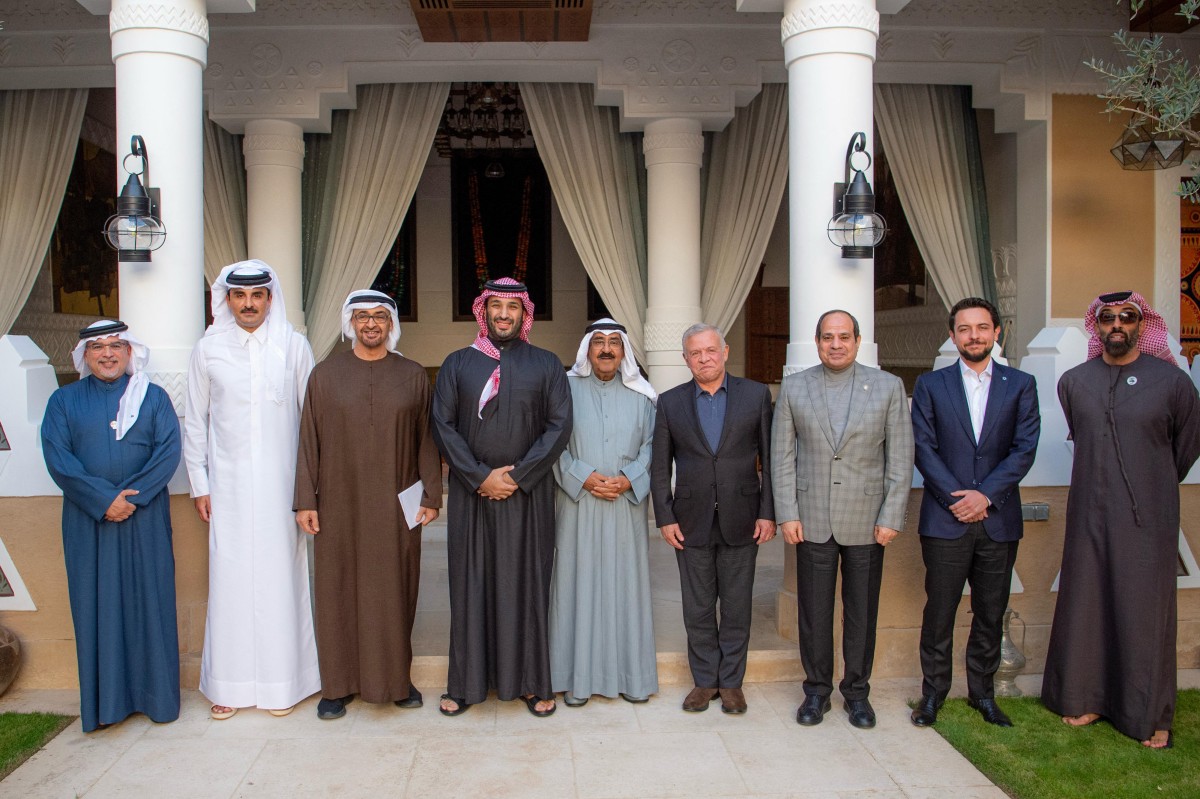
Arab leaders in Riyadh on Friday. (AFP/File)
Since the latest conflict between Hamas and Israel erupted on Oct. 7, 2023, Arab states have united in condemning the devastation in Gaza and calling for urgent peace talks. However, Prince Khalid said he has observed a notable shift in approach over the past month.
“The last 30 days of the (US) administration feel like it’s been 10 years. So much has happened in a short amount of time,” the ambassador said, adding that since Trump’s return to office, engagement with the region and beyond “has been unbelievable.”
“Things have changed. People have begun taking action and engaging and getting themselves into gear rather than sitting back and waiting,” Prince Khalid said.
“(Friday’s meeting in Riyadh) and the summit in Cairo are very good examples. We have decided to take responsibility for what is happening in our part of the world, ourselves, (and) we’re going to find our solution, and we will take that to the world. And my assumption is hopefully the world will come with us.
“It has brought the Arab countries certainly together in a way that I didn’t foresee at this time.”
The discussion was part of the Debating MENA series hosted at the Frontline Club in London, which brings regional leaders to discuss key developments in the Middle East. Previous events featured Robert Ford, a former US ambassador to Syria, and Mohammed Shia Al-Sudani, the prime minister of Iraq.
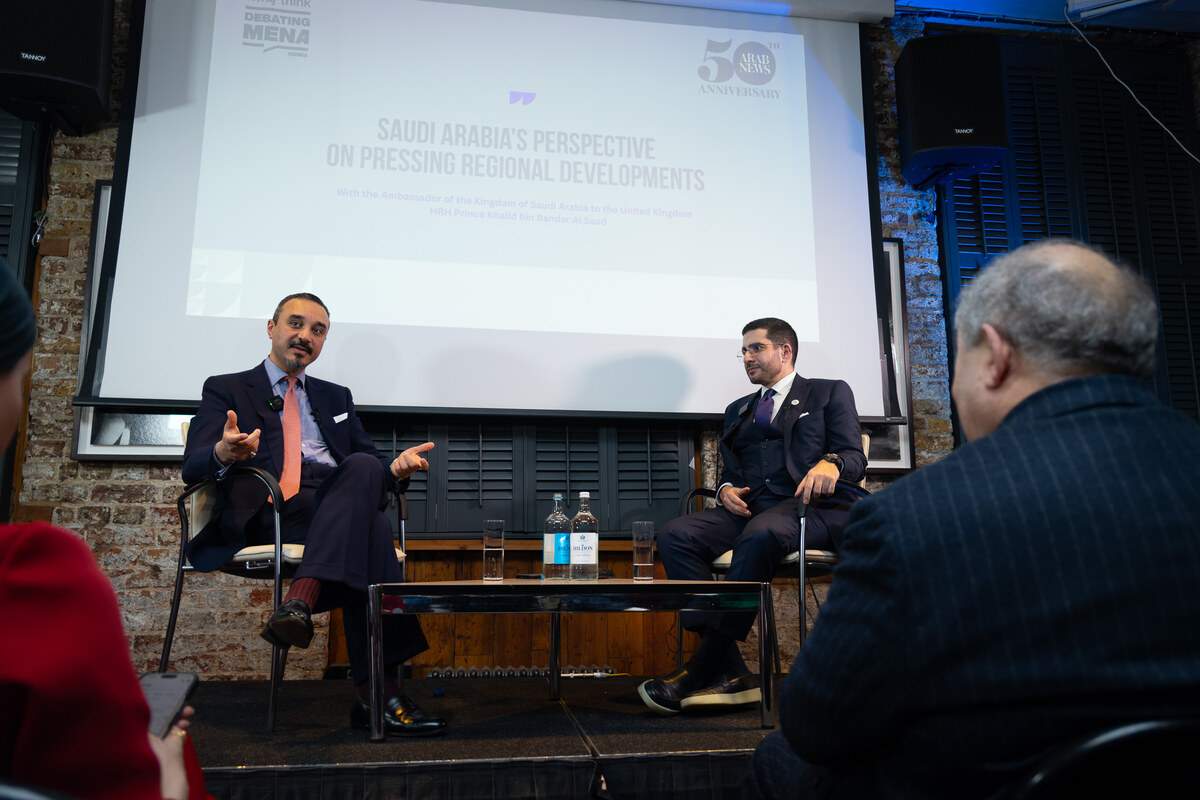
Prince Khalid with Faisal Abbas at the Frontline Club on Feb. 21, 2025. (AN photo)
During the conversation, Prince Khalid also addressed Saudi Arabia’s evolving relationships with regional powers, including Syria, Iran and Türkiye. He noted that while ties with Damascus and its new government are improving, Riyadh remains “cautious.”
“We have seen our engagement, or lack thereof, in the region historically, where we missed opportunities and allowed someone else to go back. We did not want to make that same mistake again with Syria,” Prince Khalid said.
“The engagement we have from the new government has been incredibly positive. Are we cautious? Of course, we’re going to be cautious. There are lots of reasons to be cautious.”
Trust remains a key challenge between the two countries, he added, particularly as Syria emerges from what he described as a “traumatic” period. The country’s transitional government, led by Ahmed Al-Sharaa, a former Al-Qaeda member and militant group commander, ousted Bashar Assad on Dec. 8, ending more than five decades of rule by the Assad family.
The last 13 years were marked by a brutal civil war that caused one of the worst humanitarian crises of the century.
“We need to build trust on both sides, but I think with Syria, the government has gone out of its way to try and engage with us, and we’re not going to say no to that, and we will try and help where we can and bring people along with us,” Prince Khalid said. He stressed that while Syria remains an independent nation, “it needs a lot of help” and will require significant international cooperation to rebuild.
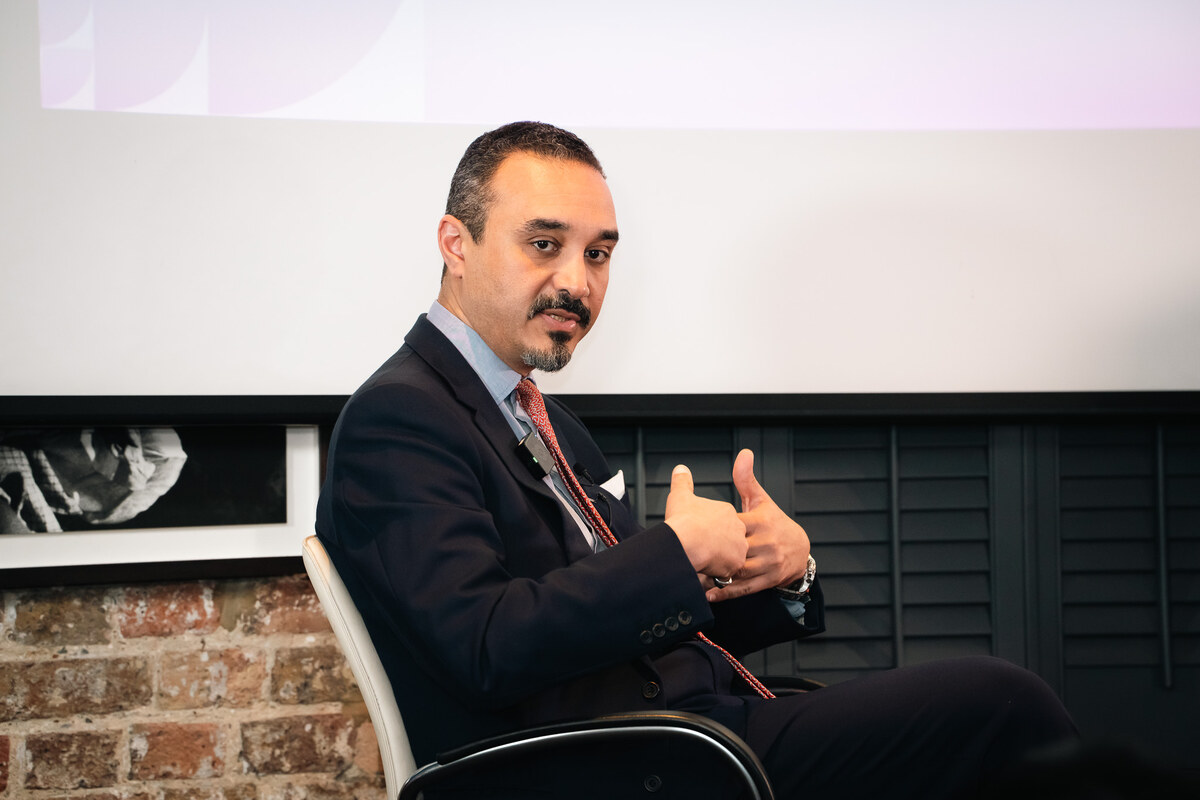
Prince Khalid bin Bandar, Saudi Arabia's ambassador to the UK. (AN/File)
Prince Khalid also described Syria’s diplomatic outreach as a bridge between Saudi Arabia and Türkiye, calling it a “really positive” development.
Despite normalizing ties in 2021 and strengthening economic relations in recent years, Riyadh and Ankara have maintained a politically complex relationship, partly due to historical tensions. However, the rebuilding of post-Assad Syria presents an opportunity for both nations to further deepen their ties.
He drew a parallel with Saudi Arabia’s rapprochement with Iran in March 2023, when China brokered talks to restore diplomatic relations after years of hostility. Prince Khalid noted that this renewed space for dialogue played a crucial role in preventing the October 7 conflict from escalating into a broader regional war.
“It took huge efforts to stop it from metastasizing into something much more dangerous,” he said. “And part of the reason we were able to do that is because we were engaging with Iran in a way we hadn’t been for quite some time.”
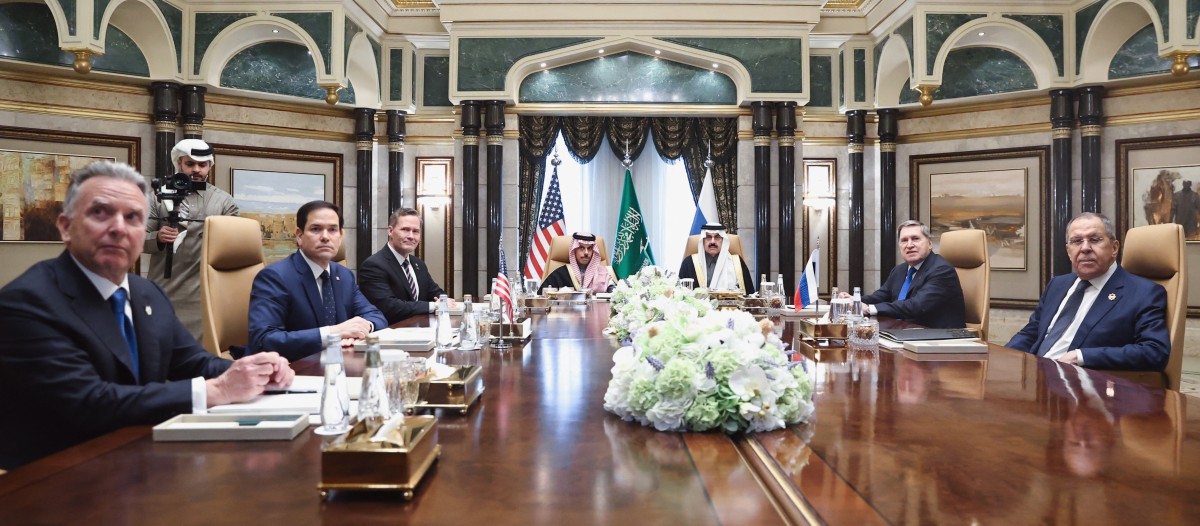
Top US and Russian representatives joined Saudi Foreign Minister Prince Faisal bin Farhan and National Security Adviser Mosaad bin Mohammad Al-Aiban for talks in Riyadh on Feb. 17, 2025. (AFP/File)
Prince Khalid also addressed the recent US-Russia talks, which were hosted in Riyadh this week. He emphasized that Saudi Arabia’s role was to provide a neutral platform for dialogue.
“We have perfectly good relations with Russia, great relations with the US. Our policy is always to talk to everyone regardless. That’s not always possible, but we constantly try. And I think this is a result of that, where both countries felt comfortable talking things down,” he said.
On a question as to why Kyiv was not represented at the talks, Prince Khalid said: “This is the beginning of a process. It is one element in what will require a lot of meetings and a lot of agreements, including, despite the way it’s been promoted, Ukraine. You can’t have peace between two people without one person at the table.”


