ALGIERS: Algeria on Tuesday denounced a visit by French Culture Minister Rachida Dati to Western Sahara, after Paris recognized Moroccan sovereignty over the disputed territory, as “objectionable on multiple levels.”
The vast desert territory is a former Spanish colony largely controlled by Morocco but claimed for decades by the Algeria-backed Polisario Front.
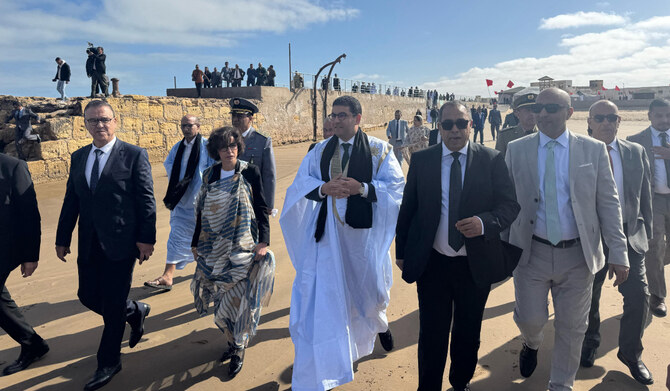
Dati, who described her visit as “historic,” launched with Moroccan Culture Minister Mohamed Mehdi Bensaid a French cultural mission in the territory’s main city, Laayoune.
An Algerian foreign ministry statement posted on social media Tuesday said the visit “reflects blatant disregard for international legality by a permanent member of the UN Security Council.”
“This visit reinforces Morocco’s fait accompli in Western Sahara, a territory where the decolonization process remains incomplete and the right to self-determination unfulfilled,” it said.
Dati’s trip, a first for a French official, “reflects the detestable image of a former colonial power in solidarity with a new one,” the statement added.
The United Nations considers Western Sahara to be a “non-self-governing territory” and has had a peacekeeping mission there since 1991, whose stated aim is to organize a referendum on the territory’s future.
But Rabat has repeatedly rejected any vote in which independence is an option, instead proposing autonomy under Morocco.
France’s stance on Western Sahara has been ambiguous in recent years, often straining its ties with Morocco.
But in July, French President Emmanuel Macron said Rabat’s autonomy plan was the “only basis” to resolve the Western Sahara dispute.
Algeria has backed the separatist Polisario Front and cut diplomatic relations with Rabat in 2021 — the year after Morocco normalized ties with Israel under a deal that awarded it US recognition of its annexation of the Western Sahara.
In October, the UN Security Council called for parties to “resume negotiations” to reach a “lasting and mutually acceptable solution” to the Western Sahara dispute.
In November 2020, the Polisario Front said it was ending a 29-year ceasefire with Morocco after Moroccan troops were deployed to the far south of the territory to remove independence supporters blocking the only road to Mauritania.
The Polisario Front claims the route is illegal, arguing that it did not exist when the ceasefire was established in 1991.


![]()

Algiers slams French minister’s visit to Western Sahara
Short Url
https://arab.news/8epns
Algiers slams French minister’s visit to Western Sahara
- France’s stance on Western Sahara has been ambiguous in recent years, often straining its ties with Morocco


Latest updates


© 2026 SAUDI RESEARCH & PUBLISHING COMPANY, All Rights Reserved And subject to Terms of Use Agreement.