Pakistan heightens security measures in Karachi, Lahore and Rawalpindi ahead of Champions Trophy 

Pakistan's police commando walks past posters displayed ahead of the Champions Trophy, outside the National Stadium in Karachi on February 17, 2025. (AFP)
Short Url
Updated 18 February 2025
Follow

Pakistan heightens security measures in Karachi, Lahore and Rawalpindi ahead of Champions Trophy 

  • Pakistan will host eight-nation Champions Trophy cricket tournament from Feb. 19-Mar. 9 
  • Police in Lahore, Karachi and twin cities have deployed over 20,000 troops for security 

ISLAMABAD: Pakistani authorities have started implementing sweeping security measures in the southern port city of Karachi and Punjab’s Lahore and Rawalpindi ahead of the Champions Trophy tournament, the first multi-country cricket event in nearly 30 years to take place in the country. 

The South Asian nation hopes to erase worries of instability in the country and restore confidence in it as a tourism and investment destination despite its security challenges. Pakistan has suffered a surge in militant attacks in its western provinces bordering Afghanistan since November 2022 after a fragile truce between militants and the state broke down. 

A near fatal militant attack on the Sri Lankan cricket team in 2009 in Lahore scared away international teams from touring Pakistan for several years. For the Champions Trophy, police in Lahore, Karachi and the twin cities of Rawalpindi and Islamabad have deployed over 20,000 troops, including snipers on rooftops along key routes. Hotels where players will stay, stadiums and airports will be heavily guarded as will the roads connecting these locations.

“My team and all the members of all the relevant forces are engaged in this, and from the police side 5000 plus police officers will be deployed,” Maqsood Ahmed, the deputy inspector general of security in Karachi, told Reuters. “They will be doing the traffic duties, the rout protection, the venue protection, the crowd management and other duties along with the intelligence gathering and the operations before the event.”
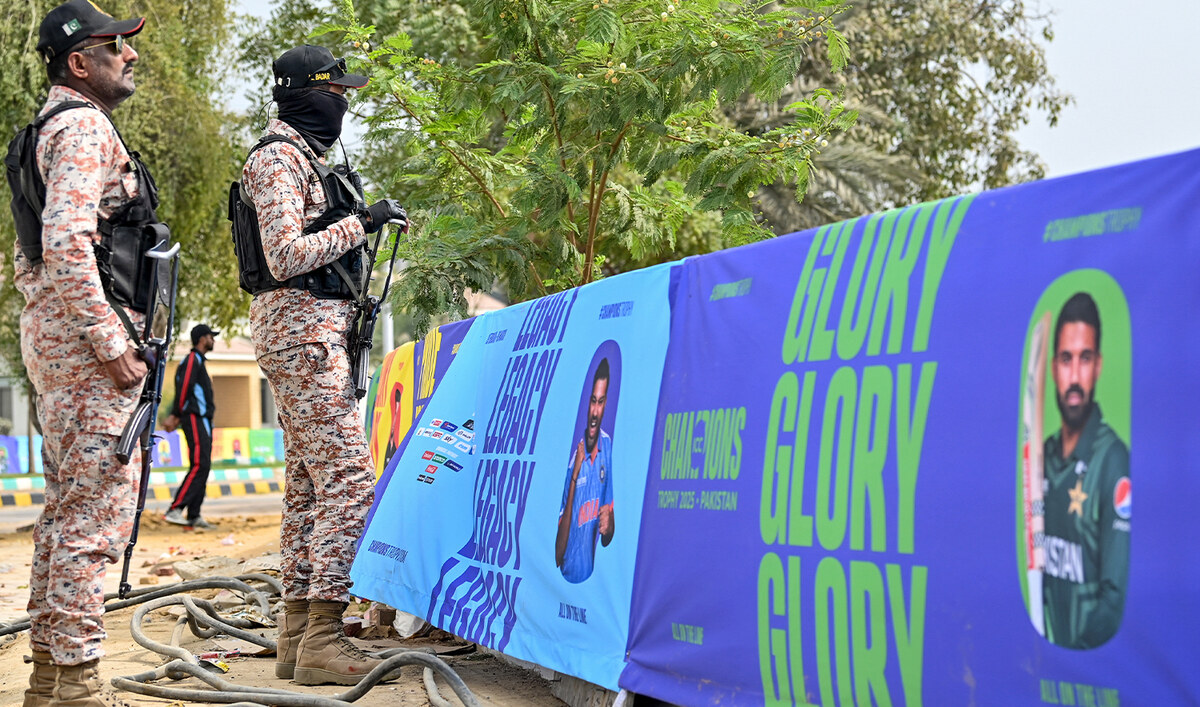


Pakistan's para-military soldiers stand guard at the National Stadium in Karachi on February 17, 2025. (AFP)

Karachi police said they have set up an additional SWAT unit to respond to emergencies and conducted preventive intelligence operations to identify potential threats. Ahmed said other law enforcement agencies such as Rangers and the Pakistan Army will cover emergency situations as a secondary reaction force.

Meanwhile, Punjab Police have updated surveillance systems and installed around 10,000 AI-powered facial recognition cameras and additional CCTV cameras across the two cities.

Mohammad Taha, a Karachi resident, pointed out that in the past, authorities would not only block the main thoroughfare but all streets surrounding the National Stadium in the city when international cricket newly returned to Pakistan.

“Now the situation is different,” he told Reuters. “Yes, the main thoroughfare Shahrah-e-Faisal will be closed but the traffic will keep flowing on other roads and flyovers surrounding the stadium.”
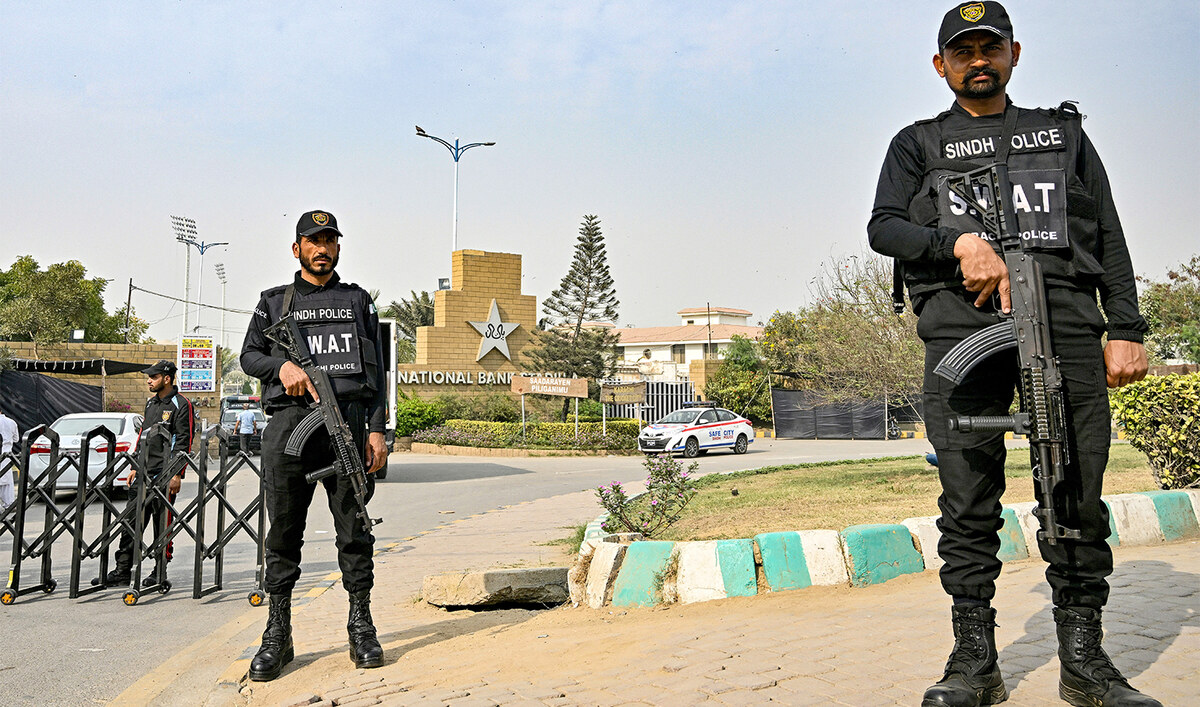


Pakistan's police commandos stand guard outside the National Stadium in Karachi on February 17, 2025. (AFP)

Mohammad Munaf, another Karachi resident, agreed. 

“This time the planning seems to be good that the matches are going on and there is no hindrance in traffic flow,” Munaf told Reuters. “The security is also very good. We can easily go to watch matches. We can go toward stadium or anywhere near it anytime. So, we don’t face these issues.”


Senior Daesh spokesperson in Pakistan’s custody— state media

Updated 5 sec ago
Follow

Senior Daesh spokesperson in Pakistan’s custody— state media

  • Sultan Aziz Azzam, a senior member of Daesh regional affiliate ISKP, has been listed as “Specially Designated Global Terrorist” by Washington
  • Azzam, who oversaw banned outfit’s media operations, was arrested in May while attempting to cross into Pakistan from Afghanistan, says state media

ISLAMABAD: Pakistani authorities have taken into custody Sultan Aziz Azzam, a senior member of Daesh who used to oversee the banned outfit’s media operations and headed its “Al Azzam” outlet, state media reported on Thursday. 

The state-run Pakistan TV Digital reported that Azzam was a senior member of Daesh regional affiliate ISKP, who hails from Afghanistan’s Nangarhar province and is a graduate of the University of Nangarhar where he studied Islamic jurisprudence. 

The state media said he joined ISKP in 2016 and later became a prominent member of its leadership council.

“He was arrested in May 2025 while attempting to cross from Afghanistan into Pakistan,” Pakistan TV Digital reported, citing intelligence sources. 

In November 2021, Washington listed Azzam as a “Specially Designated Global Terrorist” (SDGT). The move bars American citizens from engaging in transactions with persons designated as SDGTs. 

According to a report on the UN Security Council’s website, Azzam has played an “instrumental role” in spreading Daesh’s violent ideology, glorifying and justifying “terrorist acts.” 

“Building on his former experience as an Afghan journalist, his activity as ISIL-K’s spokesperson has increased ISIL-K’s visibility and influence among its followers,” the report states. 

The report further states Azzam claimed responsibility on behalf of Daesh for the suicide attack near Hamid Karzai International Airport on Aug. 26, 2021, which killed at least 170 Afghans and 13 US service members and injured 150 more. 

The development takes place amid tense relations between Pakistan and Afghanistan, with Islamabad alleging militants use Afghan soil to carry out attacks against Pakistan. Kabul denies the allegations. 

Tensions surged in October when Pakistan and Afghanistan engaged in fierce border clashes, claiming to have killed dozens of soldiers of the other side. 

Pakistan has urged the Afghan Taliban-led government to take “decisive action” against militants it says operate from its soil. Afghanistan says it cannot be held responsible for Pakistan’s security challenges.