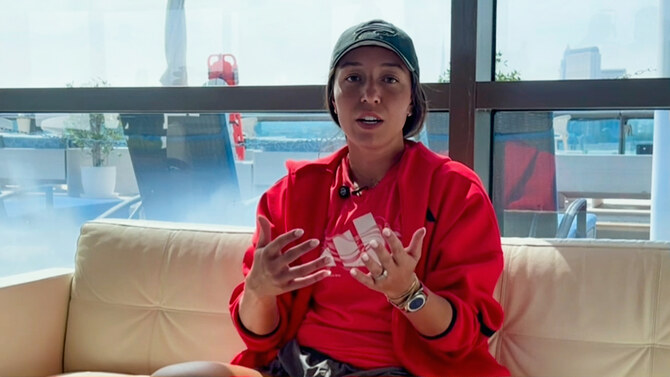

DUBAI: World number five Jessica Pegula believes the handling of the recent high profile anti-doping cases of Jannik Sinner and Iga Swiatek has shown that the “process is completely broken.”
Meanwhile, top-ranked Aryna Sabalenka admits she cannot trust the tennis anti-doping system and has become “too scared” of it.
Sinner’s long doping saga came to an end on Saturday after he agreed to a three-month ban from tennis, admitting “partial responsibility” for team mistakes which led to him twice testing positive for traces of clostebol in March last year.
Sinner was facing a potential ban of two years after the World Anti-Doping Agency appealed to the Court of Arbitration for Sport against his initial exoneration by the International Tennis Integrity Agency , announced in August.
In a surprising move, WADA withdrew its appeal and came to an agreement with Sinner to accept a three-month ban.
In a statement, WADA said “Sinner did not intend to cheat” but that he would serve his suspension as he is responsible for the actions of his entourage.
Pegula, last year’s US Open finalist and a member of the WTA Player Council, said the inconsistencies in the way cases are being processed and judged is creating an unfair environment for all tennis players.
“I think my reaction is that, whether you think he did or you don’t, or whatever side you're on, the process just seems to be completely like not a process,” the American told reporters in Dubai on Sunday.
“It seems to just kind of be whatever decisions and factors they take into consideration, and they just kind of make up their own ruling. I don’t really understand how that’s fair for athletes, how it’s fair for players when there’s just so much inconsistency and you have no idea.”
Pegula added that any emails the players have been receiving regarding anti-doping cases contain explanations that are too easy to come with, and are just ways for anti-doping organizations to justify their inconsistent rulings and processes.
“If you’re clean or not, the process is completely broken,” she stated.
“I think it needs to be seriously looked at and considered.
“I feel like they have so much power to ruin someone's career, as well. I think there needs to be something done about that because it just seems really unfair.
“I don’t think any of the players trust the process at all right now. Zero. It’s just a horrible look for the sport.”
Sabalenka refused to comment on the outcome of the Sinner case but says she has become too wary of falling foul to the sport’s strict anti-doping rules.
“You just start to be more careful. For example, before I wouldn’t care to leave my glass of water and go to the bathroom in a restaurant and now, I’m not going to drink from the same glass of water,” said the Belarusian world number one.
“You just become a bit too much aware of stuff and this thing gets to your head that, like, if someone used a cream on you and you test positive, they’re going to go for you and they’re not going to believe you or anything.
“You just become too scared of the system. I don’t see how I can trust the system.”
American World No. 3 Coco Gauff has not paid much attention to the details of the recent anti-doping cases and is instead sticking to her strategy of avoiding taking any supplements to minimize the risk of testing positive for any banned substance.
“I trust that everyone is doing what they can to protect the sport. As a player, that’s all I can hope for,” said the former US Open champion.
“I just hope it’s more for the protection of the sport and not just out to, like, get players.”