

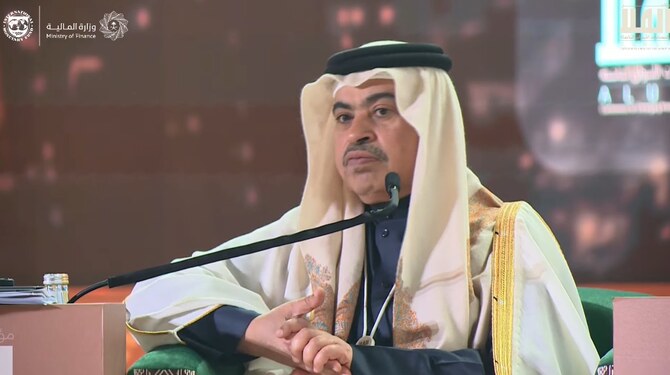

RIYADH: Maintaining financial discipline is crucial for countries in the Middle East as they work to diversify their economies and reduce reliance on energy revenues, according to a Qatari minister.
During a panel discussion at the AlUla Conference for Emerging Market Economies organized by the Saudi Ministry of Finance and the International Monetary Fund, Ali bin Ahmed Al-Kuwari, Qatar’s minister of finance, said that countries in the Middle East have engaged in healthy competition as they pursue their economic diversification journeys.
Saudi Arabia’s Vision 2030, Qatar’s Vision 2030, and the UAE’s Vision 2031 programs are focused on transitioning from a hydrocarbon-based economy to a knowledge-driven one.
These initiatives also aim to strengthen non-energy sectors, which include tourism, hospitality, manufacturing, and technology.
“While we build the diversification, it is very important to have a long-term view of how we see things change in terms of revenue and expenditure. The fiscal policy framework in Qatar builds different scenarios for revenue. We build discipline around the spending so the spending goes to the right places. We make sure that surpluses go in the right direction,” said Al-Kuwari.
He added: “Surplus goes to the Qatar Investment Authority because it is Qatar’s revenue diversification engine. A part of the surplus also goes to the shock absorption buffer by enhancing the Qatar Central Bank reserves. Part of it is also reinvested in the economy itself to achieve diversification.”
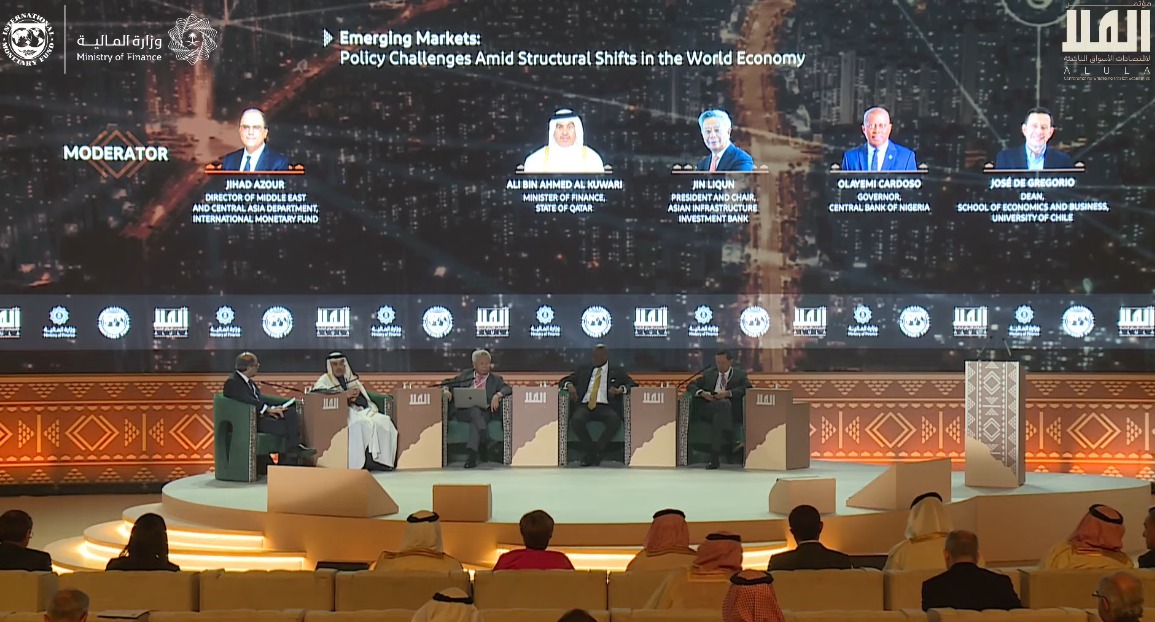
A panel discussion was held during the AlUla Conference for Emerging Market Economies on ‘Emerging Markets: Policy Challenges Amid Structural Shifts in the World Economy.’ AN Photo
According to the minister, countries including the Kingdom, the UAE, Bahrain, Kuwait, and Oman are all diversifying their economies effectively.
“Saudi, UAE, Bahrain, Kuwait, Oman everyone is working together. It is a healthy competition. We are also complementing each other,” the minister said.
He also said that Qatar’s economic diversification is based on four sectors, including technology, low-carbon manufacturing, logistics, and tourism, adding that the nation has already started seeing the results.
“In tourism, during the World Cup in 2022, we received 2.3 million visitors. In 2023, the year after the World Cup, visitors increased to 4 million, and in 2024, we welcomed 4 million,” said Al-Kuwari. The Qatari minister also said his country seeks to increase the production of liquefied natural gas by 80 percent in a phased manner by 2030, and it will help ensure a sufficient energy supply in the world.
During the event, which was held in the historic city of AlUla and runs from Feb. 16— 17, Jin Liqun, president and chairman of the Asian Infrastructure Investment Bank, said the entity is closely cooperating with other multilateral development banks to assist the funding needs in emerging economies.
“We do not work alone, as a new institution, we work with our peer institutions, and other members of the MBD family. We develop our policy lending to support the countries’ efforts toward net zero,” said Liqun.
He added: “We provide local currency financing. We can help countries to avoid currency risks, and also we believe that it is important to introduce climate-resilient debt crisis financing. This provides temporary relief after climate disasters. We have a soft fund window to help reduce the costs of infrastructure investments.”
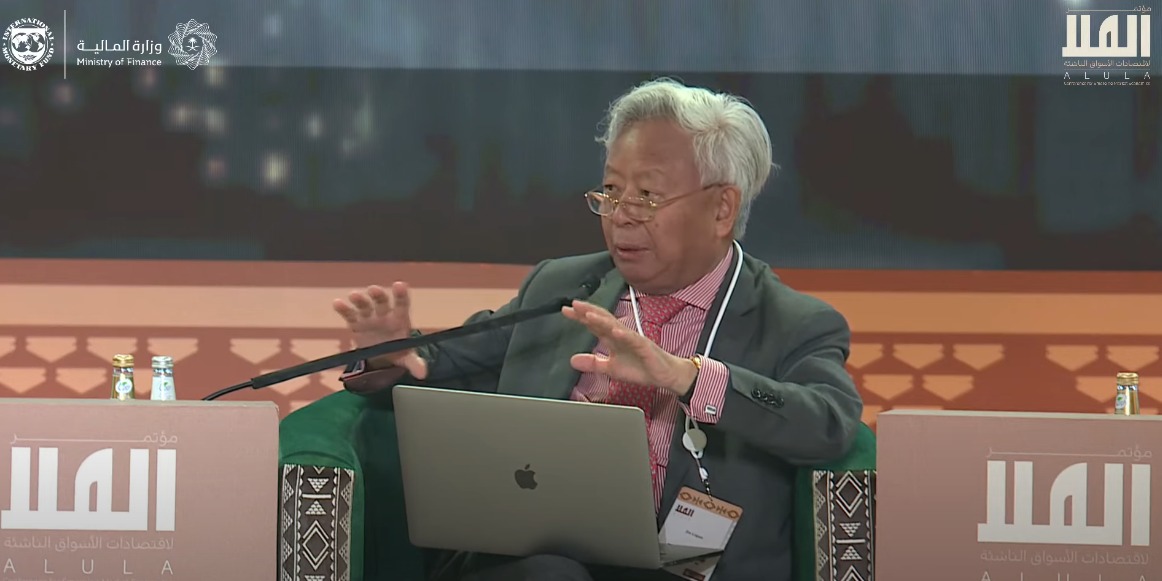
Jin Liqun, president and chairman of the Asian Infrastructure Investment Bank, speaks during the panel discussion. AN Photo
Liqun further said that the Asian Infrastructure Investment Bank is assisting emerging economies in positioning themselves within the global green economy and accessing its value chains.
“The green transition is a major opportunity for emerging countries, especially countries in the Gulf Cooperation Council regions. This is a great opportunity for GCC countries to develop sustainable and resilient economies,” added Liqun.
The Dean of the School of Economics and Business at the University of Chile, Jose De Gregorio, said emerging markets should continue doing what they are doing now but should also effectively address the potential risks as time progresses.
“Emerging markets should keep doing things which they are doing now. However, there are risks which we have to take into account and be prepared for. First, fiscal policies are not as strong as they were fifteen years ago. Why? Because we have spent a lot of money during the previous crisis. The second one is the geopolitical thing,” added De Gregorio.
The Governor of the Central Bank of Nigeria, Olayemi Cardoso, said countries should possess a deep knowledge of their economies before making strategic fiscal policy decisions.
“My experience has been that it is important for economies to understand their own economies and not just necessarily go in line with what everybody else is doing,” said Cardoso.


