

Sandgrouse: An inspirational symbol of beauty and resilience in Jazan

1 / 6
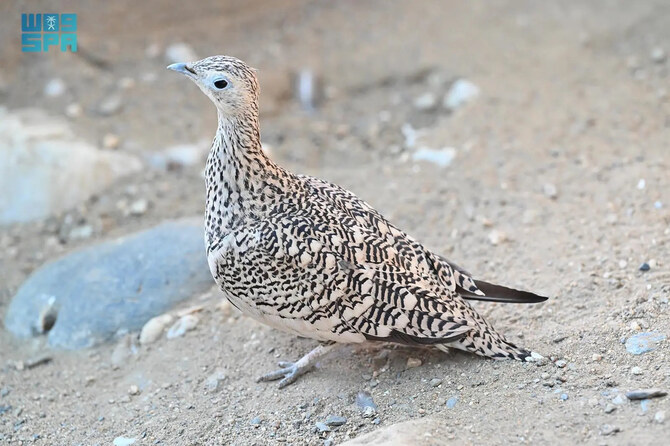
In Saudi literature, the sandgrouse has also become a symbol of the free spirit, constantly on the move yet ultimately drawn back to its homeland. (SPA)
2 / 6
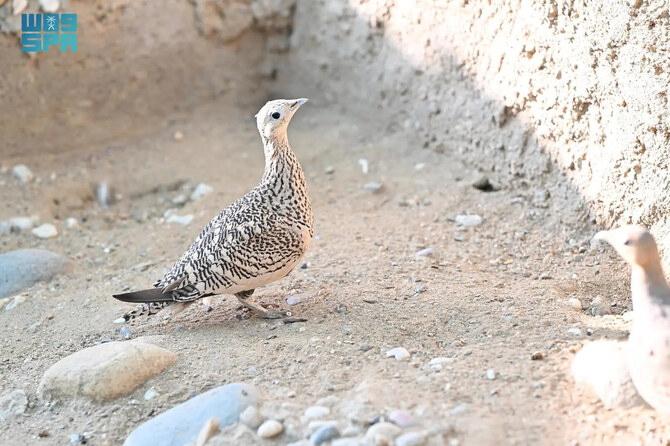
In Saudi literature, the sandgrouse has also become a symbol of the free spirit, constantly on the move yet ultimately drawn back to its homeland. (SPA)
3 / 6
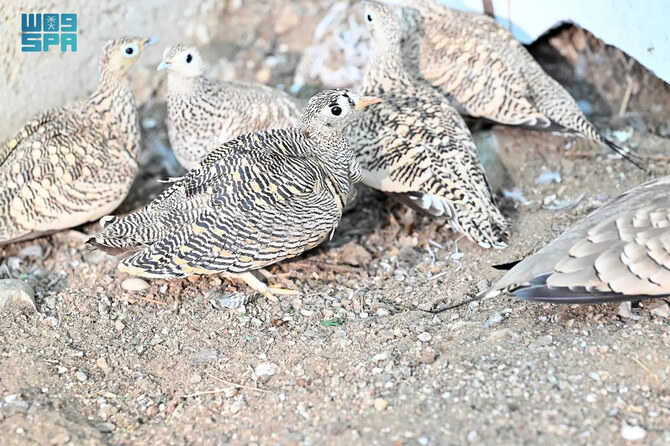
In Saudi literature, the sandgrouse has also become a symbol of the free spirit, constantly on the move yet ultimately drawn back to its homeland. (SPA)
4 / 6
In Saudi literature, the sandgrouse has also become a symbol of the free spirit, constantly on the move yet ultimately drawn back to its homeland
5 / 6
In Saudi literature, the sandgrouse has also become a symbol of the free spirit, constantly on the move yet ultimately drawn back to its homeland. (SPA)
6 / 6
In Saudi literature, the sandgrouse has also become a symbol of the free spirit, constantly on the move yet ultimately drawn back to its homeland. (SPA)
Short Url
Updated 16 February 2025
Follow

Sandgrouse: An inspirational symbol of beauty and resilience in Jazan

  • Poets draw parallels between the sandgrouse’s desert journeys and human experience
  • Birds carry water in their feathers for their young

JAZAN: The Jazan region of Saudi Arabia is a haven for a wide variety of birdlife, including the sandgrouse, a species admired for its striking crowned and striped beauty, remarkable desert adaptation, and its deep roots in Arab folklore and literature, inspiring poets and writers for generations.

From pre-Islamic poetry to modern works, the squawking sandgrouse has symbolized patience, endurance, loyalty, departure, and longing. Poets have drawn parallels between the bird’s arduous desert journeys and human experiences. One poet expresses a sense of shared hardship, comparing their own sorrow with the sandgrouse’s search for water.
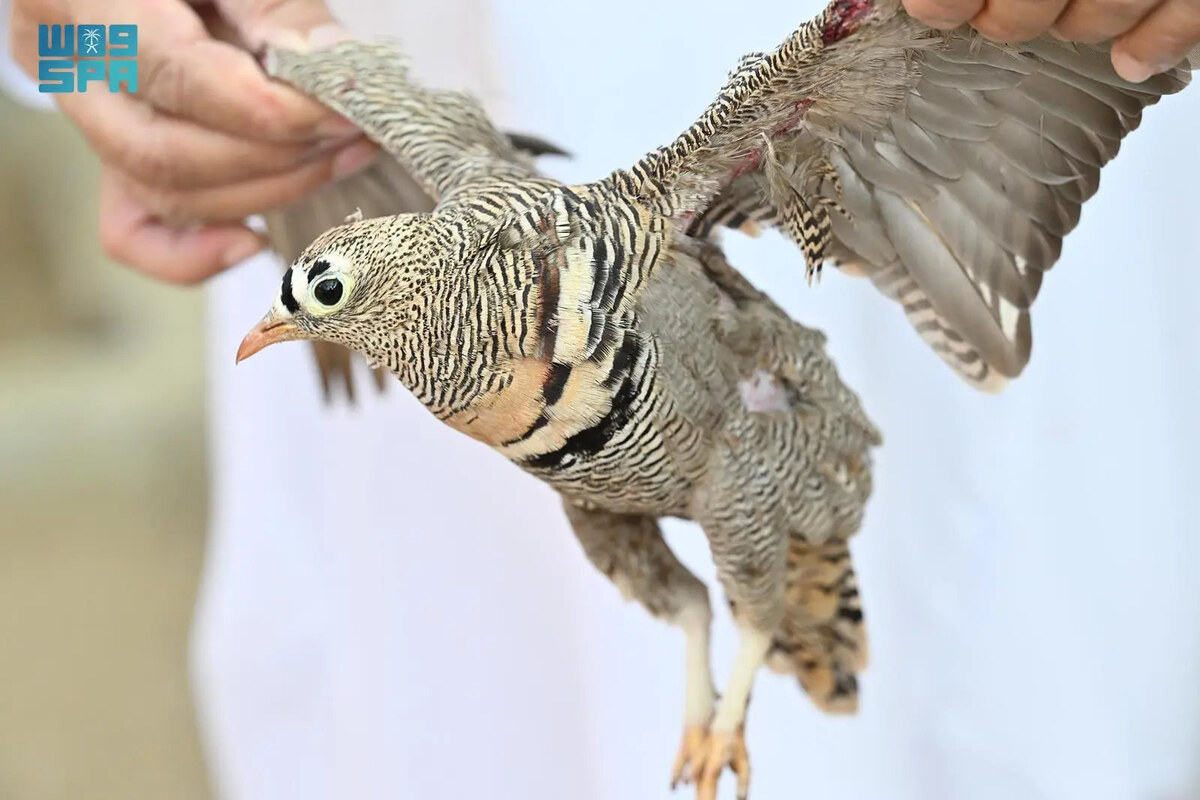


The remarkable ability of sandgrouses to carry water in their feathers for their young exemplifies their dedication to nurturing their offspring. (SPA)

In Saudi literature, the sandgrouse has also become a symbol of the free spirit, constantly on the move yet ultimately drawn back to its homeland, the Saudi Press Agency reported.

Jazan poet Mohammed bin Ali Al-Sanousi, a prominent figure in the region’s poetic tradition, often incorporated imagery from the local environment, including the sandgrouse, into his work. He reflects on a sense of displacement and yearning for home, echoing the sandgrouse’s migratory nature.

Beyond literature, the sandgrouse appears in popular proverbs and oral traditions, frequently noted for its speed and ability to locate water in arid landscapes. The saying, “If you see a sandgrouse, know that water is near,” illustrates its practical significance as a guide for those crossing the desert.

Jazan welcomes the sandgrouse, especially during migration seasons. These birds, capable of reaching flight speeds of 60 to 70 kilometers per hour, travel up to 50 kilometers each day in search of sustenance. Their remarkable ability to carry water in their feathers, transporting it long distances to their young, exemplifies their dedication to nurturing their offspring.

The sandgrouse is an integral part of Jazan’s cultural heritage, inspiring artists and writers, and serving as a powerful reminder of the beauty and biodiversity of Saudi Arabia’s natural environment.


Foreign ministers chair Saudi-Omani coordination council meeting in Muscat

Updated 23 December 2025
Follow

Foreign ministers chair Saudi-Omani coordination council meeting in Muscat

MUSCAT: Saudi Foreign Minister Prince Faisal bin Farhan met with Oman’s Foreign Minister Sayyid Badr bin Hamad Al-Busaidi on Monday.

They reviewed bilateral relations between their nations and ways to enhance and develop them across various fields. Additionally, they discussed regional and international developments.

The ministers co-chaired the third meeting of the Saudi-Omani Coordination Council in the Omani capital, Muscat, with the participation of the heads of the Council’s subsidiary committees and the two heads of the Council’s General Secretariat teams.

The meeting comes as an affirmation of the keenness of Saudi and Omani leaders to strengthen ties and advance them toward greater prosperity for both nations.

In his remarks during the meeting, Prince Faisal affirmed that gathering builds on the previous council meeting, held last year in AlUla, and on its positive and fruitful outcomes within the framework of the approved recommendations and initiatives. 

He stressed the importance of continuing the work of the council’s subsidiary committees to complete the necessary procedures to implement the remaining initiatives, and of the General Secretariat’s role in follow-up and in addressing any challenges that may hinder implementation.

He also underscored the importance of developing and enhancing trade relations, stimulating investment, and strengthening cooperation between the public and private sectors.

He also praised the ongoing work to establish and launch the Coordination Council’s electronic platform, which aims to connect all committee work and initiatives to facilitate follow-up on the Council’s progress. 

Al-Busaidi affirmed in his remarks the qualitative progress in relations between the two countries and the notable development witnessed across numerous sectors toward achieving economic integration and enhancing intra-trade and joint investments. 

The Omani foreign minister also highlighted deeper cooperation in the security and judicial fields, as well as the cultural and tourism sectors, noting the advanced and continuous political cooperation, consultation, and coordination on regional and international issues.