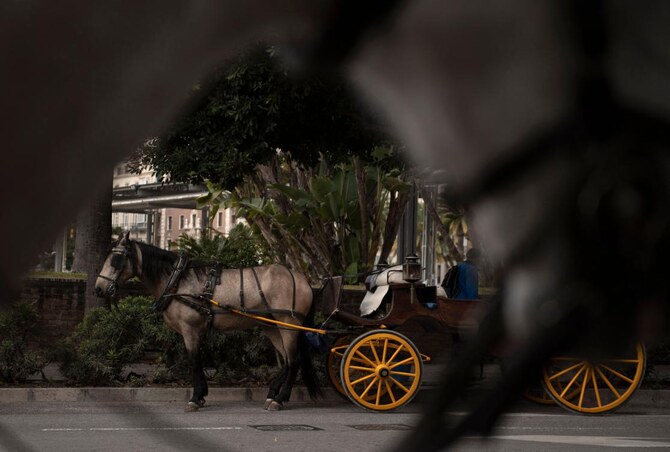
MALAGA: A pair of tourists admire the shimmering Mediterranean from their horse-drawn carriage on the seaside promenade in Spain’s southern port of Malaga — a postcard image whose days are numbered.
The city wants to ban horse-drawn carriages from its streets this year to protect the animals after years of criticism of the trade.
The decision to follow in the footsteps of other tourist hotspots such as Rome and Chicago dismayed visitors including Anastasia, a chef who had traveled from Britain.
“It’s really nice, I was impressed — seeing Malaga like this is completely different,” said the 47-year-old as she dismounted from a carriage.
Fellow British tourist Robert agreed, expressing his wonder at his “amazing” trip with a “beautiful” horse.
“I am sure it helps the city attract more tourists,” added the 46-year-old business owner.
Animal rights activists criticize horse-drawn carriages for tourists because of the strain they put on the animals, especially during the searing summer heat.
Summer temperatures in Malaga can soar to 45 degrees Celsius (113 degrees Fahrenheit), said Concordia Marquez, founder of a nearby shelter called “Todos los Caballos del Mundo” (All the Horses in the World).
“Horses and horse-drawn carriages have to cover a lot of ground, both to get to where they spend the night, where they sleep, and to get back to their place of work,” added Marquez.
“That’s inhumane to make a horse work like that.”
Malaga city hall had announced in 2015 that it aimed to ban horse-drawn carriages from its streets by 2035, but it now wants to bring the ban forward to this year.
Officials are in talks with the holders of the last 25 licenses to reach an agreement.
“We have been negotiating for a long time, we have met 99 percent of the demands of carriage owners,” Malaga’s city councillor for mobility, Maria Trinidad Hernandez, told AFP.
“What we are looking for is animal welfare, but it is also the case that they used to have more places to circulate,” she added.
“With the building works that have gone on for the last 20 years, there is hardly any left. There is the park and a little bit of the promenade left.”
Horse-drawn carriages will not totally disappear — they will still be allowed as part of festivals and traditions like Malaga’s annual fair in August.
“What there won’t be are municipal licenses, the tourist horse-drawn carriage, the one you take and pay for as if it were a street taxi,” said Hernandez.


![]()

Spanish tourist hotspot Malaga to ban horse-drawn carriages
Short Url
https://arab.news/4trp4
Spanish tourist hotspot Malaga to ban horse-drawn carriages
Latest updates







© 2026 SAUDI RESEARCH & PUBLISHING COMPANY, All Rights Reserved And subject to Terms of Use Agreement.