



ISLAMABAD: Among the many forgotten relics dotting the vast spread of the Potohar Plateau in northern Punjab is the Rawat Fort, which stands as a silent witness to centuries of history in what is this part of present-day Pakistan.
The fort lies about 18 kilometers east of the garrison city of Rawalpindi on the Grand Trunk Road highway and is believed to have been built in the 15th or 16th centuries during the Delhi Sultanate period.
There are many legends about the fort’s founding and its purpose. According to Pakistan’s Department of Archaeology and Museums (DOAM), the fort, which derives is named from the Arabic word rabat meaning caravanserai, was built as an inn that provided lodging for travelers, merchants, and caravans passing through the strategic location of Rawat, at the crossroads of trade routes and a gateway to Kashmir and Central Asia.
Some historians, however, believe the fort was built in 1036 AD by Sultan Masood, the son of Sultan Mehmood Ghaznavi, the head of the Ghaznavid Empire who ruled from 998 to 1030 AD and who had at the time of his death raised an extensive military empire that extended from northwestern Iran proper to the Punjab in the Indian subcontinent, Khwarazm in Transoxiana, and Makran. Other historical accounts say the fort was built by Sultan Sarang Khan Gakhar, the chief of the Gakhar tribes who was made ruler of the Pothohar Plateau by Mughal emperor Babar in 1520.
Dr. Abdul Ghafoor Lone, a director at DOAM which is restoring the monument, told Arab News Rawat Fort was one of many hidden relics near the Pakistani capital of Islamabad and its main attraction was a central courtyard that housed the ruined graves of Sultan Sarang and a number of his sons who died fighting Sher Shah Suri, the ruler of Bihar from 1530 to 1540 and Sultan of Hindustan from 1540 until his death in 1545. In fact, the area in which the fort is located is known as a key battleground between the Gakhar tribe and Suri.
“Tatar Khan had two sons, Sarang Khan and Adam Khan,” Lone explained. “Islam Shah, who was the son of [emperor] Sher Shah Suri, when he fought Sarang Khan, Sarang Khan was killed in battle. Sarang Khan and his 12-13 sons were also killed.”
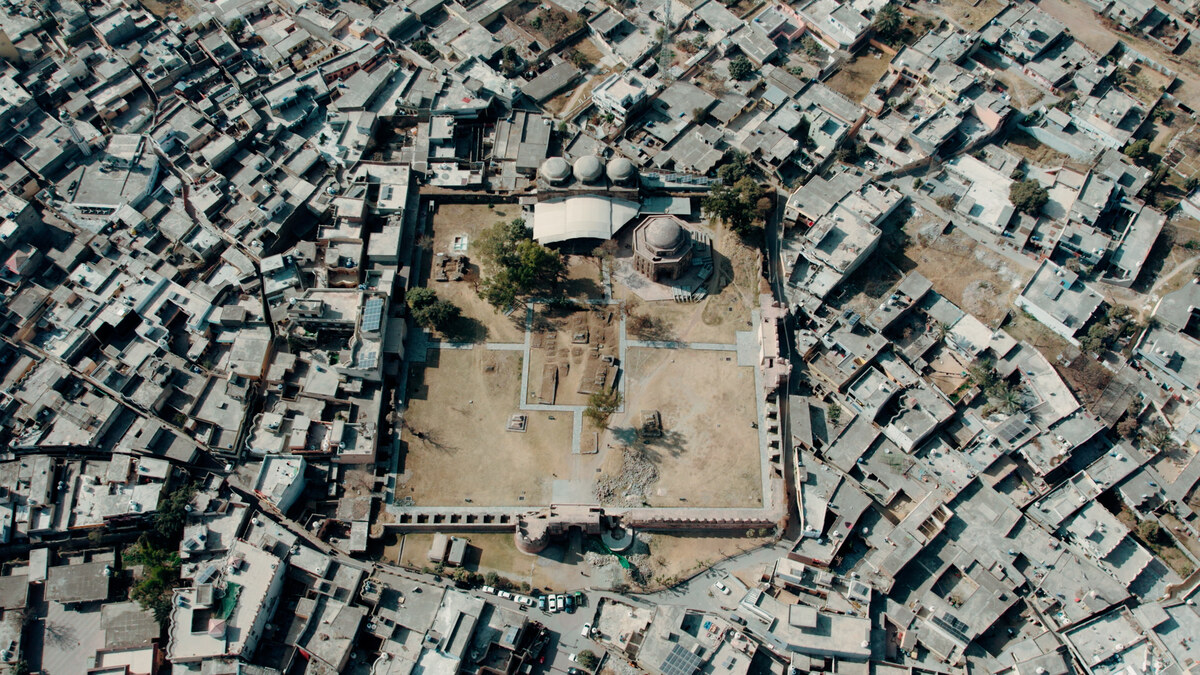
This photo, taken on February 7, 2025, shows aerial view of the Pakistani archaeological site Rawat Fort in Potohar region, in northern Punjab, Pakistan. (AN Photo)
Adam Khan recovered the bodies, the archaeologist said, and built a tomb in their honor inside Rawat Fort.
Indeed, the structure has witnessed the rise and fall of many empires and military commanders. The building’s strategic importance led to its inclusion in the Mughal defensive line against invaders from the North-West. The fort’s location on the route used by Mughal emperors traveling to Kashmir for pleasure and strategic purposes also cemented its importance.
In the early 19th century, Sikh forces led by Sardar Milkha Singh captured Rawat Fort, and under Sikh rule, the fort underwent significant renovations and expansions. But the British annexation of Punjab in 1849 marked the beginning of the fort’s decline as the British no longer saw it as strategically essential. Over time, the once-imposing structure fell into disrepair.
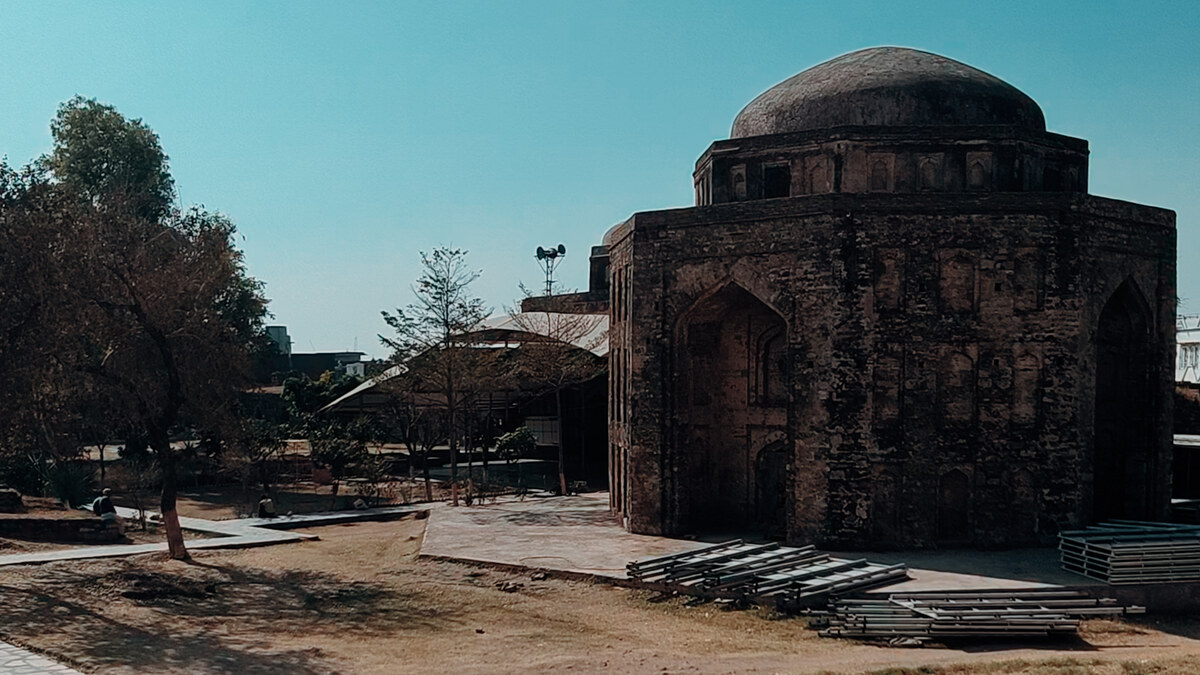
This photo, taken on February 7, 2025, shows the Pakistani archaeological site Rawat Fort in Potohar region, in northern Punjab, Pakistan. (AN Photo)
“It has been used throughout the ages,” Dr. Tahir Saeed, an archaeologist and visiting professor at the Quaid-e-Azam University in Islamabad, told Arab News.
“During the Sher Shah Suri period, it was used as a port for the Mughals … The caravans passing through GT Road used it as a port. It was an important place from a strategic point of view … After the Mughal period, the Sikhs came here and used it as a stable or court.”
RESTORATION
The management of Rawat Fort shifted from the federal government to the Punjab provincial government due to administrative changes in 2010 after a constitutional amendment devolved power to the provinces. The transition period from 2011 to 2017 saw significant encroachment, according to the DOAM, until the monument was returned to the department in 2017.
The fort, a quadrangular monument with three main gates, has several small cells that used to be rented out to merchants, and which are now undergoing restoration by authorities, as well as a mosque with three domes. The main attraction is the tomb of Sarang Khan, built by his brother Adam Khan who assumed leadership of the tribe and became the next Gakhar chief after 1546.
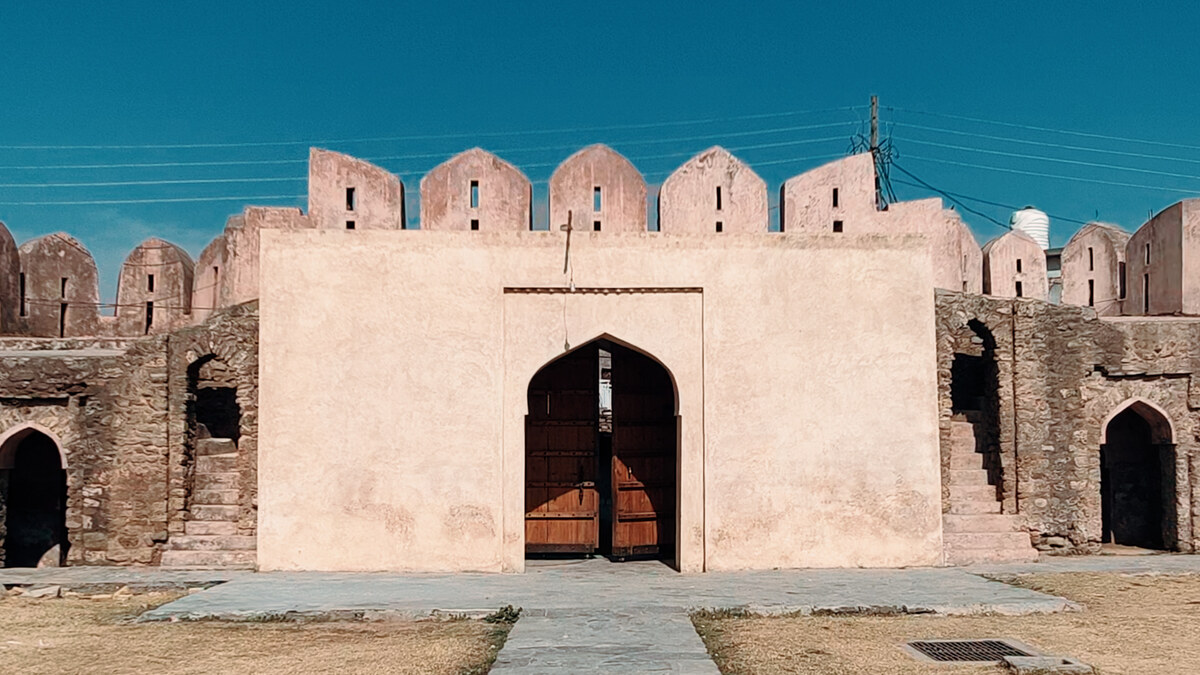
This photo, taken on February 7, 2025, shows entrance gate of the Pakistani archaeological site Rawat Fort in Potohar region, in northern Punjab, Pakistan. (AN Photo)
“We try our maximum effort to maintain the authenticity of our monuments and artifacts,” said Lone.
“You can do conservation, preservation and restoration. But we don’t reconstruct them. We try to restore the material that has been used for the original construction. Wherever it is available, we bring and use it or if it is lying there, we restore it.”
At the last stage of the restoration, he added, the ruined graves would be restored so “that people can understand that there is a grave of Sarang Khan in it and all his sons who were martyred are buried here.”
Pakistan has six UNESCO heritage sites and 25 which are on a tentative list, according to Lone. Rawat Fort is not on either list but when it achieves the status of a UNESCO heritage site, it would boost tourism in the area and also lead to better upkeep, he added.
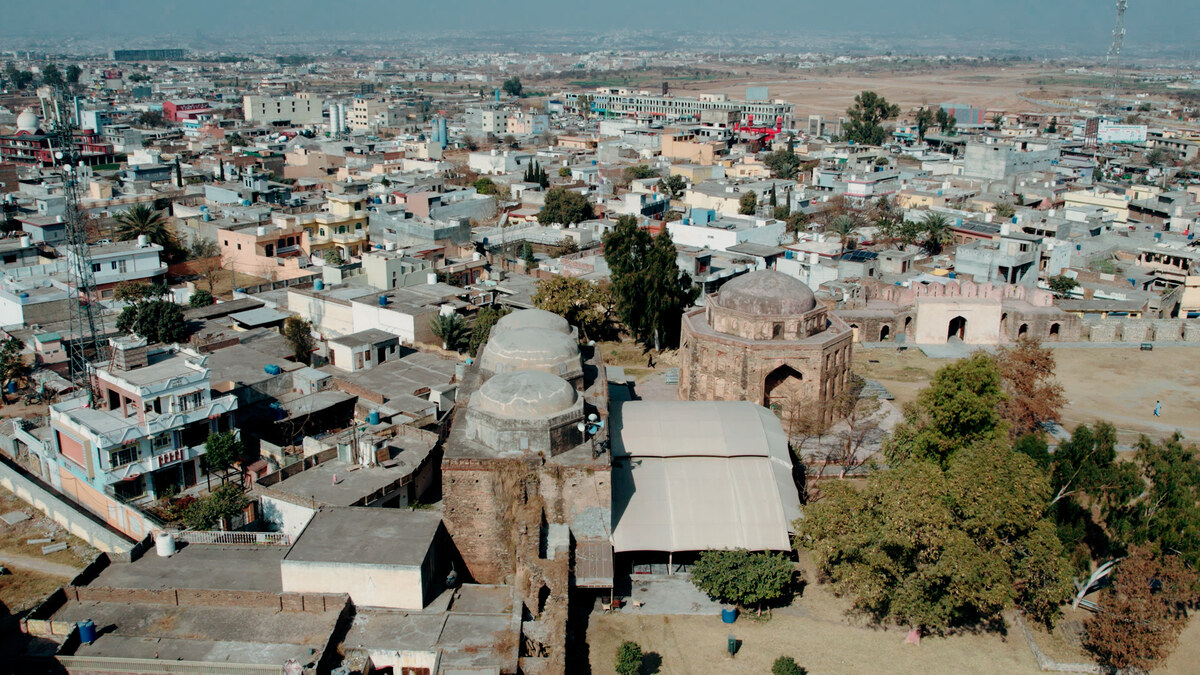
This photo, taken on February 7, 2025, shows aerial view of the Pakistani archaeological site Rawat Fort in Potohar region, in northern Punjab, Pakistan. (AN Photo)
The archaeologist stressed the need for a sense of “shared ownership” of monuments and historical sites by the government and members of the public to help preserve them for generations to come.
“This is our heritage. We all have to take ownership of it,” Lone said. “Only if we take ownership of it can we protect it.”
Saeed, the archaeology professor, also called for more government funding.
“The government will have to set priorities,” he said.
“They will have to provide maximum funding and continuous funding so that conservation work on sites, archaeological sites, monuments and heritage sites can continue.”


