

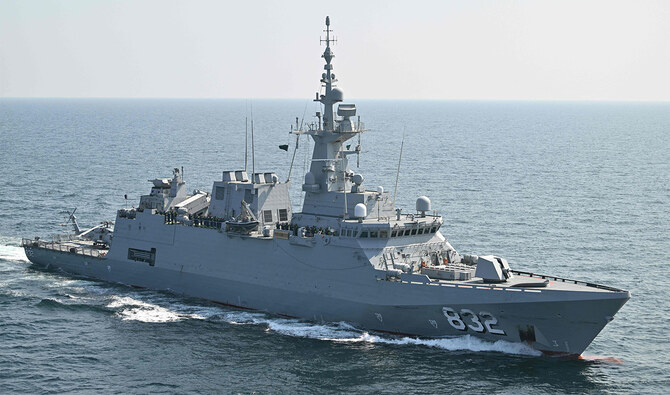

KARACHI: Saudi warships took part in an international fleet review at the Arabian Sea off the coast of Karachi on Tuesday as Pakistan concluded its multinational naval exercise AMAN-25, which aimed to strengthen maritime security and cooperation and featured participation from over 60 countries.
A fleet review is a formal inspection of a navy’s fleet by high-ranking officials. The international fleet review in Karachi, marking the finale of the five-day naval exercise, was attended by senior military and diplomatic officials including Pakistan’s Army Chief General Syed Asim Munir.
“This international fleet review marks the conclusion of exercise AMAN-25,” Rear Admiral Abdul Munib, Pakistan Navy’s fleet commander, said. “In 2007, we started AMAN exercise series, and this one is the ninth edition of the exercise.”
Munib said 28 countries participated in the first AMAN edition while during last year’s exercise, 50 countries took part. He said in the 2025 edition the number of participating countries swelled to over 60.
The AMAN exercise is conducted every two years under the “Together for Peace” theme. Over 30 warships, including the Royal Saudi Navy’s HMS Jazan and HMS Hail along with 16 air units took part in the international fleet review.
The naval exercise began on Feb. 7 and consisted of harbor and sea phases, featuring various drills and operations to enhance interoperability among the naval forces. The last day of the sea phase included aerial operations, replenishment-at-sea exercises, counter-piracy demonstrations, and live-fire exercises followed by a spectacular fly-past.
Captain Humayun Yaqoob, commanding officer of Pakistan Navy ship PNS Moawin, emphasized the strategic importance of the event.
“The basic purpose of this exercise is ‘Together for Peace’. All these 60 nations, they are here. They are together with us for peace,” Yaqoob said. “It [exercise] is giving a message. It is the confidence of the international community that this exercise is a meaningful platform.”
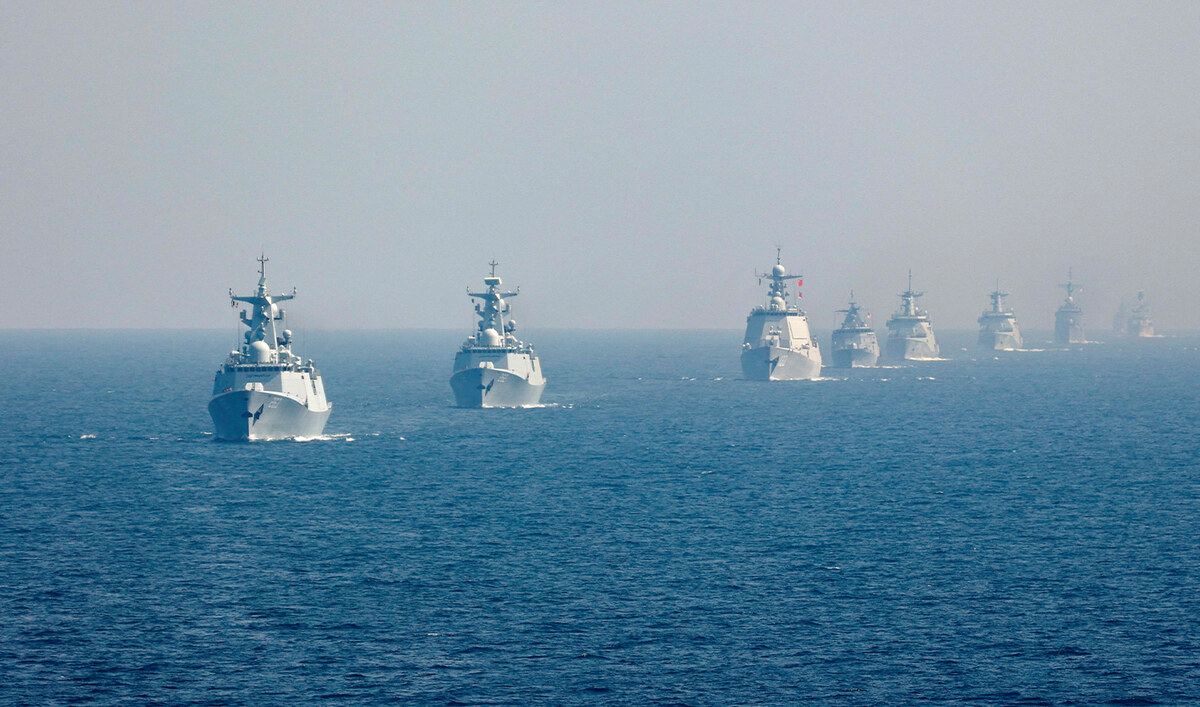
Pakistan Navy's PNS Tippu Sultan and PNS Taimur frigate warships lead the Naval vessels of participating countries during the sea phase of Pakistan Navy's 9th Multinational Maritime Exercise AMAN-25 under the slogan "Together for Peace," in the Arabian Sea near Karachi, Pakistan, on February 10, 2025. (REUTERS)
The AMAN-25 exercise was complimented by the inaugural AMAN Dialogue, held from Feb. 9-10, which brought together naval chiefs, coast guard officials and defense representatives to discuss challenges in the Indian Ocean. Topics included strategic competition, piracy, narco-trafficking, climate change, and the use of emerging technologies such as artificial intelligence and unmanned systems.
Pakistan’s Planning Minister Ahsan Iqbal underscored the importance of collaboration in the region during the dialogue.
“The Indian Ocean should not be a rivalry playground but a center of opportunities for all nations,” he said. “Pakistan prefers collaboration over confrontation, and Aman-25 is an example of mutual trust and shared prosperity.”
The Indian Ocean remains a focal point of geopolitical competition, with China expanding its naval presence and the United States strengthening defense ties with India. Pakistan, through AMAN-25, positioned itself as an advocate for cooperative maritime security, engaging regional and global partners to ensure stability in waters crucial for global trade.
The event also included counterterrorism drills at sea, with special forces from various nations conducting visit, board, search and seizure (VBSS) operations, amphibious exercises, and combat search-and-rescue missions.
As the exercise concluded on the last day, participating warships including those from Saudi Arabia, Bangladesh, China, Indonesia, Japan, Malaysia, Oman, Sri Lanka, UAE and the US paid a ceremonial mark of respect to the chief guest on PNS Moawin, Pakistan’s army chief.


