CAIRO: Libya authorities uncovered nearly 50 bodies this week from two mass graves in the country’s southeastern desert, officials said Sunday, in the latest tragedy involving people seeking to reach Europe through the chaos-stricken North African country.
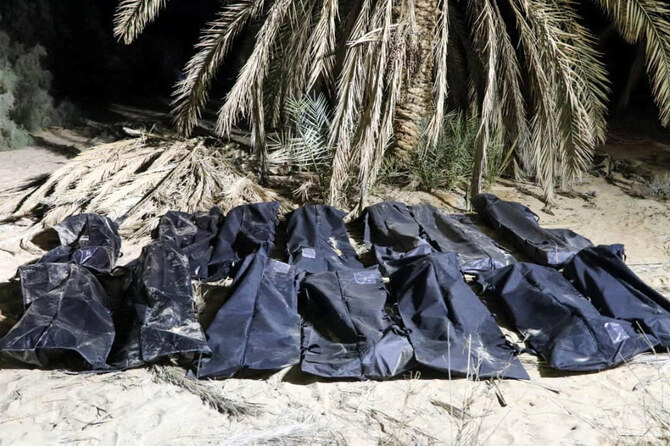
The first mass grave with 19 bodies was found Friday in a farm in the southeastern city of Kufra, the security directorate said in a statement, adding that authorities took them for autopsy.
Authorities posted images on its Facebook page showing police officers and medics digging in the sand and recovering dead bodies that were wrapped in blankets.
The Al-Abreen charity, which helps migrants in eastern and southern Libya, said that some were apparently shot and killed before being buried in the mass grave.
A separate mass grave with at least 30 bodies was also found in Kufra after raiding a human trafficking center, according to Mohamed Al-Fadeil, head of the security chamber in Kufra. Survivors said nearly 70 people were buried in the grave, he added. Authorities were still searching the area.
Migrants’ mass graves are not uncommon in Libya. Last year, authorities unearthed the bodies of at least 65 migrants in the Shuayrif region, 350 kilometers (220 miles) south of the capital, Tripoli.
Libya is the dominant transit point for migrants from Africa and the Middle East trying to make it to Europe. The country plunged into chaos following a NATO-backed uprising that toppled and killed longtime autocrat Muammar Qaddafi in 2011. Oil-rich Libya has been ruled for most of the past decade by rival governments in eastern and western Libya, each backed by an array of militias and foreign governments.
Human traffickers have benefited from more than a decade of instability, smuggling migrants across the country’s borders with six nations, including Chad, Niger, Sudan Egypt, Algeria and Tunisia.
Once at the coast, traffickers pack desperate migrants seeking a better life in Europe into ill-equipped rubber boats and other vessels for risky voyages on the perilous Central Mediterranean Sea route.
Rights groups and UN agencies have for years documented systematic abuse of migrants in Libya including forced labor, beatings, rapes and torture. The abuse often accompanies efforts to extort money from families before migrants are allowed to leave Libya on traffickers’ boats.
Those who have been intercepted and returned to Libya — including women and children — are held in government-run detention centers where they also suffer from abuse, including torture, rape and extortion, according to rights groups and UN experts.


![]()

2 mass graves with bodies of nearly 50 migrants found in southeastern Libya
Short Url
https://arab.news/zwa78
2 mass graves with bodies of nearly 50 migrants found in southeastern Libya
Latest updates


© 2026 SAUDI RESEARCH & PUBLISHING COMPANY, All Rights Reserved And subject to Terms of Use Agreement.