CHAKWAL: After a heartbreaking separation of over five decades, a Bangladeshi citizen reunited with his family earlier this year in a village in Pakistan’s Chakwal district, marking a moment of joy and healing.
The emotional reunion was celebrated with drumbeats from villagers as Iftikhar Hussain, 60, embraced his long-lost relatives in Choa Gunj Ali Shah, the ancestral village of his father, Abdul Rauf, who had served in the Pakistan Army in East Pakistan before the 1971 secession.
“The way they welcomed me made me very emotional,” Hussain told Arab News this week, visibly moved by the warmth he received.
“I hope that my family in Pakistan can visit Bangladesh, and my family there can come here so that we can continue this bond.”

The screengrab taken on February 6, 2025, shows locals welcoming Iftikhar Hussain at his family village in Chakwal, Punjab. (Handout)
At its inception in 1947, Pakistan was split into two wings — West Pakistan (present-day Pakistan) and East Pakistan (now Bangladesh) — separated by more than 1,600 kilometers of Indian territory. Though united by religion, the two regions were culturally, linguistically and politically distinct. Over time, tensions grew as East Pakistanis felt marginalized by the central government in the west.
Complaints of economic neglect, political underrepresentation and cultural suppression deepened the divide, eventually escalating into a full-blown crisis. By 1971, amid mounting unrest and a military crackdown, the conflict spiraled into a war, leading to the creation of Bangladesh.
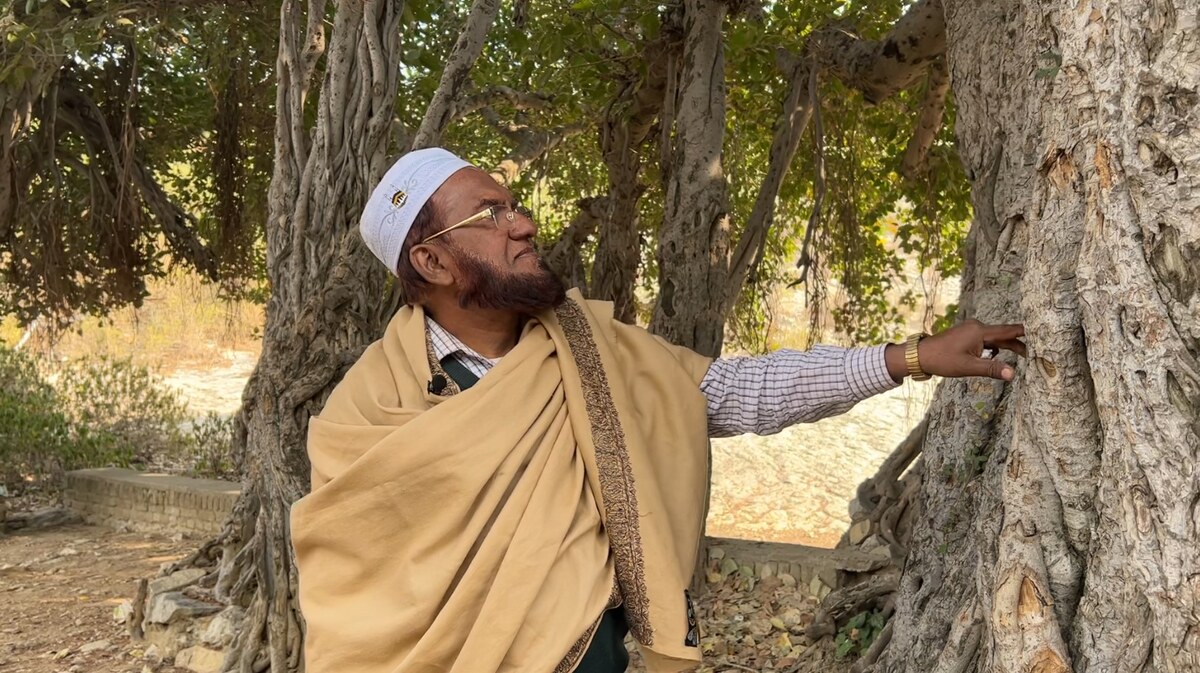
Iftikhar Hussain looks at the old Banyan tree nears his father's home on January 30, 2025. (AN Photo)
Hussain’s father had married a Bengali woman, Munawara Begum, during his deployment in the eastern wing. The couple had five children, who once visited Chakwal in 1969. However, the 1971 war not only divided the country but also shattered their lives.
Hussain said his father lost his life, and his body was never recovered. Devastated and fearing the tensions that followed the conflict, his mother chose to remain in Bangladesh with her children.
At first, both sides of the family stayed in touch by writing letters. However, the exchanges were fraught with danger, as letters from Dhaka were written in Bengali and those from Chakwal in Urdu, often requiring translation.
When translators were unavailable, communication would come to a standstill.
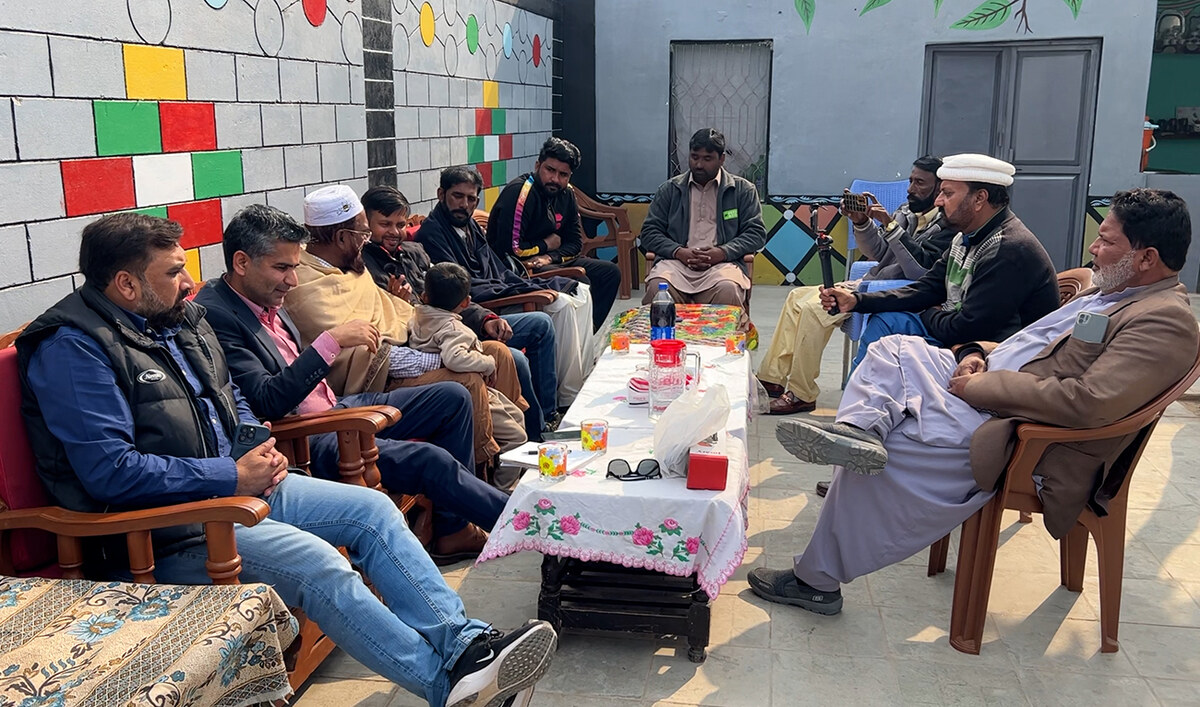
Iftikhar Hussain gestures during a meeting with his relatives and neighbours following a family reunion after over 50 years in a Pakistani village in Chakwal district on January 30, 2025. (AN Photo)
Aftab Hussain, Hussain’s cousin in Chakwal, said each time his uncle’s name was mentioned by someone, everyone in the family would start crying.
“When we finally got in touch with them, their letters would come in Bengali [language], and we had to get them translated in Chakwal,” he said.
“We would read those letters so many times that the ink would fade because of our tears.”
Things worsened when Chakwal was designated as a separate district in 1985, and their village name was changed from Choa Gunj Al Bair to Choa Gunj Ali Shah. The administrative change, unknown to Hussain’s family, complicated efforts to stay connected.
By the early 1990s, all correspondence had ceased, and the families lost touch completely.
Decades later, social media rekindled hope of a reunion.
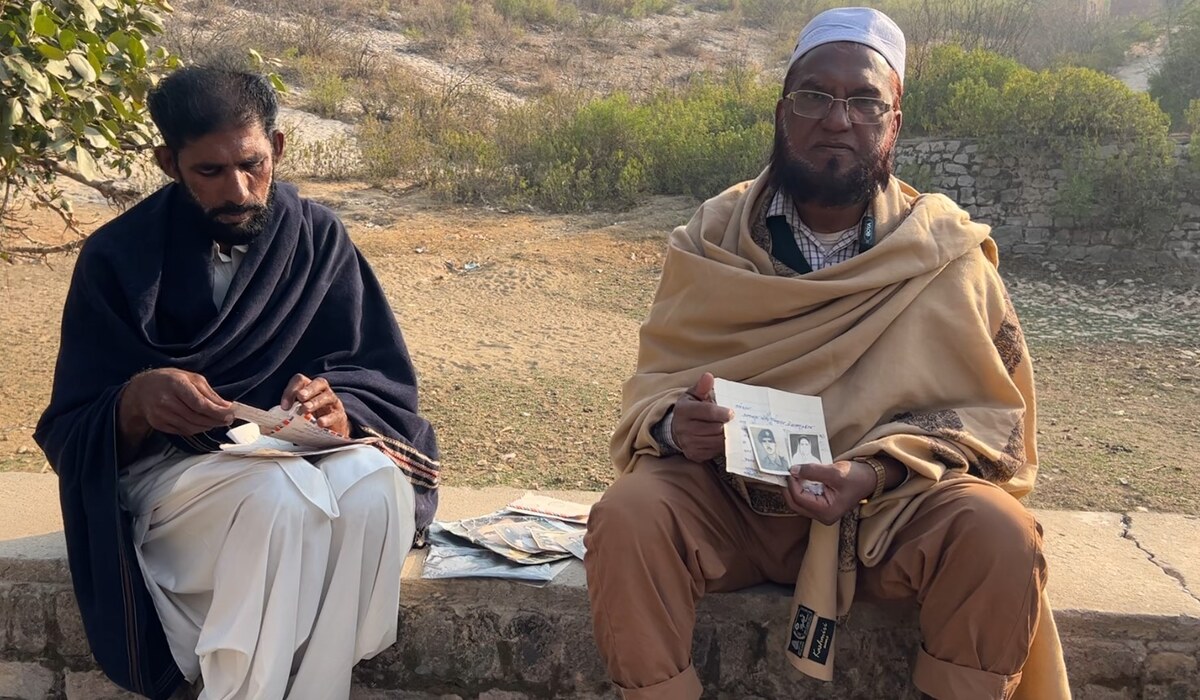
Iftikhar Hussain shows photographs of his father Abdul Rauf and mother Munawara Begum as he visits his father’s home in Chakwal district of Punjab, Pakistan, on January 30, 2025. (AN Photo)
Hussain’s younger brother, Abdul Khaliq, posted pictures of their father on Facebook, seeking assistance to reconnect with their relatives in Chakwal.
The posts caught the attention of a local social media activist, Arshad Mehmood, in Chakwal who took it upon himself to reunite the separated family.
“I am truly happy that two families have reunited,” Mehmood said, as he shared how he traced Hussain’s relatives in Pakistan.
Hussain said he had recently retired from a bank in Bangladesh before embarking on his journey to Pakistan.
“Most of my elder relatives have passed away. Now, I have one cousin brother and a sister left [in Bangladesh],” he said, before briefly pausing and continuing again with his eyes shining with emotion.
“Everyone here is so happy to see me. I wish my family here [in Pakistan] can visit there [Bangladesh], and my family there may come here.”