

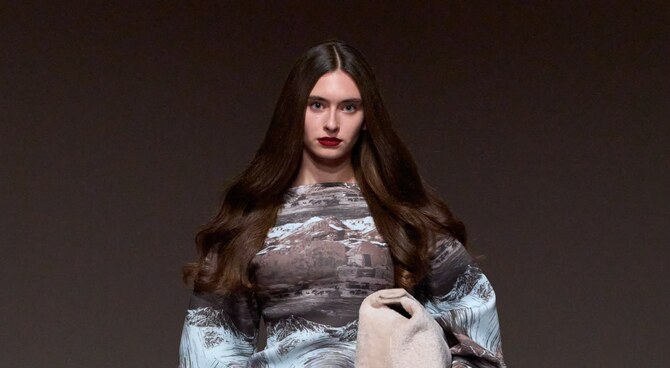
Les Benjamins makes its debut at Dubai Fashion week  

Drawing inspiration from the Altai region, the “Altai Turks/Altaicana” collection blends traditional cultural elements and modern fashion. (Supplied)
Short Url
Updated 08 February 2025
Follow

Les Benjamins makes its debut at Dubai Fashion week  

DUBAI: Les Benjamins, the Istanbul-based brand renowned for blending Eastern and Western influences, made its debut at Dubai Fashion week.

Led by creative director Bunyamin Aydin and by head of women’s wear Lamia Al-Otaishan Aydin, the pair presented the Autumn/Winter 2025 collection on Wednesday. 

Drawing inspiration from the Altai region, the “Altai Turks/Altaicana” collection blends traditional cultural elements and modern fashion. 


Led by creative director Bunyamin Aydin and by head of women’s wear Lamia Al-Otaishan Aydin, the pair presented the Autumn/Winter 2025 collection on Wednesday. (Supplied)

The collection draws inspiration from the Altai people’s harmonious relationship with nature, their ancient traditions, and the mythology that shapes their cultural identity.

Featuring a neutral color palette such as those found in nature, such as warm browns, forest greens and even pieces depicting mountain ranges, the collection is a direct reflection of nature. 

The Saudi designer said the collection was inspired by her husband, the brand’s creative director.


Featuring a neutral color palette such as those found in nature, such as warm browns, forest greens and even pieces depicting mountain ranges, the collection is a direct reflection of nature. (Supplied)

“Bunyamin Aydin, our creative director, came up with the concept and direction. It’s about going back to his roots and Turkic Altai region,” she said.

When asked about her favorite piece, the designer said it was too hard to select just one.

“Some of my favorites are the green leather jacket with all the curves that represents the Altai mountains. My other favorite is the long red coat with sheep’s fur,” she said.

The show featured fashion influencers from the region including Jullz Bek, Basil Alhadi and Osied Al-Shwaihan.


The collection draws inspiration from the Altai people’s harmonious relationship with nature, their ancient traditions, and the mythology that shapes their cultural identity. (Supplied)

Lamia’s Saudi heritage plays a big role in the brand’s presence in the Middle East and the UAE, with special collections featuring Arabic letters and design elements. 

Founded in 2011, Les Benjamins has outlets in the UAE and a strong online presence in the market. 

The brand has collaborated with the likes of Nike, Daniel Arsham, Apple, Puma, and many more. 

The city’s official fashion week, co-founded by Dubai Design District and the Arab Fashion Council, reinforces Dubai’s status in the international fashion landscape.

Hosting labels such as Moschino, Jean Paul Gaultier and Carolina Herrera, Dubai Fashion Week has welcomed designers from all over the world while also fostering homegrown talent.  


From trends to routines — how beauty is evolving in the Gulf region

Updated 36 min 30 sec ago
Follow

From trends to routines — how beauty is evolving in the Gulf region

DUBAI: The beauty landscape in the Gulf is shifting, driven by a new generation of consumers who see skincare, self-care and digital discovery as part of their everyday lives. According to Nicole Nitschke, managing director of FACES Beauty Middle East, the region has moved far beyond simply buying products.

“Beauty in the GCC (Gulf Cooperation Council) has evolved from being product-focused to increasingly experience-driven, with consumers seeking solutions that combine effectiveness, self-care and personalization,” she told Arab News. 

Shoppers today may browse online, but many still want to touch, test and experience products in-store, creating what she describes as a balance between digital inspiration and physical retail.

That evolution is being led by Gen Z — those born between the late 1990s and early 2010s. “Gen Z in the GCC is informed, experimental and digitally connected,” Nitschke said. “Social media plays a major role in how young consumers discover and engage with beauty trends, and routines that support both appearance and wellbeing have become especially important to them.”

One of the most powerful trends shaping this generation is the rise of Asian and Korean beauty. Nitschke said: “The success of Korean beauty in the GCC is driven by a convergence of product excellence and innovation, accessible pricing and cultural influence. K-beauty is not just about products; it represents a broader lifestyle movement.”

From K-pop to K-dramas, Korean pop culture has created an aspirational pull that resonates strongly with young consumers in the region. But it is also about results, Nitschke said: “Its products deliver high quality and visible results.” 

In the Gulf’s climate, skincare routines have also become more purposeful. “GCC consumers are gravitating toward hydration-focused and barrier-supporting products, including essences, serums, ampoules and lightweight creams,” she said, adding that multi-step routines centered on skin health and self-care are especially popular.

Shoppers in the region are also highly aware of what they are putting on their skin, she says: “They are highly ingredient-conscious, value education and seek guidance that combines expertise with accessibility.”

Looking ahead, Nitschke believes Korean beauty is here to stay: “Korean beauty has become structurally integrated into the GCC market, influencing routines, expectations, and retail offerings.” It is no longer a passing trend, but a permanent part of how beauty is understood in the region.