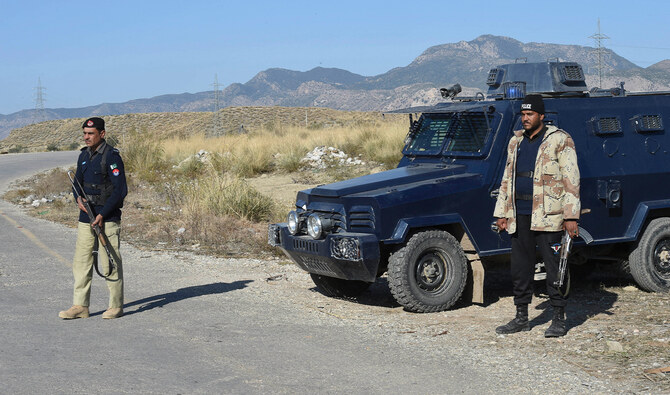
PESHAWAR: Almost a dozen well-armed militants mounted an overnight assault on a police check post in Pakistan’s restive Karak district in northwestern Khyber Pakhtunkhwa (KP) province, triggering a gunbattle that left three policemen dead and six others wounded on Thursday, police said.
Pakistan has witnessed a surge in militancy in KP, which borders Afghanistan, since a fragile truce between the Tehreek-e-Taliban Pakistan (TTP) and the state broke down in November 2022.
Most of these attacks have targeted police personnel and security forces, though civilians and other government functionaries have also been affected.
Pakistani officials have attributed the uptick in militant violence to cross-border attacks from Afghanistan, accusing the administration in Kabul of “facilitating” TTP fighters, though Afghan authorities deny the allegation.
“Militants started an attack on Bahadur Khel police check post of Karak with small and heavy weapons but police officers on duty offered stiff resistance,” Shaukat Khan, the district’s police spokesman, said. “During the exchange of fire, three police officials were martyred and six others wounded. But militants had to flee after police reinforcement arrived.”
Khan said the dead and wounded were shifted to the district headquarters hospital for treatment soon after the incident.
Speaking to the media after attending the funeral prayers of the slain police officers, provincial police chief Zulfiqar Hameed said law enforcement personnel fought bravely with the militants for two long hours.
“The terrorists wanted to take over the police post but their attempt was thwarted. We will chase terrorists everywhere and will take strict action against those involved in this heinous assault,” he added.
So far, no group has claimed responsibility for the attack, but suspicion is likely to fall on the TTP that has frequently targeted police and security personnel in the province.
KP Chief Minister Ali Amin Gandapur condemned the assault and directed the police chief to take all measures to identify the perpetrators.
He expressed his condolences over the death of the three police officers and prayed for the swift recovery of those wounded in the attack.
“The provincial government will not leave the bereaved families alone and will provide them with all support. Police have rendered immense sacrifices to protect the lives and property of people,” he added.
The TTP and other militants have stepped up attacks against security forces in the country’s two western provinces, alongside targeted killings and kidnappings of law enforcers and government officials, in recent months.
Last week, four soldiers of the paramilitary Levies force were killed after they were targeted by gunfire and an improvised explosive device (IED) blast in Dera Ismail Khan district of the province.
Earlier this month, the military said 18 Pakistani soldiers were killed in a militant attack in southwestern Balochistan province.
The military added that it had killed at least 23 militants in subsequent clearance operations.


![]()

Militants attack police post in northwest Pakistan, killing three officers
Short Url
https://arab.news/v7cvf
Militants attack police post in northwest Pakistan, killing three officers
- Khyber Pakhtunkhwa police chief says officers battled militants for two hours
- Overnight attack in Karak district continued until police reinforcements arrived
Latest updates




© 2026 SAUDI RESEARCH & PUBLISHING COMPANY, All Rights Reserved And subject to Terms of Use Agreement.