

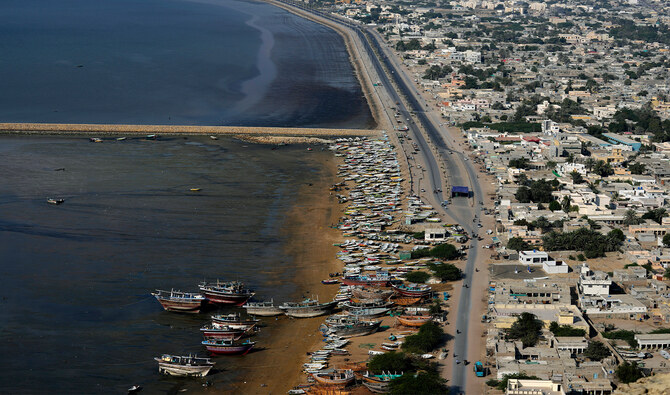

GWADAR, Pakistan: There was a time when few people in the coastal Pakistani city of Gwadar understood what climate change was. After a decade of extreme weather, many more do.
Rain battered Gwadar for almost 30 consecutive hours last February. Torrents washed out roads, bridges, and lines of communication, briefly cutting the peninsula town off from the rest of Pakistan. Homes look like bombs have struck them and drivers swerve to avoid craters where asphalt used to be.
Gwadar is in Balochistan, an arid, mountainous, and vast province in Pakistan’s southwest that has searing summers and harsh winters. The city, with about 90,000 people, is built on sand dunes and bordered by the Arabian Sea on three sides, at a low elevation that makes it vulnerable to climate change in a country that has already seen its share of catastrophe from it.
“It’s no less than an island nation situation,” warned Gwadar-based hydrologist Pazeer Ahmed. “Many low-lying areas in the town will be partially or completely submerged if the sea level continues to rise.”
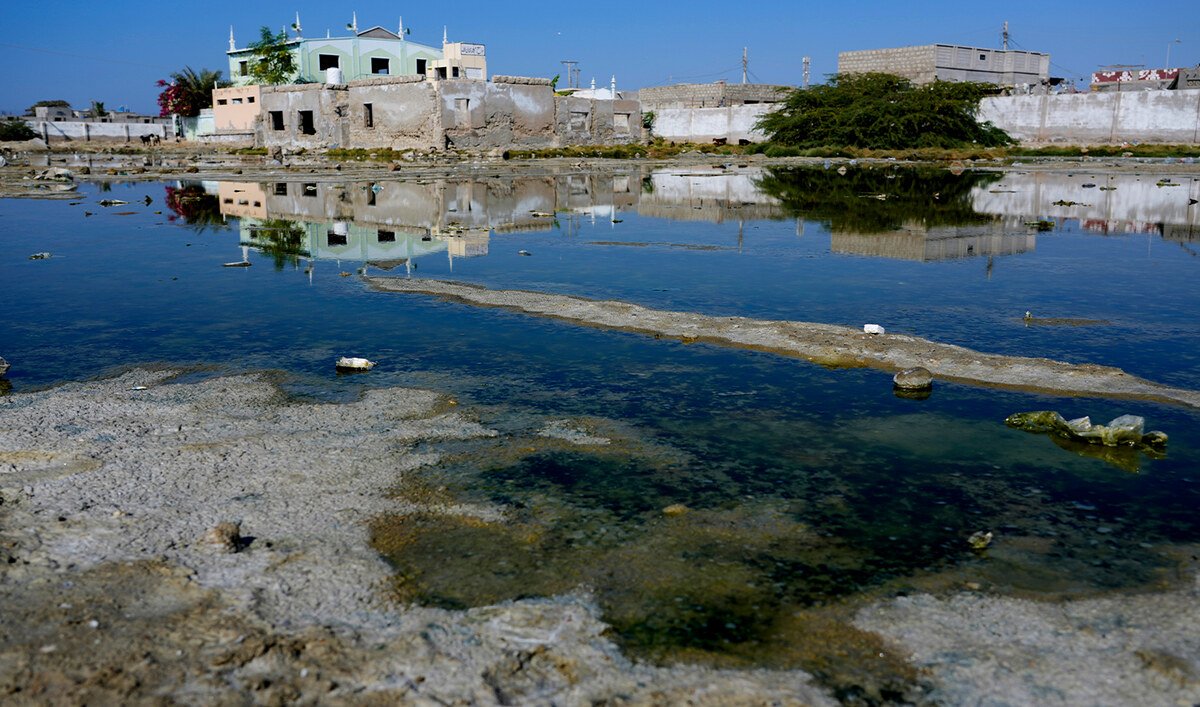
Houses reflect in standing water in a neighborhod of Gwadar, Pakistan, on January 14, 2025. (AP)
The sea, once a blessing for Gwadar’s fishing and domestic tourism sectors, has become an existential threat to lives and livelihoods.
Warming oceans mean bigger and more powerful waves, and those waves get whipped higher by summer monsoon winds. Warmer air holds more moisture — about 7 percent more per degree Celsius (4 percent per degree Fahrenheit) — and that means more big rain events.
“Waves have become more violent due to the rising sea temperatures and eroded beaches,” said Abdul Rahim, deputy environment director at Gwadar Development Authority. “The tidal actions and patterns have changed. Hundreds of homes have been washed away. It is very alarming.”
Melting glaciers contribute to rising sea levels, another cause of coastal erosion. The sea level at Karachi rose almost 8 inches (almost 20 centimeters) between 1916 and 2016, according to data from the National Oceanic and Atmospheric Administration. It’s projected to rise another half-inch (about 1.3 centimeters) by 2040.
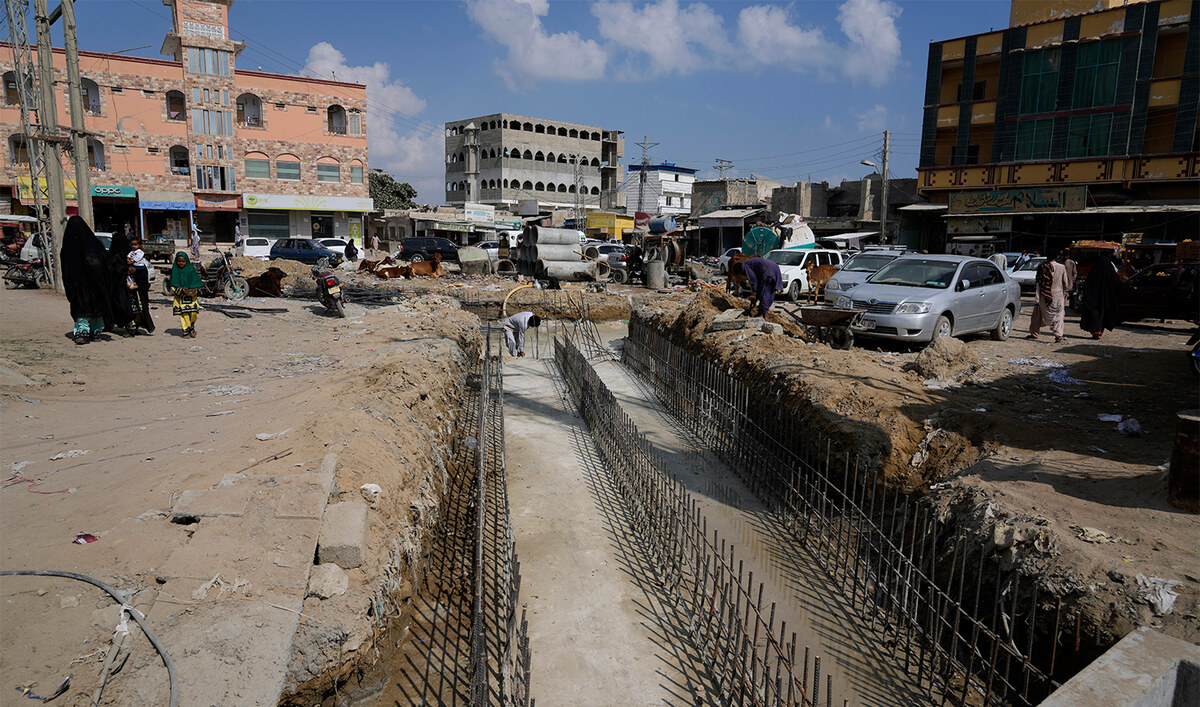
A laborer works at the construction site of a drainage system by the local government in the downtown of Gwadar, Pakistan, on January 13, 2025. (AP)
In areas near Gwadar, like Pishukan and Ganz, waves have swallowed up mosques, schools, and settlements. There are gashes in the cliffs at the popular picnic spot of Sunset Park, and rocks have cascaded onto the shore. Beaches run flat for dozens of kilometers because no structures remain on it.
Authorities have built seawalls from stone or concrete to hold back saltwater intrusion. But they’re a small solution to a massive problem as Gwadar’s people and businesses are fighting climate change on different fronts.
Saltwater pools on government land, salt crystals glistening in the sunshine. In the Shado Band neighborhood, former local councillor Qadir Baksh fretted about water seeping up through the ground and into his courtyard every day, held at bay only by regular pumping. Dozens of houses have the same problem, he said.
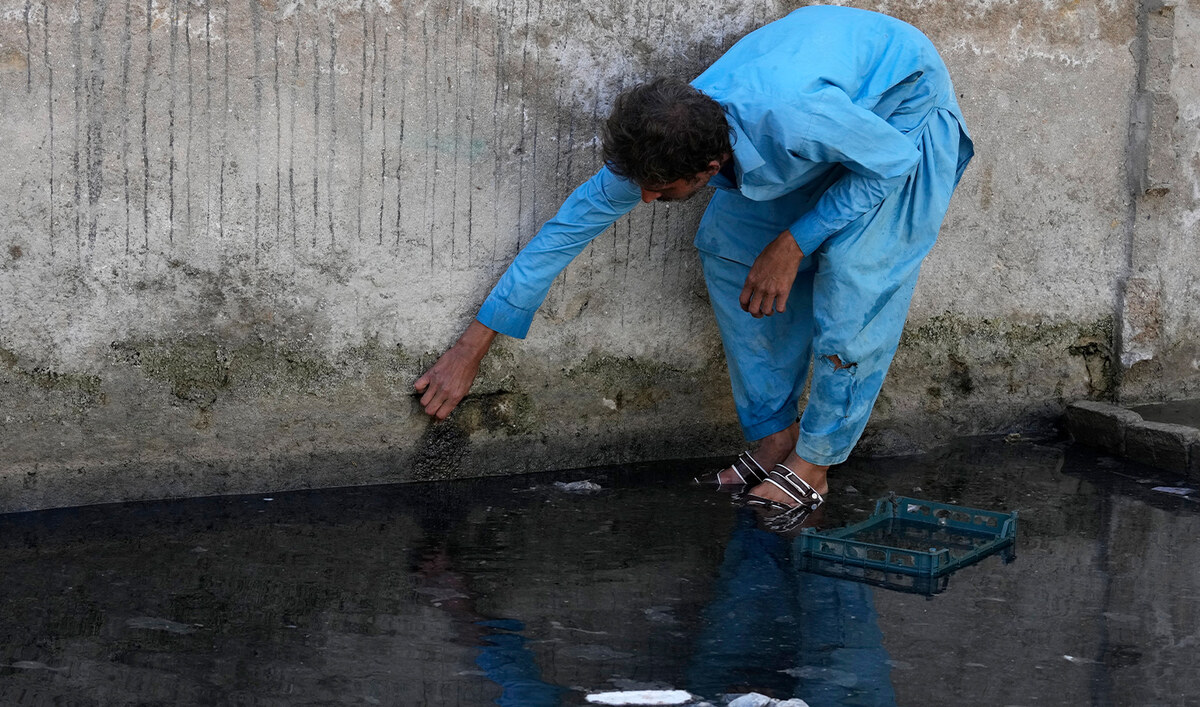
Amanullah shows a wall impacted by rising water in the compound of his home in a neighborhood of Gwadar, Pakistan, on January 14, 2025. (AP)
Officials, including Ahmed and Rahim, said changes in land use and unauthorized building are worsening flooding. Locals said some major construction projects have destroyed traditional drainage pathways.
Gwadar is the centerpiece of a massive Chinese-led initiative to create an overland route between its western Xinjiang region and the Arabian Sea through Gwadar. Hundreds of millions of dollars have poured into the town to create a deep seaport, an international airport, expressways and other infrastructure. The more sensitive projects, especially the port, are tightly secured by the Pakistani military, out of sight and off-limits to the public.
But there is no proper sewage or drainage system for residents despite a decade of foreign investment, and Gwadar’s porosity, high water table, rising sea levels, and heavier rainfall are rocket fuel for the town’s vulnerability.
There’s nowhere for the water to go.
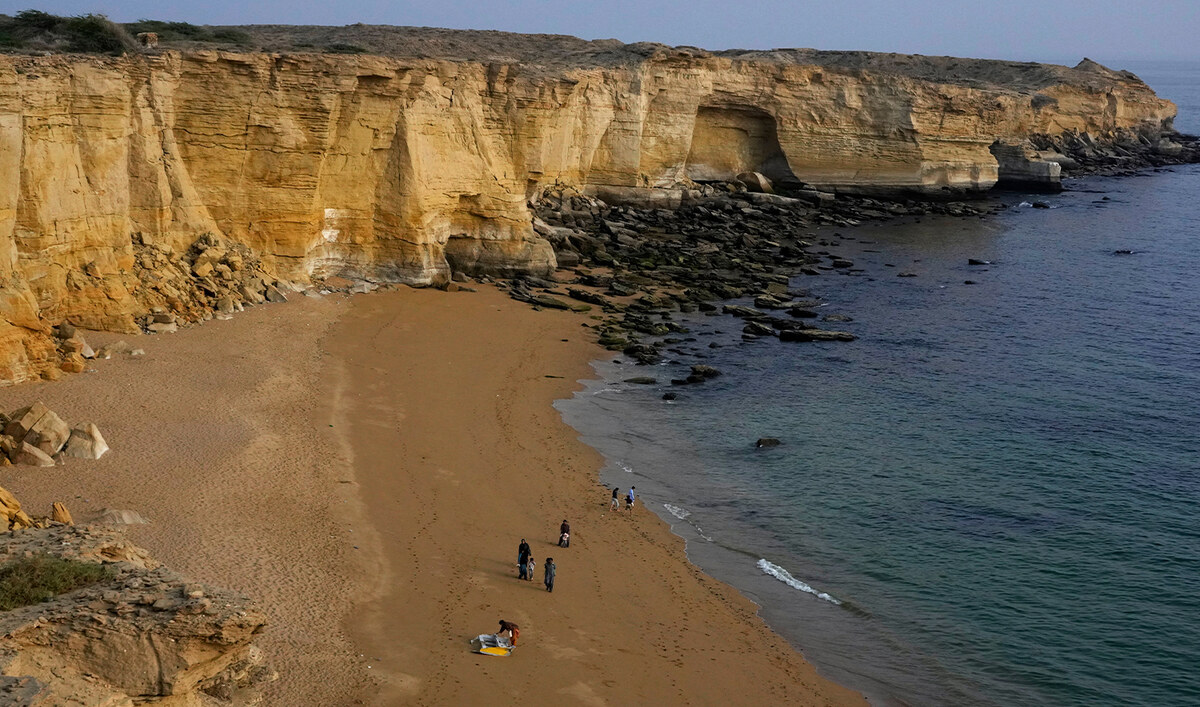
People walk along a beach next to a cliff in Gwadar, Pakistan, on January 13, 2025. (AP)
“In the past when it rained, the water disappeared up to 10 days later,” said Baksh. “But the rain that came last year hasn’t gone. The water rises from the ground with such speed it will reach the four walls of my home if we don’t run the generator every day to extract it. Officials say it’s because of climate change but, whatever it is, we’re suffering.”
Gwadar’s fishing community is also hurting. Catches are smaller, native fish are disappearing, and migration patterns and fishing seasons have changed, said Ahmed and Rahim. There is also algae bloom and the invasion of unwanted marine species like pufferfish.
Illegal fishing and foreign trawlers are responsible for a few of these things, but it’s mostly rising sea temperatures.
People have migrated from places like Dasht and Kulanch because of water scarcity. What agriculture there was in Gwadar’s surrounding areas is vanishing due to loss of farmland and livestock deaths, according to locals. It’s part of a wider pattern in which Pakistan’s farmers are seeing declining crop yields and increasing crop diseases due to climate extremes, particularly floods, droughts and heat waves, according to the United Nations’ Intergovernmental Panel on Climate Change.
“There are heat waves and dust storms in Gwadar,” said Ahmed. “But the main impact of climate change here is that there is too much water and not enough of it. If nothing is done to address this problem, we will have no option but to retreat.”


