

New International Retail Council launched in Riyadh

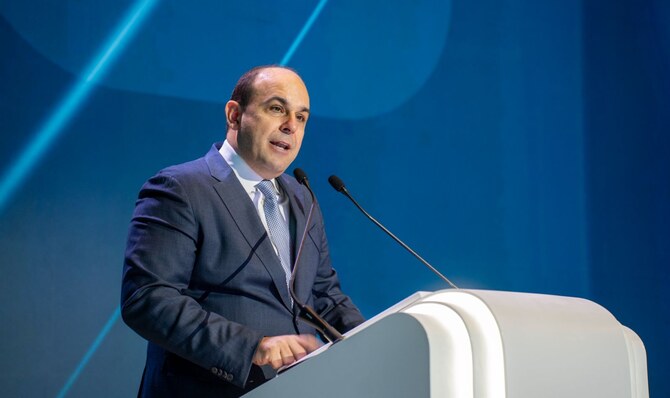
Panos Linardos speaking at the Retail Leaders Circle Global Forum. AN
Short Url
Updated 04 February 2025
Follow

New International Retail Council launched in Riyadh

RIYADH: An International Retail Council designed to unite top experts, decision-makers, and industry stakeholders has been launched at an industry event in Riyadh.

Announced at the Retail Leaders Circle Global Forum, event chairman Panos Linardos said the new body will tackle upcoming challenges and opportunities facing the sector across the globe.

This year’s gathering, taking place from Feb. 4 to 5, comes as the Kingdom’s retail sector continues to show strong resilience and sustained growth, with total sales reaching SR37.4 billion ($9.97 billion) in the third quarter of 2024, despite ongoing global economic uncertainties. 

Retail sales in the Kingdom are forecast to reach $161.4 billion by 2028, according to data platform Statista, while the e-commerce sector is projected to surpass $13.2 billion by 2025.

Setting out the importance of the new council, Linardos said: “The IRC is not just another industry initiative — it is a forward-thinking response to an evolving global landscape.” 

He added: “Retail is more interconnected than ever, yet faces growing complexity in regulation, technology, and consumer behavior. The IRC will unite leaders, visionaries, and experts to facilitate global dialogue, drive innovation, and shape policies that will define the industry’s next era.” 

During his speech, the chairman highlighted that the IRC will initially focus on four key pillars shaping the future of commerce: luxury goods, retail real estate, cross-border trade, and grocery businesses.

Linardos also shed light on how geopolitical changes, economic volatility, supply chain challenges, and the rapid growth of artificial intelligence, as well as digital commerce, are transforming the retail industry at an unprecedented rate. 

“The rules of global trade are being rewritten, cross-border commerce is evolving, and consumer expectations are shifting faster than ever before. In this moment of transformation, the need for collaborative leadership, innovation, and a strategic vision for the future of retail has never been greater,” he said.

The chairman added that the discussions at the forum will reflect shared goals and help lay the groundwork for actionable solutions.

Held under the theme “Rebuilding a Shared Future,” the event commenced with the “Business Outlook: Navigating A New Global Order” session. 

It explored how geopolitical tensions, economic instability, and fast-paced technological advancements are affecting global commerce, with international business leaders sharing strategies to turn volatility into opportunity while fostering resilience and innovation.

Another session titled “A New Leadership Order: Building Growth in Turbulent Times” followed, highlighting the importance of leadership in overcoming economic challenges, boosting productivity, and promoting sustainable growth.

Industry experts shared strategies during the session for navigating complex business environments and using strategic adaptability to succeed in a constantly changing marketplace.

Discussions also centered on the transformative impact of social commerce, which is changing how consumers shop, engage with brands, and interact online.

With e-commerce in the Middle East expected to reach $57 billion by 2026, the importance of marketplaces in meeting shifting consumer expectations is crucial. 

Chief Content Officer at EMARKETER Zia Daniell Wigder presented a report created in collaboration with the RLC Global Forum which offered a data-driven roadmap for the future of e-commerce in the Gulf Cooperation Council, providing valuable insights into consumer trends, market dynamics, and opportunities for sustainable growth in the region.

AI was another key focus of the day, with several sessions exploring its transformative impact on the retail sector. 

Industry leaders discussed how the technology is being leveraged to enhance personalization, optimize supply chains, and improve operational efficiencies at scale.

According to a new report released by Knight Frank, Riyadh and Jeddah are driving a major transformation in Saudi Arabia’s lifestyle retail sector, reshaping the retail scene with 394,900 sq. meters of upcoming developments, all scheduled for completion by 2027.

The report further disclosed that the planned developments include food and beverage outlets, entertainment options, and lively public spaces.

Both major Saudi cities currently provide 670,500 sq. meters of lifestyle retail space, reflecting a 12 percent surge over the past year.

In Riyadh, the average lease rate for retail spaces is SR2,360 per sq. meter, with a 96 percent occupancy rate, while in Jeddah, lease rates average SR2,030 per sq. meter, with an occupancy rate of 70 percent.


AI will never replace human creativity, says SRMG CEO 

Updated 30 January 2026
Follow

AI will never replace human creativity, says SRMG CEO 

  • Speaking to Maya Hojeij, senior business anchor at Asharq with Bloomberg, Jomana R. Alrashid expressed pride in SRMG platforms that had absorbed and adopted AI

RIYADH: Jomana R. Alrashid, CEO of Saudi Research and Media Group, highlighted how AI cannot replace human creativity during a session at The Family Office’s “Investing Is a Sea” summit at Shura Island on Friday. 

“You can never replace human creativity. Journalism at the end of the day, and content creation, is all about storytelling, and that’s a creative role that AI does not have the power to do just yet,” Alrashid told the investment summit. 

“We will never eliminate that human role which comes in to actually tell that story, do the actual investigative reporting around it, make sure to be able to also tell you what’s news or what’s factual from what’s wrong ... what’s a misinformation from bias, and that’s the bigger role that the editorial player does in the newsroom.”

Speaking on the topic of AI, moderated by Maya Hojeij, senior business anchor at Asharq with Bloomberg, the CEO expressed her pride in SRMG platforms that had absorbed and adopted AI in a way that was “transformative.”

“We are now translating all of our content leveraging AI. We are also now being able to create documentaries leveraging AI. We now have AI-facilitated fact-checking, AI facilities clipping, transcribing. This is what we believe is the future.”

Alrashid was asked what the journalist of the future would look like. “He’s a journalist and an engineer. He’s someone who needs to understand data. And I think this is another topic that is extremely important, understanding the data that you’re working with,” she said.

“This is something that AI has facilitated as well. I must say that over the past 20 years in the region, especially when it comes to media companies, we did not understand the importance of data.”


The CEO highlighted that previously, media would rely on polling, surveys or viewership numbers, but now more detailed information about what viewers wanted was available. 

During the fireside session, Alrashid was asked how the international community viewed the Middle Eastern media. Alrashid said that over the past decades it had played a critical role in informing wider audiences about issues that were extremely complex — politically, culturally and economically — and continued to play that role. 

“Right now it has a bigger role to play, given the role again of social media, citizen journalists, content creators. But I also do believe that it has been facilitated by the power that AI has. Now immediately, you can ensure that that kind of content that is being created by credible, tier-A journalists, world-class journalists, can travel beyond its borders, can travel instantly to target different geographies, different people, different countries, in different languages, in different formats.”

She said that there was a big opportunity for Arab media not to be limited to simply Arab consumption, but to finally transcend borders and be available in different languages and to cater to their audiences. 


The CEO expressed optimism about the future, emphasizing the importance of having a clear vision, a strong strategy, and full team alignment. 

Traditional advertising models, once centered on television and print, were rapidly changing, with social media platforms now dominating advertising revenue.

“It’s drastically changing. Ultimately in the past, we used to compete with one another over viewership. But now we’re also competing with the likes of social media platforms; 80 percent of the advertising revenue in the Middle East goes to the social media platforms, but that means that there’s 80 percent interest opportunities.” 

She said that the challenge was to create the right content on these platforms that engaged the target audiences and enabled commercial partnerships. “I don’t think this is a secret, but brands do not like to advertise with news channels. Ultimately, it’s always related with either conflict or war, which is a deterrent to advertisers. 

“And that’s why we’ve entered new verticals such as sports. And that’s why we also double down on our lifestyle vertical. Ultimately, we have the largest market share when it comes to lifestyle ... And we’ve launched new platforms such as Billboard Arabia that gives us an entry into music.” 

Alrashid said this was why the group was in a strong position to counter the decline in advertising revenues across different platforms, and by introducing new products.

“Another very important IP that we’ve created is events attached to the brands that have been operating in the region for 30-plus years. Any IP or any title right now that doesn’t have an event attached to it is missing out on a very big commercial opportunity that allows us to sit in a room, exchange ideas, talk to one another, get to know one another behind the screen.” 

The CEO said that disruption was now constant and often self-driving, adding that the future of the industry was often in storytelling and the ability to innovate by creating persuasive content that connected directly with the audience. 

“But the next disruption is going to continue to come from AI. And how quickly this tool and this very powerful technology evolves. And whether we are in a position to cope with it, adapt to it, and absorb it fully or not.”