CBS says it will turn over an unedited transcript of its October interview with Kamala Harris to the Federal Communications Commission, part of President Donald Trump’s ongoing fight with the network over how it handled a story about his opponent.
Trump sued CBS for $10 billion over the “60 Minutes” interview, claiming it was deceptively edited to make Harris look good. Published reports said CBS’ parent company, Paramount, has been talking to Trump’s lawyers about a settlement.
The network said Friday that it was compelled by Brendan Carr, Trump’s appointee as FCC chairman, to turn over the transcripts and camera feeds of the interview for a parallel investigation by the commission. “60 Minutes” has resisted releasing transcripts for this and all of its interviews, to avoid second-guessing of its editing process.
The case, particularly a potential settlement, is being closely watched by advocates for press freedom and by journalists within CBS, whose lawyers called Trump’s lawsuit “completely without merit” and promised to vigorously fight it after it was filed.
The Harris interview initially drew attention because CBS News showed Harris giving completely different responses to a question posed by correspondent Bill Whitaker in clips that were aired on “Face the Nation” on Oct. 6 and the next night on “60 Minutes.” The network said each clip came from a lengthy response by Harris to Whitaker’s question, but they were edited to fit time constraints on both broadcasts.
In his lawsuit, filed in Texas on Nov. 1, Trump charged it was deceptive editing designed to benefit Harris and constituted “partisan and unlawful acts of voter interference.”
Trump, who turned down a request to be interviewed by “60 Minutes” during the campaign, has continued his fight despite winning the election less than a week after the lawsuit was filed.
The network has not commented on talks about a potential settlement, reported by the Wall Street Journal and New York Times. Paramount executives are seeking Trump administration approval of a sale of the company to another entertainment firm, Skydance.
ABC News in December settled a defamation lawsuit by Trump over statements made by anchor George Stephanopoulos, agreeing to pay $15 million toward Trump’s presidential library rather than engage in a public fight. Meta has reportedly paid $25 million to settle Trump’s lawsuit against the company over its decision to suspend his social media accounts following the Jan. 6, 2021, riot at the US Capitol.


CBS agrees to hand over ‘60 Minutes’ Harris interview transcripts to FCC

https://arab.news/ny2fs
CBS agrees to hand over ‘60 Minutes’ Harris interview transcripts to FCC

- The Harris interview initially drew attention because CBS News showed Harris giving completely different responses to a question posed by correspondent Bill Whitaker in clips that were aired on “Face the Nation” on Oct. 6


To infinity and beyond: Grendizer’s 50 years of inspiring Arabs
- 50 years after its creation, the Grendizer anime series continues to capture Arab imagination
- Arab News Japan speaks to creator Go Nagai, Middle Eastern fans and retells the story behind the UFO Robot tasked with protecting our planet
LONDON: Few cultural imports have crossed borders as unexpectedly, or as powerfully, as Grendizer, the Japanese giant robot that half a century ago became a childhood hero across the Arab world, nowhere more so than in Saudi Arabia.
Created in Japan in the mid-1970s by manga artist Go Nagai, Grendizer was part of the “mecha” tradition of giant robots. The genre was shaped by Japan’s experience during the Second World War, and explored themes of invasion, resistance and loss through the medium of science fiction.
But while the series enjoyed moderate success in Japan, its true legacy was established thousands of kilometers away in the Middle East.

The anime “UFO Robot Grendizer” arrived on television in the region in 1979, dubbed into Arabic and initially broadcast in Lebanon during the Lebanese civil war. The story it told of the heroic Duke Fleed, a displaced prince whose planet had been destroyed by alien invaders, struck a chord with children growing up amid regional conflict and occupation by Israel.
Its themes of defending one’s homeland, standing up to aggression and protecting the innocent were painfully relevant in the region, transforming the series from mere entertainment into a kind of emotional refuge.
Much of the show’s impact came from its successful Arabization. The powerful Arabic dubbing and emotionally charged voice-acting, especially by Lebanese actor Jihad El-Atrash as Duke Fleed, lent the show a moral gravity unmatched by other cartoons of the era.

The theme song for the series, performed by Sami Clark, became an anthem that the Lebanese singer continued to perform at concerts and festivals right up until his death in 2022.
By the early 1980s, “Grendizer” had spread across the Middle East, inspiring fandoms in Saudi Arabia, Kuwait, Iraq and beyond. For many, it was not only their first exposure to anime, it also delivered lessons on values such as justice and honor.
Grendizer was so influential in the region that it became the subject of scholarly research, which in addition to recognizing the ways in which the plight of the show’s characters resonated with the audience in the Middle East, also linked the show’s popularity to generational memories of displacement, particularly the Palestinian Nakba.
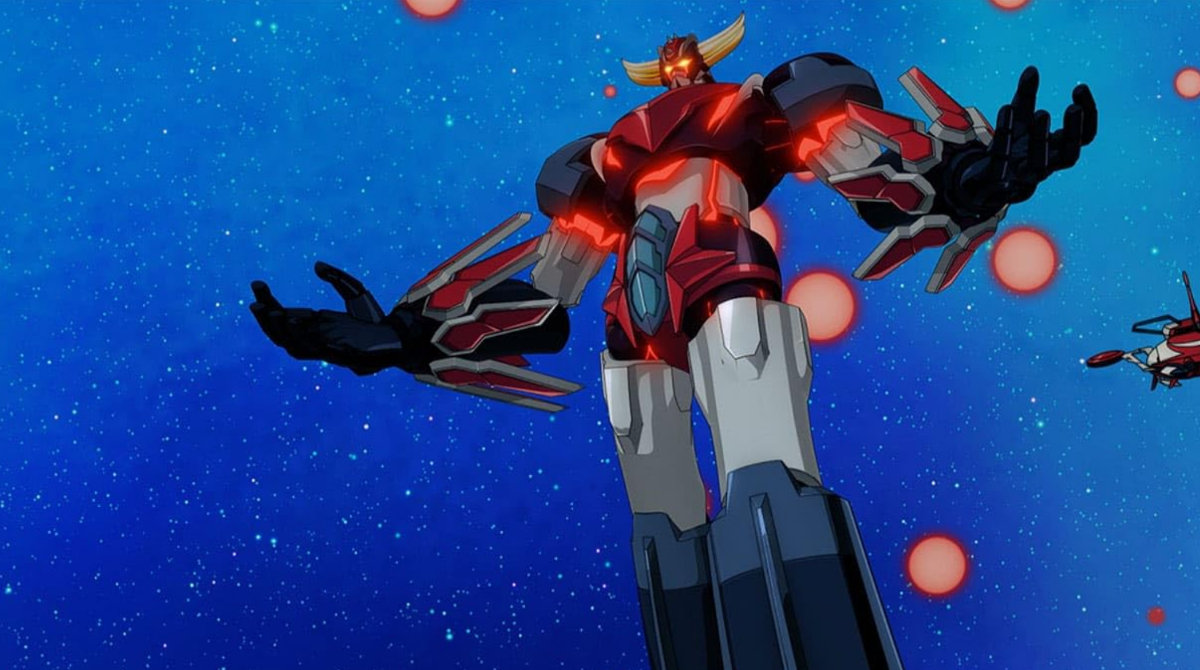
Half a century later, “Grendizer” remains culturally alive and relevant in the region. In Saudi Arabia, which embraced the original version of the show wholeheartedly, Manga Productions is now introducing a new generation of fans to a modernized version of the character, through a video game, The Feast of The Wolves, which is available in Arabic and eight other languages on platforms including PlayStation, Xbox and Nintendo Switch, and a new Arabic-language anime series, “Grendizer U,” which was broadcast last year.
Fifty years after the debut of the show, “Grendizer” is back — although to a generation of fans of the original series, their shelves still full of merchandise and memorabilia, it never really went away.


