



PALM BEACH, Florida: President Donald Trump on Saturday signed an order to impose stiff tariffs on imports from Mexico, Canada and China — fulfilling one of his post-campaign commitments to voters that also carries the risk of sparking higher inflation and disrupting businesses across North America.
Trump’s order also includes a mechanism to escalate the rates if the countries retaliate against the US, as they are possibly prepared to do.
The decision throws the global economy and Trump’s own political mandate to combat inflation into possible turmoil, though the Republican president posted on social media that it was necessary “to protect Americans.”
The tariffs risk an economic standoff with America’s two largest trading partners in Mexico and Canada, upending a decades-old trade relationship with the possibility of harsh reprisals by those two nations. The tariffs also if sustained could cause inflation to significantly worsen, possibly eroding voters’ trust that Trump could as promised lower the prices of groceries, gasoline, housing, autos and other goods.
Trump declared an economic emergency in order to place duties of 10 percent on all imports from China and 25 percent on imports from Mexico and Canada. But energy imported from Canada, including oil, natural gas and electricity, would be taxed at a 10 percent rate.
The tariffs would go into effect on Tuesday, setting a showdown in North America that could potentially sabotage economic growth. A new analysis by the Budget Lab at Yale laid out the possible damage to the US economy, saying the average US household would lose the equivalent of $1,170 in income from the taxes. Economic growth would slow and inflation would worsen — and the situation could be worse if Canada, Mexico and China retaliate.
For the moment, Mexico plans to stay cool-headed as it weighs its options.
Mexico President Claudia Sheinbaum, appearing Saturday at an event promoting a government housing program outside Mexico City said, “I’m calm, I’ve been saying since yesterday, because I know that Mexico’s economy is very powerful, very strong.”
A senior administration official, insisting on anonymity to brief reporters, said the lower rate on energy reflected a desire to minimize any disruptive increases on the price of gasoline or utilities. That’s a sign White House officials understand the gamble they’re taking on inflation. Price spikes under former President Joe Biden led to voter frustration that helped to return Trump to the White House last year.
The order signed by Trump contained no mechanism for granting exceptions, the official said, a possible blow to homebuilders who rely on Canadian lumber as well as farmers, automakers and other industries.
The Trump administration put the tariffs in place to force the three countries to stop the spread and manufacturing of fentanyl, in addition to pressuring Canada and Mexico to limit any illegal immigration into the United States.
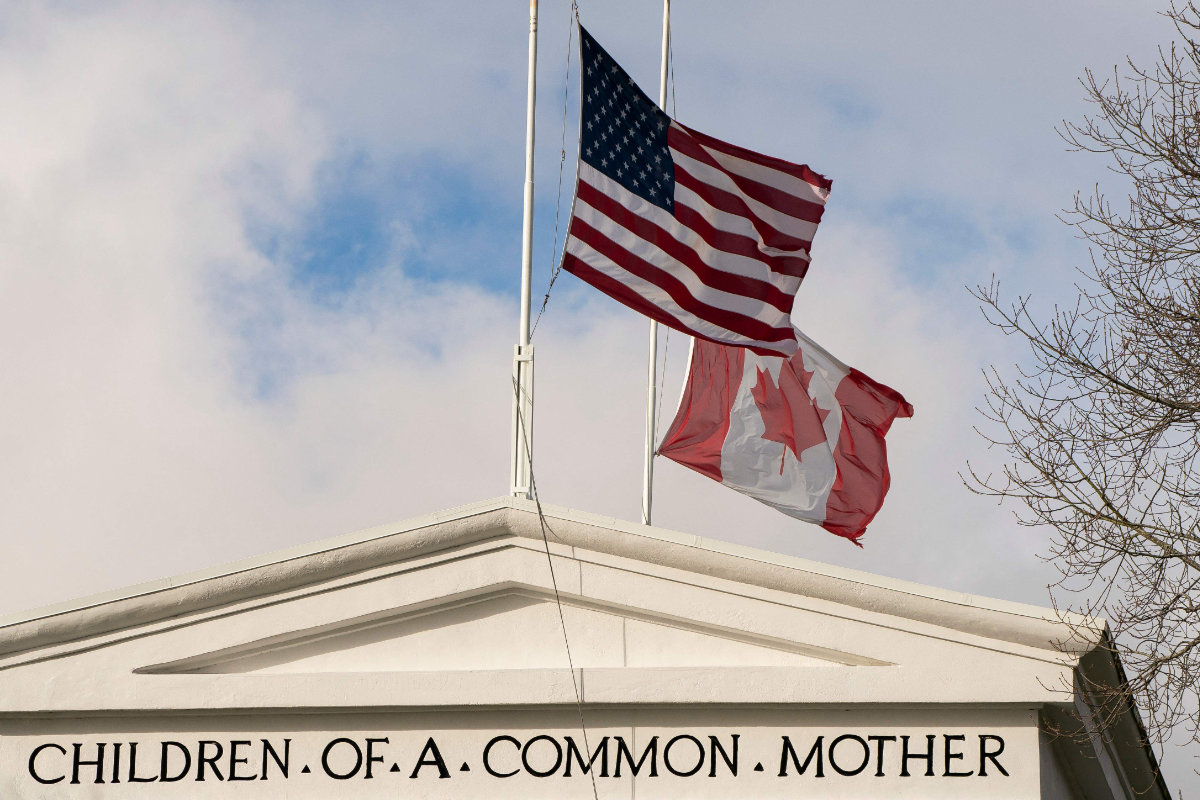
Flags fly above the Peace Arch monument on the border between the US and Canada at Peace Arch Park on February 1, 2025 in Blaine, Washington.(Getty Images via AFP)
The official did not provide specific benchmarks that could be met to lift the new tariffs, saying only that the best measure would be fewer Americans dying from fentanyl addiction.
The order would also allow for tariffs on Canadian imports of less than $800. Imports below that sum are currently able to cross into the United States without customs and duties.
“It doesn’t make much economic sense,’’ said William Reinsch, senior adviser at the Center for Strategic and International Studies and a former US trade official. “Historically, most of our tariffs on raw materials have been low because we want to get cheaper materials so our manufacturers will be competitive ... Now, what’s he talking about? He’s talking about tariffs on raw materials. I don’t get the economics of it.’’
The Republican president is making a major political bet that his actions will not significantly worsen inflation, cause financial aftershocks that could destabilize the worldwide economy or provoke a voter backlash. AP VoteCast, an extensive survey of the electorate in last year’s election, found that the US was split on support for tariffs.
With the tariffs, Trump is honoring promises that are at the core of his economic and national security philosophy. But the announcement showed his seriousness around the issue as some Trump allies had played down the threat of higher import taxes as mere negotiating tactics.
The president is preparing more import taxes in a sign that tariffs will be an ongoing part of his second term. On Friday, he mentioned imported computer chips, steel, oil and natural gas, as well as against copper, pharmaceutical drugs and imports from the European Union — moves that could essentially pit the US against much of the global economy.
It is unclear how the tariffs could affect the business investments that Trump said would happen because of his plans to cut corporate tax rates and remove regulations. Tariffs tend to raise prices for consumers and businesses by making it more expensive to bring in foreign goods.
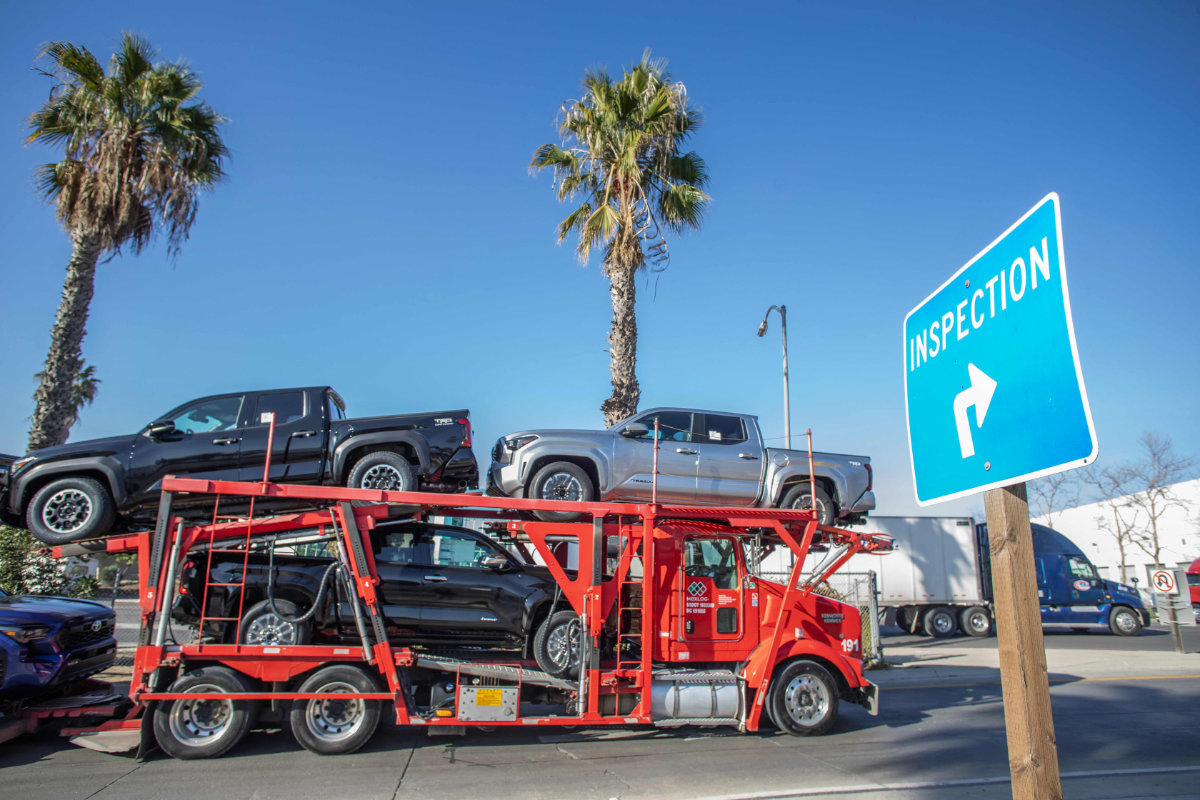
A truck carrying vehicles drives into the US at the Otay Mesa Port of Entry, on the US-Mexico border on February 1, 2025 in San Diego, California. (Getty Images via AFP)
Many voters turned to Trump in the November election on the belief that he could better handle the inflation that spiked under Biden. But inflation expectations are creeping upward in the University of Michigan’s index of consumer sentiment as respondents expect prices to rise by 3.3 percent. That would be higher than the actual 2.9 percent annual inflation rate in December’s consumer price index.
Trump has said that the government should raise more of its revenues from tariffs, as it did before the income tax became part of the Constitution in 1913. He claims, despite economic evidence to the contrary, that the US was at its wealthiest in the 1890s under President William McKinley.
“We were the richest country in the world,” Trump said Friday. “We were a tariff country.”
Canadian Prime Minister Justin Trudeau has told Canadians that they could be facing difficult times ahead, but that Ottawa was prepared to respond with retaliatory tariffs if needed and that the US penalties would be self-sabotaging.
Trudeau said Canada is addressing Trump’s calls on border security by implementing a CDN$1.3 billion ($900 million) border plan that includes helicopters, new canine teams and imaging tools.
Trump still has to get a budget, tax cuts and an increase to the government’s legal borrowing authority through Congress. The outcome of his tariff plans could strengthen his hand or weaken it.
Democrats were quick to say that any inflation going forward was the result of Trump, who is about to start his third week back as president.
“You’re worried about grocery prices. Don’s raising prices with his tariffs,” Senate Democratic Leader Chuck Schumer of New York posted on X. “You’re worried about tomato prices. Wait till Trump’s Mexico tariffs raise your tomato prices. … You’re worried about car prices. Wait till Trump’s Canada tariffs raise your car prices,” he wrote in a series of posts.


