

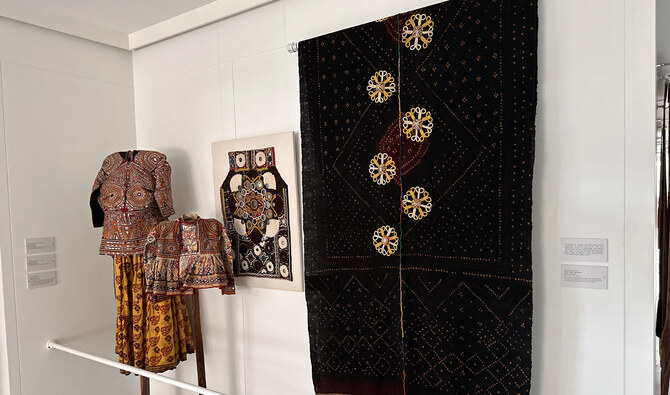

KARACHI: Adorned with traditional garments, from colorful skirts of Tharparkar to the talismanic scarves worn by Sindhi grooms, The Haveli in Karachi has become an inspiration for many in terms of cultural preservation, with each artifact narrating a story, reflecting the landscapes, symbols, and beliefs of the people of Pakistan’s southern Sindh province.
For over 50 years, Dr. Nasreen Askari meticulously collected textiles, and documented the cultural and historical narratives woven into each piece to finally set up The Haveli in December last year. Today, the museum stands as a testament to Sindh’s deep-rooted artistry, offering a glimpse into ancient craft to people in major cities like Karachi where modern outfits mostly get the limelight.
Askari was mesmerized by the vibrant garments worn by women in Sindh’s rural heartlands, when she first arrived at Sindh University in Jamshoro as a medical student in the 1970s. The intricate embroidery and stunning hues were unlike anything she had encountered in Karachi’s urban sprawl where she had lived. What began as curiosity soon evolved into a lifelong passion for her to preserve Sindh’s textile traditions, a pursuit that would ultimately lead to the creation of Haveli.
“This institution, which is called the Haveli, is an attempt to show the cultural heritage that we have, which is so rich and so varied,” Askari told Arab News, acknowledging that her pursuit was in complete contrast to medicine which she practiced for many years.
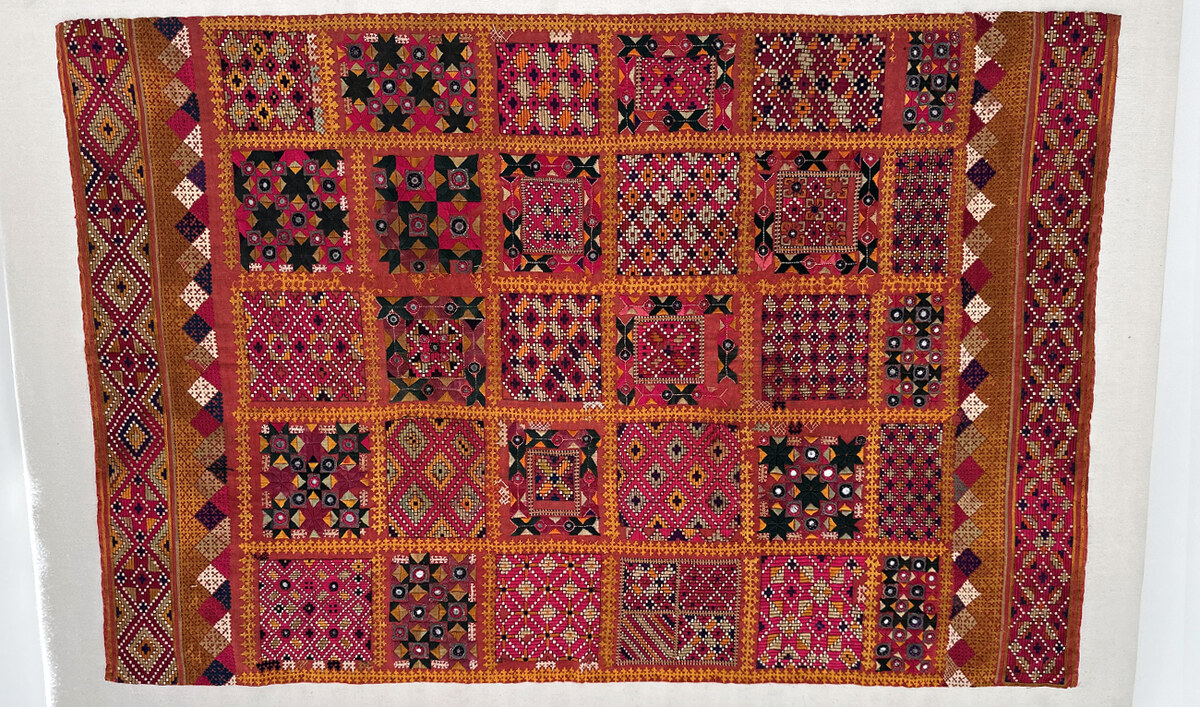
The photograph taken on January 30, 2025, shows Sindhi and Balochi styles of embroidery on a pillow case displayed at ‘The Haveli: A Museum of Textiles’ in Karachi, Pakistan. (AN)
“It is an obsession. It is not just a hobby. It is actually a passion. That is how that this institution has taken shape. Because if there was no passion, there would not be an institution [like Haveli].”
Askari shared that she practiced medicine for some time and enjoyed it, however, her passion for handicrafts moved her to start collecting artifacts, with the oldest piece being a bridegroom’s scarf she collected some 50 years ago.
“It was a very big surprise for me, and a very attractive surprise,” he recalled the time, when she decided to build her collection.
The Haveli showcases around 75 pieces from Askari’s extensive collection, amassed over five decades. It has a ‘bandhani’ (a woman’s head shawl) from 1978, a ‘kanjiro’ (a blouse or tunic front), a ‘bujhki’ (a dowry purse), ‘lungis’ (used as men’s sashes), and a ‘chola’ (a woman’s shirt). A section dedicated to animals displays a horse’s outfit, a ‘mohra’ and a ‘gaani’ (adornments for a camel’s face and neck), and a ‘jhul’ (a camel saddle cloth).
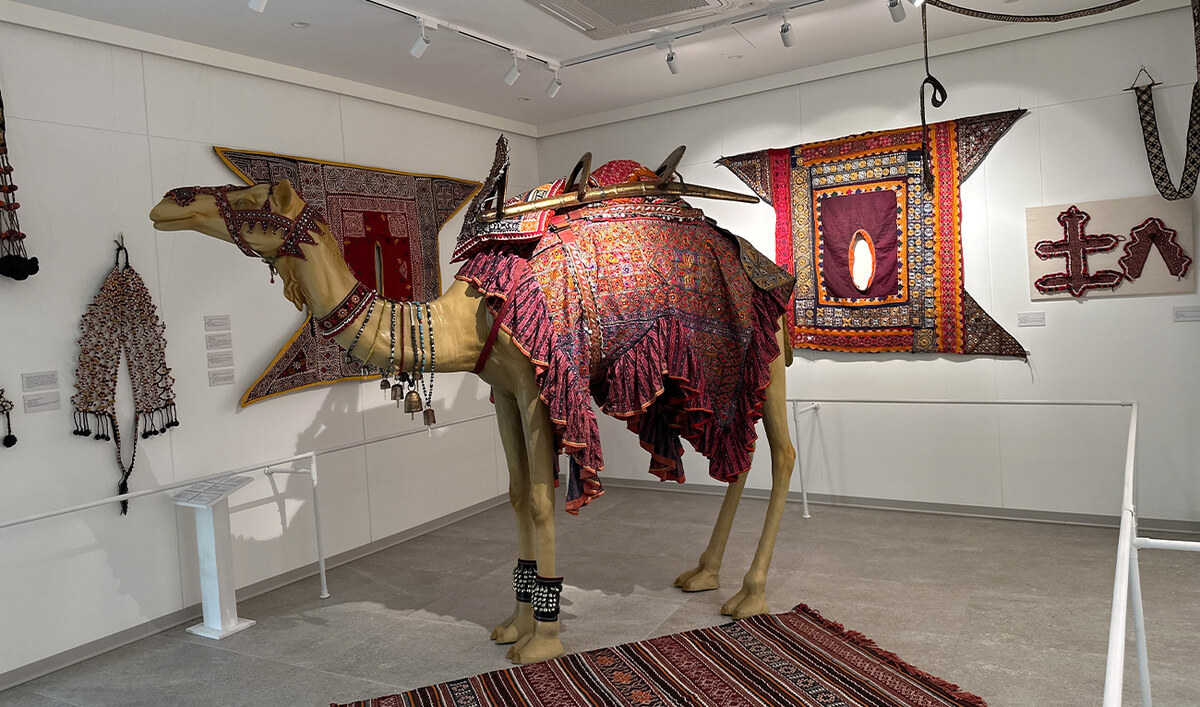
The photograph taken on January 30, 2025, shows a camel saddle blanket on display at ‘The Haveli: A Museum of Textiles’ in Karachi, Pakistan. (AN)
One of Askari’s favorite articles features is a ‘parha,’ a skirt made by the Meghwar community of Chachro in Sindh’s border district of Tharparkar. This resist-printed, hand-loom cotton skirt is adorned with embroidery, mirrors and depictions of peacocks gamboling among flowers.
While Askari, who is known as one of Pakistan’s pre-eminent experts on textiles, hasn’t ventured into creating her own designs, she hopes to inspire future generations of designers.
“I just stuck to the traditional designs, and to appreciating them, and examining them,” she said. “But I hope in the future, I will inspire design students to make their own designs.”
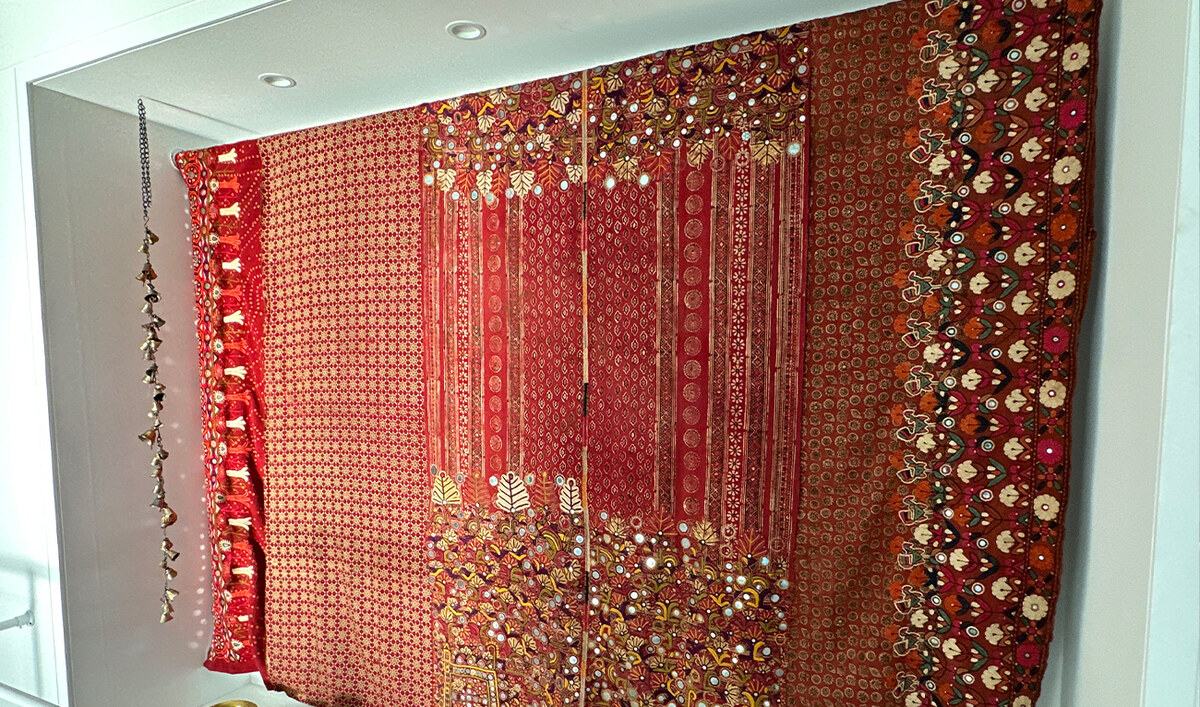
The photograph taken on January 30, 2025, shows a traditional textile artifact displayed at ‘The Haveli: A Museum of Textiles’ in Karachi, Pakistan. (AN)
Syed Hasan Askari, Askari’s husband and chief executive of The Haveli, noted that Sindh’s rich textile traditions stem from its historical role as crossroads for artisans traveling between Iran, Central Asia and India.
“Every region has its own charm, and every region has its own skills, but Sindh does have an exceptionally rich tradition,” he said, emphasizing the importance of preserving Pakistan’s cultural heritage.
“It is very important to preserve the culture and heritage of the country, any country, but even more so in Pakistan where there has been a lot of degradation of its historical roots.”
Askari wishes for The Haveli to not only showcase the beauty of Sindhi textiles, but also help generate income for the women who create these handicrafts.
“I believe that we need to promote their crafts so that the women who make them can have a source of income when they create them,” she added.


