

KSrelief launches 2025 winter kits project for Pakistan

In this handout photo, released by Saudi Embassy, Pakistan’s National Food Security Minister Rana Tanveer Hussain (2L) and Saudi Ambassador Nawaf bin Said Al-Malki handover packages during the launching ceremony of KSrelief’s 2025 winter kits project in Islamabad on January 30, 2025. (Photo courtesy: X/@KSAembassyPK)
Short Url
Updated 31 January 2025
Follow

KSrelief launches 2025 winter kits project for Pakistan

  • 84,500 winter kits to be distributed across Pakistan as part of KSrelief annual initiative for vulnerable communities
  • In 2023 alone, KSrelief provided over 110 million meals globally, including a significant share for Pakistan

ISLAMABAD: The King Salman Humanitarian Aid and Relief Center (KSrelief) on Thursday launched its 2025 project to distribute winter relief kits in Pakistan, to be distributed to needy people in all four provinces of Pakistan as well as the Gilgit-Baltistan and Azad Kashmir northern regions. 
As part of the program, KSrelief will distributes 84,500 shelter, NFIs (non-food items), and winter kits across Pakistan as part of its annual initiative to support vulnerable communities.
“It’s my pleasure to participate in this ceremony on behalf of my country, the Kingdom of Saudi Arabia,” Nawaf bin Said Al-Malki, Saudi ambassador to Pakistan, said at the launch ceremony. 
“This kit will be distributed among the needy people in all four provinces of Pakistan, including Gilgit-[Baltistan] and Azad Kashmir.”
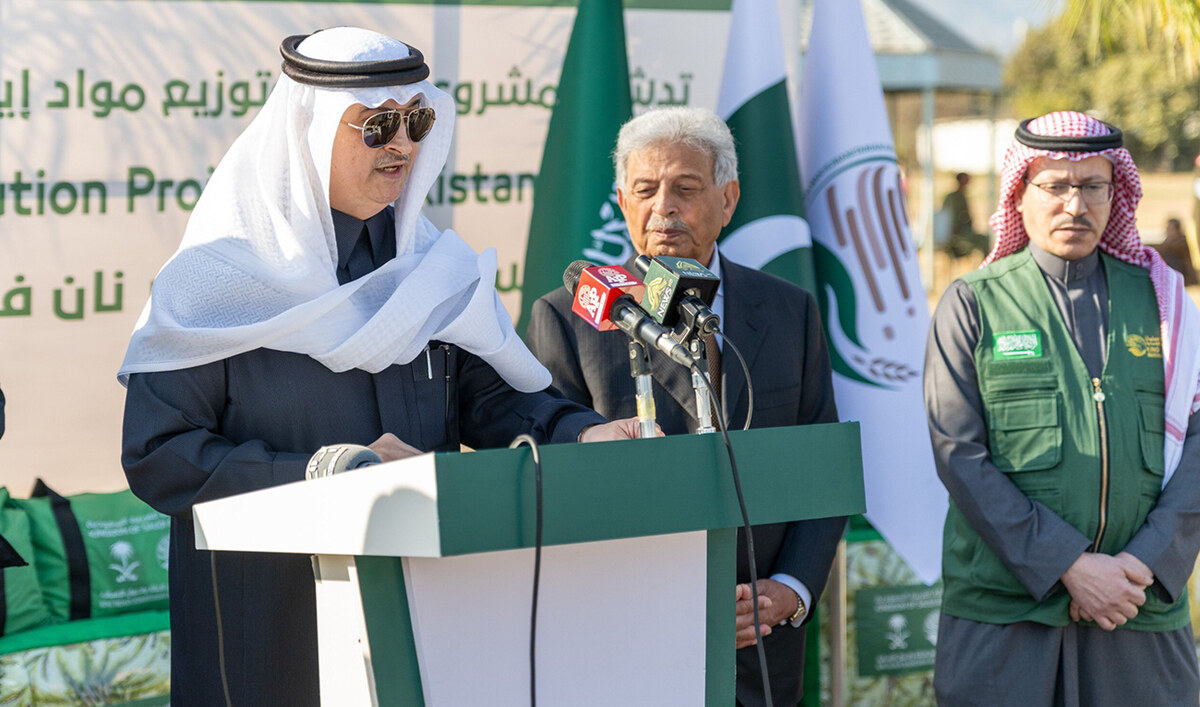


In this handout photo, released by Saudi Embassy, Nawaf bin Said Al-Malki (left), Saudi ambassador to Pakistan, speaks during the launching ceremony of KSrelief’s 2025 winter kits project in Islamabad on January 30, 2025. (Photo courtesy: X/@KSAembassyPK)

In the first phase, KSrelief will deliver 50,000 winter kits to residents of the 50 coldest and snow-bound districts in Pakistan. Distribution will be region-specific, targeting 16,000 kits in Khyber Pakhtunkhwa (KP), 12,000 in Balochistan, 10,000 in Gilgit-Baltistan (GB), 6,000 in Azad Jammu and Kashmir (AJK), 4,000 in Sindh, and 2,000 in Punjab. These winter packages include two polyester quilts and a kit of warm shawls for both men and women, as well as warm clothing for children and adults.
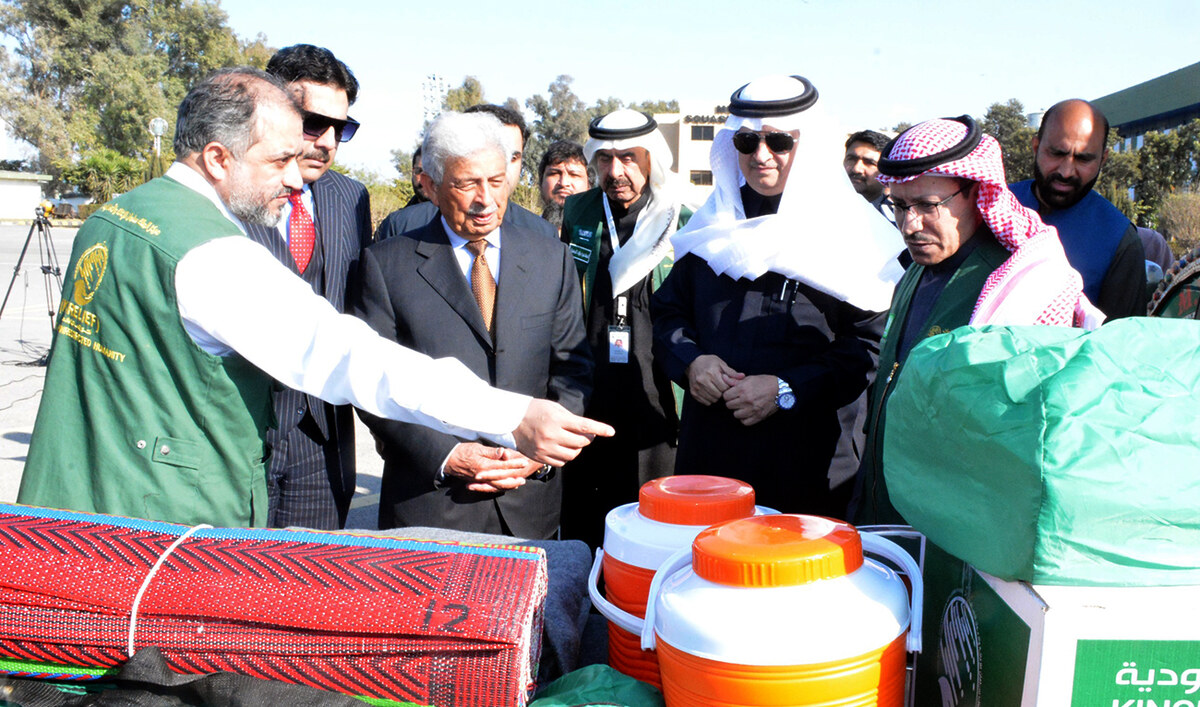


In this handout photo, released by Saudi Embassy, Pakistan’s National Food Security Minister Rana Tanveer Hussain (3L), Saudi Ambassador Nawaf bin Said Al-Malki (2R) and other officials inspect packages during the launching ceremony of KSrelief’s 2025 winter kits project in Islamabad on January 30, 2025. (Photo courtesy: X/@KSAembassyPK)

The remaining 34,500 Shelter NFIs will be strategically allocated for disaster response, with distribution planned over three additional phases, set to conclude by December 2025.
To ensure transparency and effective implementation, the project will be carried out in close collaboration with key stakeholders, including the National Disaster Management Authority (NDMA), Provincial Disaster Management Authorities (PDMAs), Gilgit-Baltistan Disaster Management Authority (GBDMA), State Disaster Management Authority (SDMA), and local authorities. 
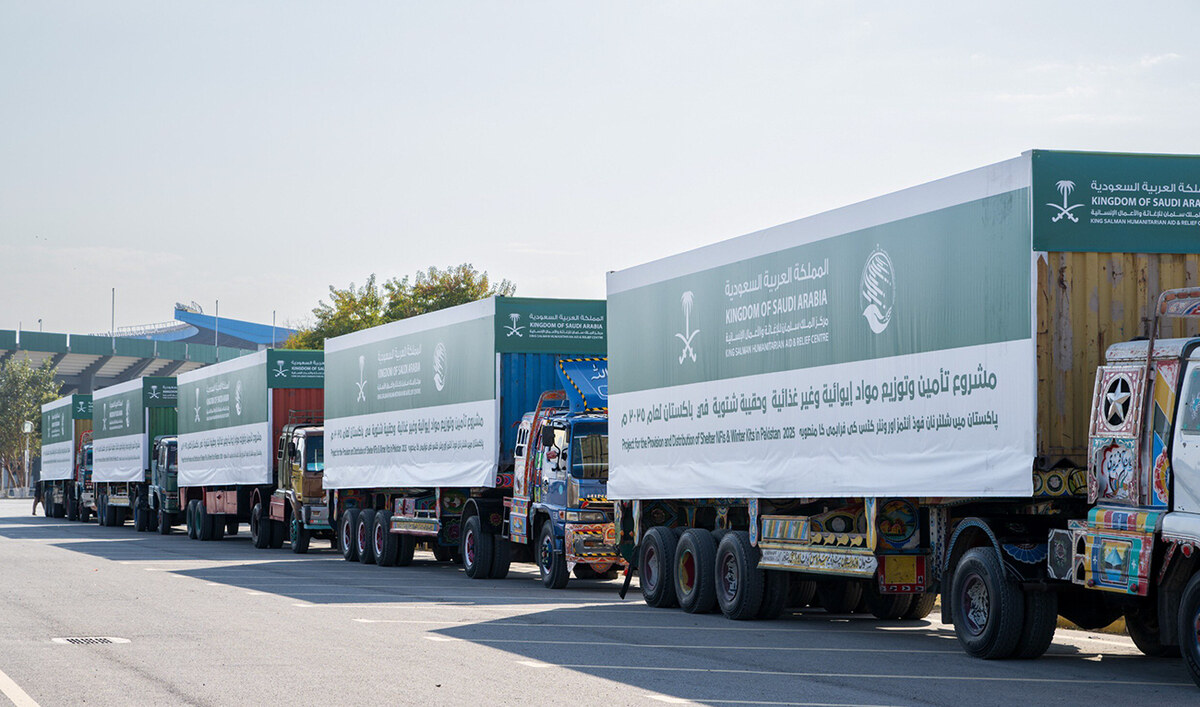


This handout photo, released by Saudi Embassy, shows trucks, loaded with winter relief kits to distribute in Pakistan, parked during the launching ceremony of KSrelief’s 2025 winter kits project in Islamabad on January 30, 2025. (Photo courtesy: X/@KSAembassyPK)

“The joint effort is expected to benefit over 591,500 individuals, underscoring KSrelief’s commitment to alleviating hardships and improving the well-being of those in need across Pakistan,” a statement from the humanitarian agency said. 
Attending the ceremony, Pakistani minister for food security, Rana Tanveer Hussain, said the event marked “yet another milestone in the strong and historic ties between Pakistan and Saudi Arabia, reflecting their shared commitment to humanitarian aid and development.”
In 2023 alone, KSrelief provided over 110 million meals globally, including a significant share for Pakistan.


Pakistan clears global crypto exchanges Binance, HTX under new regulatory framework

Updated 7 sec ago
Follow

Pakistan clears global crypto exchanges Binance, HTX under new regulatory framework

  • NOCs allow Binance, HTX to conduct engagement activities within Pakistan, says regulator PVARA
  • Says move allows entities to open subsidiaries in Pakistan but doesn’t constitute as operating license

ISLAMABAD: The Pakistan Virtual Assets Regulatory Authority (PVARA) announced on Friday that it has granted no objection certificates (NOCs) to global crypto exchanges Binance and HTX, the latest in a series of moves by Islamabad to regulate its fast-growing virtual assets market. 

PVARA said the NOCs were granted following a review process it conducted with public sector stakeholders which focused on governance structures, compliance frameworks, risk management controls and alignment with Pakistan’s emerging regulatory requirements for virtual asset activities.

Pakistan has been moving to regulate its fast-growing crypto and digital assets market by bringing virtual asset service providers (VASPs) under a formal licensing regime. Officials say the push is aimed at curbing illicit transactions, improving oversight and encouraging innovation in blockchain-based financial services.

“The introduction of this structured NOC framework demonstrates Pakistan’s commitment to responsible innovation and financial discipline,” Finance Minister Muhammad Aurangzeb was quoted as saying in a press release issued by PVARA. 

The regulatory authority said the NOCs allow Binance and HTX to conduct preparatory and engagement activities within Pakistan under “defined regulatory oversight,” clarifying that it does not constitute a “full operating license.”

The NOCs allow Binance and HTX to begin registration on the FMU goAML, Pakistan’s anti–money laundering reporting platform, as reporting entries. It also allows them to engage with the Securities and Exchange Commission of Pakistan (SECP) regulator to incorporate their subsidiaries in the country. 

HTX and Binance can also prepare and submit their full VASP license applications once licensing regulations are promulgated and provide anti-money laundering (AML) registered services after the completion of their goAML registration.

“PVARA will continue to engage with domestic and international stakeholders as it advances subsequent phases of its regulatory framework,” the authority said. 

“Additional guidance regarding licensing standards, compliance obligations and supervisory expectations for virtual asset service providers will be issued in due course.”

Chairman PVARA Bilal Bin Saqib said issuing the NOCs marks the first step toward a fully licensed and regulated environment for digital assets in Pakistan. 

“By adopting a phased and internationally aligned approach, Pakistan is ensuring that only well-governed, fully compliant global platforms progress toward full licensing,” Saqib was quoted as saying by PVARA.

According to PVARA, Pakistan already ranks at number three in crypto adoption and is home to an estimated 30 to 40 million users.

It said industry-wide assessments estimate that annual digital asset trading activity linked to Pakistan exceeds $300 billion. 

The development takes place days after Prime Minister Shehbaz Sharif met a delegation of Binance in Islamabad, led by its CEO Richard Teng, to discuss regulating digital assets in Pakistan.