

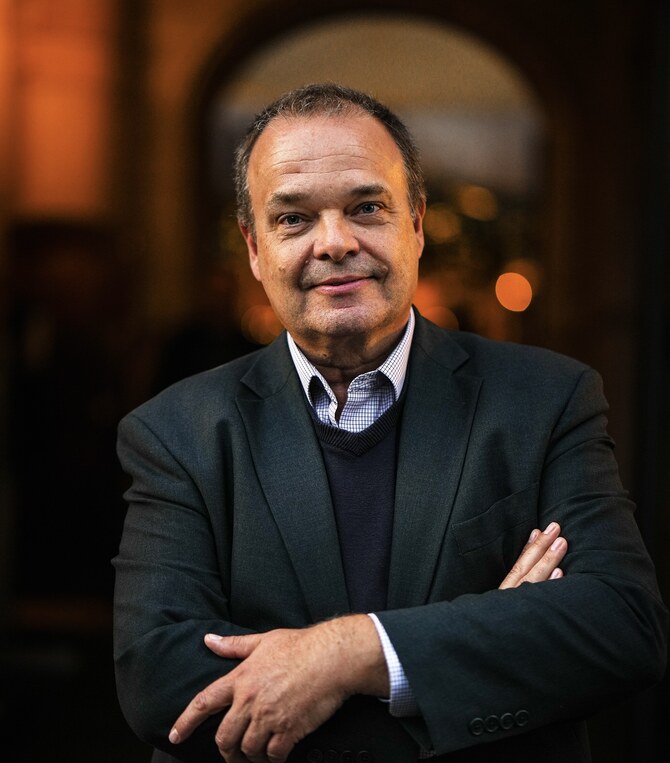

RIYADH: Countries around the world can take lessons from the transformation of Saudi Arabia’s labor market, a former Swedish employment minister has insisted.
Speaking to Arab News on the sidelines of the Global Labor Market Conference in Riyadh, Sven Otto Littorin praised the Kingdom’s progress since the launch of Vision 2030, which has seen female workforce participation doubling in nearly six years.
The changes have seen Saudi Arabia emerge as a global leader in addressing labor market challenges, skill development, and workforce prequalification, as highlighted in the inaugural GLMC report in December.
The findings align with Vision 2030’s goal to reduce unemployment from 11.6 percent in 2017 to 7 percent by the end of the decade.
“I would go as far as to say that most other countries could learn a thing or two from Saudi Arabia. The transformation of the Saudi labor market since the start of Vision 2030 is truly nothing less than spectacular. The Kingdom has made so much progress in such a short time it is hard to choose,” said Littorin, who is also an international business and policymaking expert.
He praised the significant increase in female workforce participation, noting that Saudi Arabia achieved a twofold rise in just six years, a feat that took Sweden 40 years to accomplish.
“Roughly 35 percent of women in the workforce have leadership positions, and I saw an opinion poll recently that stated that over 75 percent of Saudi men saw this as very favorable to family life,” he added.
Unprecedented progress
The Kingdom’s labor market reforms align with Vision 2030 goals, as recent data from Saudi Arabia’s General Authority for Statistics shows the overall unemployment rate fell to 3.7 percent in the third quarter of 2024, a 0.5 percentage point drop from the previous year.
Unemployment among Saudi nationals was 7.8 percent, while female participation reached 36.2 percent.
Littorin emphasized the broader societal impact of these changes, saying: “As a foreigner, I have to say that it is so gratifying to see these women in the labor market, earning their own money, contributing to their families and to the growth of the country with their productivity, their grit, and ambition.”
He added: “Saudi Arabia is a richer nation for it, where everyone is involved in the growth of the country.”
Saudi Arabia’s young workforce is another key driver of its economic transformation, Littorin noted. “The Gulf Cooperation Council region and Saudi Arabia, in particular, have a very young workforce. This is a great advantage compared with many other places around the world. A young workforce is versatile, agile, and finds it easier to learn new skills than others,” he said.
The former minister also pointed to the Kingdom’s growing appeal to international investors and tourists. “When I first came to Riyadh in 2017, I was almost the only foreigner on every flight I took into the Kingdom. Now, these flights are filled with tourists and investors alike. The interest in Saudi Arabia has exploded,” Littorin said.
A November report by BlackRock Investment Institute echoed this sentiment, predicting that Saudi Arabia’s future growth will be driven by its young population and abundant natural resources. However, the report cautioned that success will depend on governance, regulatory improvements, and labor market reforms.
Sustainable growth
Littorin stressed the importance of international cooperation to sustain this growth. He suggested partnerships between Saudi Arabia and countries like Sweden to enhance the Kingdom’s job market.
“Saudi Arabia might want technological solutions in waste management from Sweden, for instance,” Littorin said.
He added that the Saudi workforce is young and eager to learn from abroad, suggesting that joint venture solutions could foster mutual learning, with the possibility of exchanging workforces for a period to strengthen bonds between companies, economies, and countries.
“Solutions like this would create larger markets for the companies involved, enhance job training for both Swedes and Saudis, broaden international exposure and contacts while increasing relevancy to both countries. The world is global, and so are its solutions,” Littorin added.
Global platform
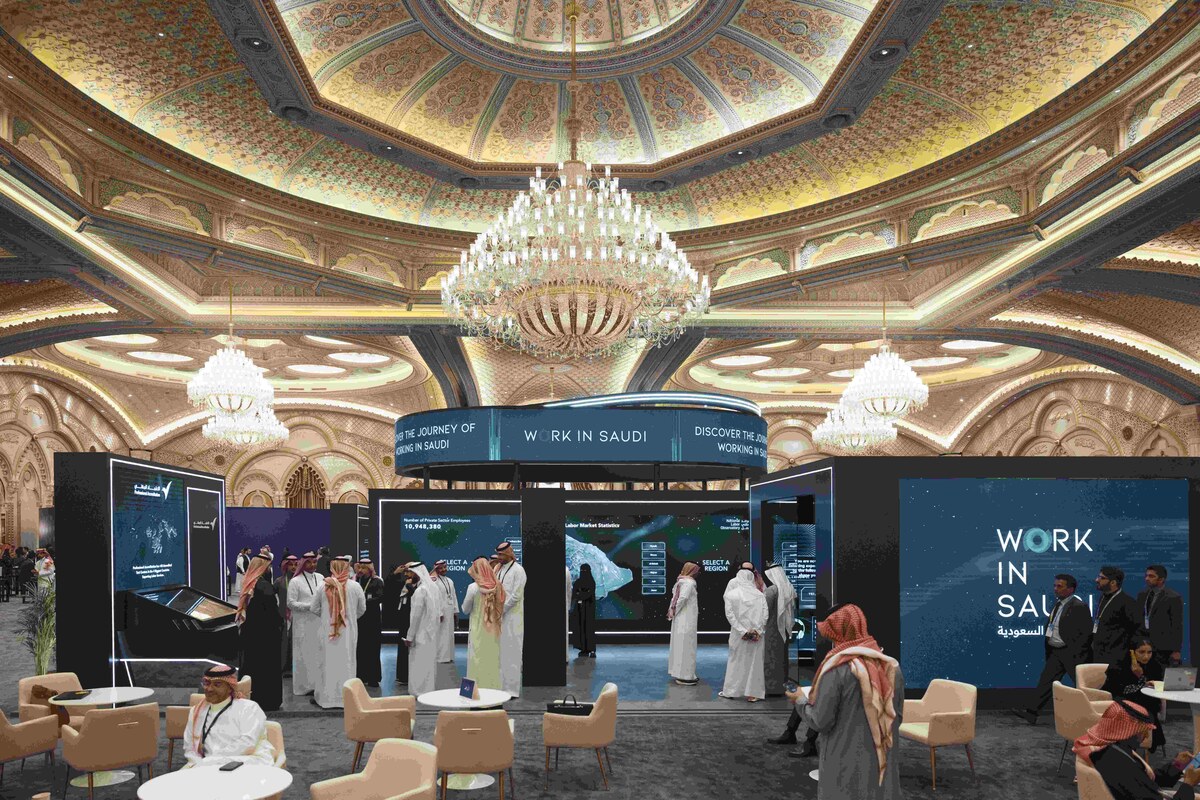
The Global Labor Market Conference in Riyadh. AN
The second edition of the GLMC is taking place at the King Abdulaziz International Convention Center on Jan. 29-30, drawing over 5,000 attendees and 200 speakers, including ministers, CEOs, and experts from more than 50 countries.
Littorin, a keynote speaker at the event, described the conference as a global platform for dialogue on future labor market trends. This year’s conference focuses on skills and productivity, exploring how education, skilling, upskilling, and reskilling can better meet tomorrow’s demands.
“Solutions in economic policy, education policy, and labor market policy need to go hand in hand to support the transformation of our economies for the good of both people, companies, and countries,” he said.
Littorin emphasized the need for upskilling and reskilling to adapt to the fast-evolving job market. “The long-term key to economic growth and prosperity is not only to find ways to create more jobs but to create better jobs; jobs that through higher productivity are more rewarding to the individual and contribute more to the economy,” he said.
The former minister highlighted the role of advanced technologies like artificial intelligence in shaping global labor markets, particularly in the Middle East, emphasizing that “technology, digital transformation, and AI are key in so many aspects.”
“Technology will enhance our ability to better understand where we are and where we are going. Digitalization will improve productivity not only in general terms but specifically in education and job matching,” Littorin said.


